Zongyang

Things to do in Zongyang

Search attractions or local attractions & tours
Search

Explore top experiences

Top 10 attractions in Zongyang

View all Attractions
Fushan Mountain

Fushan Mountain

3.8
4.4/5
236 reviews

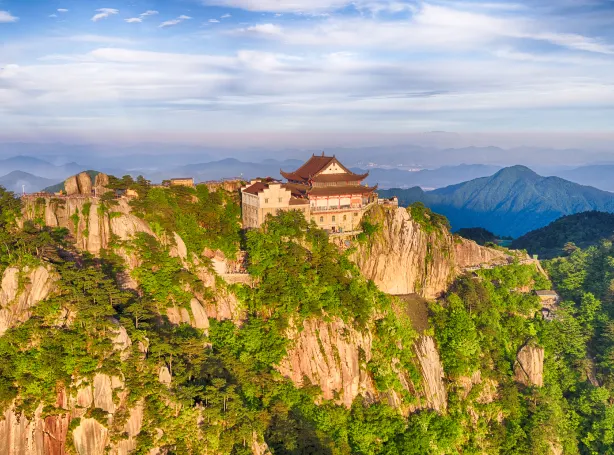
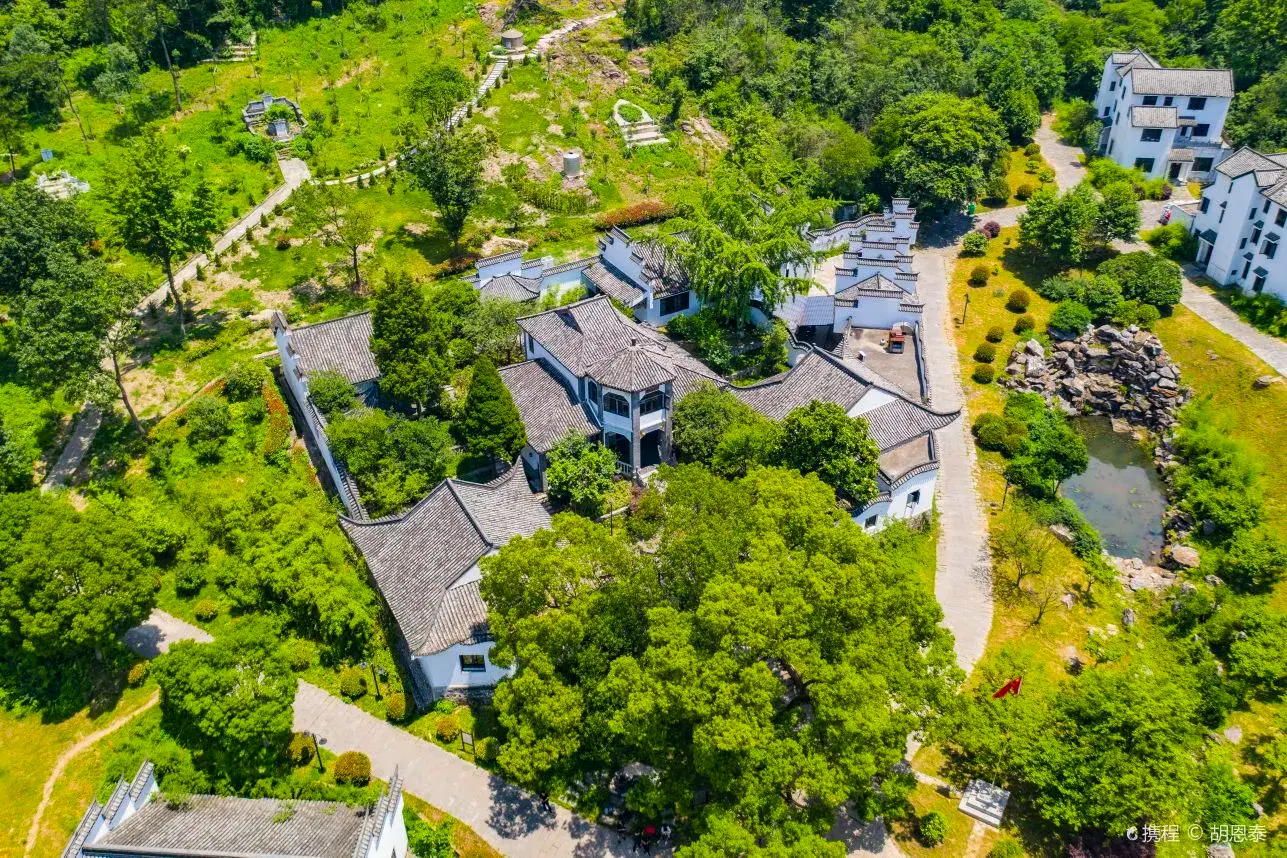
Fushan is 36 kilometers away from Congyang County in the south. It is located on the shore of Baidang Lake on the north bank of the Yangtze River. It is surrounded by water on three sides. The peak is 165 meters above sea level, just like a boat floating on the water, hence the name Fushan. The volcanic landform is a major feature of Fushan. Traces left by volcanic eruptions can be seen on the mountain. It is suitable for geology enthusiasts to discover the wonders of nature, but for ordinary tourists, it may just be climbing the mountain. Cliff carvings are another major feature of Fushan. The fonts are different and very precious. Fushan has two main gates, the east gate is at Fushan Middle School, and the west gate is on County Road 098. The west gate is the main gate, close to the main attractions. Generally, you enter from the west gate and exit from the east gate, or vice versa. You don't have to go back in the general direction, but there are many forks in the Attraction, so you often have to take a fork to see the attractions and then return to the main road. At the entrance of the west gate is the Fushan Geological Museum, which introduces Fushan and volcanic landforms with pictures and texts. After entering the gate, you can first see the Lan Ke Stone, which was formed by the flow of volcanic magma. In the middle of the stone platform is a chessboard where Ouyang Xiu and Monk Yuanlu played chess and preached. Nearby is the "Lan Ke Stone" written by Meng Jiao in the Tang Dynasty, but the handwriting is very blurred. Climbing all the way to the top of the mountain, you will pass many strange caves, all of which are related to volcanoes. There are also scenic spots such as the volcanic rock wall "Island Snow Wave" and the "Immortal Bridge" formed by natural rocks. The Huisheng Rock area on the hillside is where cliff carvings are concentrated. Many celebrities have left their handwriting here, such as Lu You's "Lu Ziyan", and philosophical poems jointly written by the Qing Dynasty scholar Fang Yizhi, calligrapher and painter Dai Yixiao, etc. Climbing to the top of the mountain, you can overlook the rural scenery and low hills below the mountain. The scenery is average, but you can see Tianchi on the top of the mountain, which is the original crater of the volcano. In addition, there are many temples on Fushan Mountain. Some temples are embedded in caves on the rock wall, such as Jingu Zen Temple near the east gate; some temples feature ancient trees, such as Huisheng Temple. The ginkgo and holly trees in front of the temple are more than 100 years old, and the trunks are so thick that it takes 2-3 people to hug them. It is said that the stones produced in Fushan can float on the water without sinking. If you are interested, you may want to pick up two pieces to experiment. There are also vendors selling these stones on the mountain.

Zongyang · 25km from downtown
Xinghua Village Scenic Area

Xinghua Village Scenic Area

5.2
3.3/5
560 reviews

Xinghua Village Scenic Area is located west of Chizhou city, where there was once a tavern producing famous wine. The village stretches from Qishan Lake in the south to Bodingshan Mountain in the north, connects to the West Gate Drawbridge in the east, and borders the Qiupu River in the west, with apricot blossoms flying like rain across ten miles. In the past, the village had hundreds of acres of apricot forests, with blossoms as vibrant as clouds. There was also a tavern named Huang Gong's Wine Shop in the village, quiet and elegant, with the rich aroma of wine lingering. When Du Mu, then the governor of Chizhou, visited this place, he left behind the timeless poem: "During the Qingming Festival, the rain drizzles endlessly; travelers on the road seem lost in sorrow. Asking where a tavern might be found, a shepherd boy points to Apricot Blossom Village in the distance." Since then, this place has become a renowned village through the ages. The "Chizhou Prefecture Records" mention Apricot Blossom Village: "There was once Huang Gong's Wine Shop, which later fell into ruin. The remaining well curb lies in the farmland, inscribed with the words 'Huang Gong's Guangrun Spring.'" During the Ming Dynasty's Tianqi era and the Qing Dynasty's Kangxi and Yongzheng eras, structures, arches, and temples were successively built here. The fame of Apricot Blossom Village wine has endured through time. The ancient well still exists, with clear and cold water, colloquially known as "fragrant spring like wine, inexhaustible when drawn." Today, "Apricot Blossom Village wine" remains a famous market brand. This area historically featured twelve scenic spots: Spring surge at Pingtian, Lotus breeze at Baipu, Misty rain at Xixiang, Waves of tea and wheat, Sunset glow at Santai, Moonlit pines at Qiyun, Huang Gong's tavern, Iron Buddha's Zen forest, Zhaoming Academy, Fishermen's songs at Duwu, Crimson maples amid mulberries, and Dawn snow at Meizhou. Every step offers a picturesque view, captivating all who visit. The attraction was listed as one of the first provincial-level scenic areas in Anhui in 1987. Xinghua Village Ancient Well Cultural Park is located one km west of Chizhou, Anhui, with convenient transportation. It is a new tourist attraction built on the site of an ancient well. Visit famous attractions such as the Six Dynasties Corridor, Huaidu Pavilion, Lang Sui's former residence, Yulong Bridge, ancient stage, Qinglian Hall, folk village, fishing song pier, Wanghua Pavilion, Zhaoming Hall, Xinghua Village Scenic Area - Drunken Immortal Lake, and Kui Garden. Experience the unique poetic and wine culture of this millennia-old village, engage with farming traditions and ancient crafts, enjoy Huangmei opera and martial arts performances, challenge yourself in the thrilling Bagua maze, interact with water buffaloes, sample free hand-brewed Huang Gong wine, and observe traditional winemaking techniques.

Chizhou · 25km from Zongyang
Dalongshan Wulongxi Scenic Area

Dalongshan Wulongxi Scenic Area

3.9
4.3/5
174 reviews

Wulongxi Attraction is located in the southeast of the forest park, with a total area of ​​645.34 hectares. There are three main streams in the area, namely Wulongxi, Youlongxi and Wolongxi. There are also Yuanzhao Ancient Temple, century-old trees, strange stones, stone carvings and other landscapes, as well as many historical and cultural sites. It is known as "magnificent peaks, mysterious caves, secluded valleys, strange stones, beautiful trees and spiritual waters". The park is densely forested, with a variety of species and rich plant resources, including 120 families and more than 800 species. Pine, cypress, maple, sassafras and bamboo are its main tree species. Natural trees, shrubs, grasses and vines are mixed in the area. Rhododendron, wisteria, rose, Lespedeza, white azalea plum and light bamboo are scattered in the forest and on the slopes. At the foot of the mountain, apricots, peaches, pears, oranges and jujube trees compete for beauty, each with its own characteristics, mixed together, layered and intertwined, with green pines and cypresses everywhere, mountain flowers in full bloom, red, yellow, white and purple interlaced, and dark green against each other. With the alternation of spring, summer, autumn and winter, the mountains have become many colorful paintings. In March, the trees are green and the flowers are in full bloom. The peach and apricot flowers are like pieces of red dew, and the plum and pear flowers are white as snow. In early summer, the branches and leaves are lush and cool. In autumn, the mountains are covered with red leaves, and the mountains are full of fruits and the fragrance is overwhelming. In midwinter, the snow covers the forest, the mountains are covered with silver, and the trees are covered with silver flowers. The weather is magnificent all year round.

Anqing · 17km from Zongyang
West Lake
2026 Global 100 - Best Things to Do

West Lake

10
4.7/5
37.4k reviews

West Lake is the core scenery of Hangzhou, with cloud-covered mountains on three sides and the city on one, and the two long causeways, Su Causeway and Bai Causeway, lie across the lake surface, dividing the water into several stretches large and small. Among the lakeside highlights, the "Ten Scenes of West Lake" handed down from the Southern Song dynasty rank first, and together with the later "New Ten Scenes of West Lake" and the "Three Reviews of the Ten Scenes of West Lake," over a hundred attractions spread out along the lake shore and the surrounding mountains, with pavilions, terraces, temples, and pagodas, gardens, causeways, and islands setting off one another against the distant mountains and nearby waters; the legend of the Broken Bridge, where Bai Niangzi and Xu Xian met, adds a touch of story to the lake and hills. There is no need to insist on visiting every spot; simply choosing a stretch of shoreline and wandering slowly is pleasant enough. You can explore West Lake on foot, by cycling, by the sightseeing electric shuttle that circles the lake, or by boat. The shuttle route makes exactly one full loop around the lake, saving effort and being convenient; cycling along the lakeside is leisurely and romantic, with many public bicycle rental points along the shore; if you want to take a boat, the several piers around the lake offer different boat types and routes, and it is recommended to take a boat to Three Pools Mirroring the Moon in the center of the lake while enjoying the lake views from the water along the way; alternatively, you can hail a rowboat at the lakeside and let the boatman row you around the lake for a more free and flexible experience. Attractions on the north shore are concentrated. The usual route starts from Lingering Snow on the Broken Bridge in the northeast corner, follows Bai Causeway to Solitary Hill, and along the way you can see cultural views such as the Xiling Seal Art Society, the Zhejiang Provincial Museum, the China Seal Museum, and Zhongshan Park–Pavilion for Releasing Cranes, taste a bowl of authentic West Lake vinegar fish at Louwailou, and then pass Xiling Bridge to the Temple of King Yue and Breeze-Ruffled Lotus at Quyuan Garden. In summer when the sun is strong, you might instead walk along Beishan Road, hide under the dense shade of the trees, and look at the curve of Broken Bridge and the swaying weeping willows on Bai Causeway; along the way there are many entrances where you can climb Baoshi Hill for high views; in the evening, the live performance Impression West Lake on Yue Lake is also well worth seeing. If you have plenty of time and energy, you can also get on the Su Causeway from around the Temple of King Yue and walk to enjoy the full view of West Lake. Hubin Road to Nanshan Road along the southeast shore is another area with a dense concentration of attractions. Hubin Road sits at the junction of the urban area and the scenic area, right next to the downtown commercial district, making it suitable for a short stop for travelers on a tight itinerary; by the lake there is also the iconic musical fountain and a cruise pier. From Hubin Road heading south along Nanshan Road, Orioles Singing in the Willows, the Long Bridge, Leifeng Pagoda, and Evening Bell at Nanping Hill line up one after another, and further west is Viewing Fish at Flower Harbor. The distances between adjacent attractions are convenient to cover on foot or by sightseeing bus, and you can choose a few to visit according to your preferences. Leifeng Pagoda and Evening Bell at Nanping Hill are best scheduled for the evening—listening to the bell at Jingci Temple and climbing Leifeng Pagoda to look down over the lakes and hills in the twilight are both excellent experiences.

China · Hangzhou
The Qishan Pingtian Lake Scenic Area
No. 1 of Night Attractions in Chizhou

The Qishan Pingtian Lake Scenic Area

5.4
4.5/5
126 reviews

Qishan Pingtian Lake Scenic Area is located 2 kilometers east of Chizhou City, mainly composed of Pingtian Lake and Qishan Mountain on the south bank. The greenery around the lake is very good, and the scenery of the lake and mountains along the way makes people feel comfortable. In the evening, you can go to the lake for a walk along the wooden plank road, blow the wind, and watch the night view. It is also a paradise for anglers. Not only Chizhou, but also tourists from the surrounding areas will come to the lake to fish. There is Pingtian Lake Lotus Terrace on the west bank of the lake, which is a lotus-shaped viewing platform extending into the lake. Because it is close to the urban area, it is a good place to see the lake view, and the viewing platform will be lit at night. The strange mountain on the south bank of the lake is not high, and it can be climbed to the top very quickly. The famous mountains are the statue of Yue Fei and the Cuiwei Pavilion. In the Tang Dynasty, Du Mu once wrote "Nine Days Climbing Qishan", and Yue Fei wrote "Chizhou Cuiwei Pavilion" here. . The numerous cliff-like stone carvings on the mountain are also not to be missed. The "Qi Mountain" inscribed by Bao Zheng in the Northern Song Dynasty is very magnificent. There is Chizhou Zoo at the western foot of Qishan Mountain, which is suitable for tourists with children. There is Bishan on the east bank of Pingtian Lake, which is also a small hill. The cruise ship moored by the lake is said to have been a hotel, but it is now closed and has become an alternative attraction on Pingtian Lake. On the northern shore of the lake, there are scenic spots such as the tortoise worshiping the mountain, the Taibai poetry rhyme, and the windmill sculpture.

Chizhou · 30.5km from Zongyang
Jiuhua Mountain
No. 3 of Best Things to Do in Southern Anhui

Jiuhua Mountain

8.4
4.8/5
28.7k reviews

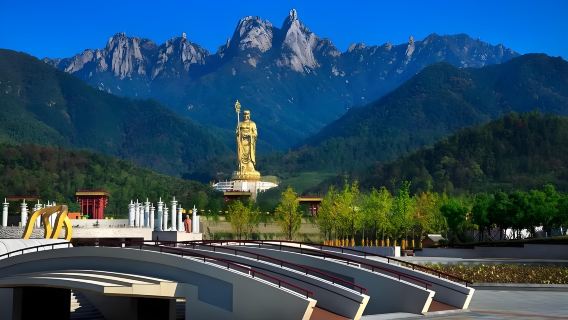
Jiuhua Mountain is located southeast of Chizhou. During the Kaiyuan reign of the Tang Dynasty (719 AD), Prince Jin Qiaojue of the ancient Silla Kingdom (an ancient regime on the Korean Peninsula) came here to practice Buddhism. Because various auspicious signs before and after his death closely resembled those of Ksitigarbha Bodhisattva, he was recognized as an incarnation of Ksitigarbha Bodhisattva and revered as Jin Ksitigarbha. Thus, Jiuhua Mountain became Ksitigarbha Bodhisattva's bodhimanda and, together with Mount Putuo, Mount Wutai, and Emeishan, was listed as one of the Four Sacred Buddhist Mountains. The preserved bodies of eminent monks from various dynasties are a major feature here. Under the perpetually humid climate, the bodies of these monks have been preserved after their passing. Currently, there are five such flesh-body bodhisattvas available for viewing. Jiuhua Street on the mountain is ring-shaped and serves as the core tourist hub of the attraction. Most trips to the various attractions start from Jiuhua Street, and many important temples are also located here. Temples are scattered throughout the mountain, and three key temples are recommended: Baisui Palace, the Hall of the Flesh Body, and Huacheng Temple. Except for Baisui Palace, which is built on a small hill, the latter two are both within the area of Jiuhua Street. To reach Baisui Palace, it takes about half an hour on foot up the mountain, or you can take the cable car. Baisui Palace enshrines the flesh body of the Ming Dynasty monk Wuxia, one of the oldest extant flesh-body bodhisattvas on Jiuhua Mountain, who was imperially conferred the title of "Response Body Bodhisattva." The Hall of the Flesh Body enshrines the flesh body of the Tang Dynasty Jin Dizang; the flesh body is sealed within a pagoda, so visitors cannot directly view the true body, but they may walk clockwise around the pagoda inside the hall. Huacheng Temple is the founding ancestral temple of Jiuhua Mountain and also the site of the Jiuhua Mountain History and Cultural Relics Museum, which houses the "Huayan Blood Sutra," copied by monk Wuxia over twenty-eight years using his own finger blood, a national first-class cultural relic. In addition to the two flesh bodies at Baisui Palace and Roushen Baodian, the other three flesh-body bodhisattvas are: Monk Mingjing of Zhantan Zen Forest, Monk Ciming of Dizang Zen Temple, and Master Renyi, a bhikkhuni, of Tonghui Zen Forest. Master Renyi is a bhikkhuni flesh body that can be visited. These three temples are all located on Jiuhua Street and can be visited in sequence. In the evening, the Qiyuan Zen Temple, the foremost of the four great monasteries, is brightly lit, and many large-scale Buddhist ceremonies are held here. Travelers may observe quietly, but must strictly observe Buddhist etiquette, refraining from loud noise and pointing at will. Travelers on a 1-day tour generally only need to visit the key temples; those with plenty of energy can continue upward from Baisuigong to Dongya Temple, and walk from Roushen Hall to **Shangchan Hall and Xiaotiantai**. Travelers on a 2-day tour can visit temples on the first day and hike up the mountain to enjoy the natural scenery on the second day, with three options: the Tiantai scenic area, the Huatai scenic area, or the ridge traverse from Tiantai to Huatai. Visiting Tiantai or Huatai separately generally takes about half a day; the Tiantai–Huatai traverse is a hiking route with a certain level of intensity, so it is recommended to set aside a full day. Tiantai is located on the south side, with its entrance at Fenghuang Pine south of Jiuhua Street; from Tiantai Temple at the top, you can enjoy the sunrise and sea of clouds and overlook the panoramic view of Jiuhua Street. Huatai is located in the northern part of the attraction, where the natural scenery is more pristine and pure, with exotic peaks and grotesque rocks scattered in varied forms; every May, rhododendrons bloom across the mountains in succession. The entrances to the two scenic areas are far apart, but they are connected by a hiking trail along the ridge. This place is foggy year-round, especially in spring and fall, when clouds and mist shroud the temple, giving it a sense of a Buddhist wonderland. Foggy days are often accompanied by drizzle, so bringing a rain poncho is recommended. In winter, snowy scenery is common in the mountains, but the steps are wet and slippery, so be sure to take anti-slip precautions when climbing.

Qingyang · 62.9km from Zongyang
Mount Huangshan Scenic Area
2026 Asia 100 - Best Things to Do

Mount Huangshan Scenic Area

9.1
4.8/5
73.6k reviews

Mount Huangshan Scenic Area is located in Tangkou Town, Huangshan District, Huangshan City. Since ancient times, Mount Huangshan has been one of China's most renowned mountains. Its peculiar pines, strange rocks, sea of clouds, and hot springs are known as the "Four Wonders" of Mount Huangshan. In addition to these, rime, snowscapes, and sunrises are also views that visitors will not miss. There is an ancient saying: "Having visited the Five Great Mountains, one need not look at any other mountains; having visited Mount Huangshan, one need not look at the Five Great Mountains." The attraction is divided into the south gate, west gate, and north gate. The vast majority of visitors enter and exit through the south gate, which has two entrances and exits—front mountain and back mountain—both close to Tangkou Town at the foot of the mountain. The town has also become a transfer hub for visiting Huangshan, and many visitors arrive here in advance to stay overnight. From Tangkou Town to the attraction entrance, you need to take the Huangshan New National Line shuttle bus, which stops at the front mountain gate (Ciguang Pavilion), the back mountain gate (Yungu Temple), and the Huangshan-Hot Spring attraction. Visiting the attraction mainly involves two routes up the mountain, the front mountain and the back mountain, both leading to one of the main peaks, Bright Summit. On the other side of Bright Summit, there is also a loop route — the West Sea Grand Canyon. Front mountain The front mountain refers to the hiking route starting from Ciguang Pavilion to Yuping Tower at the summit (accessible directly by the Yuping Cable Car), as well as the Mount Huangshan Scenic Area - Lotus Peak and Tiandu Peak areas at the summit. The scenery of the front mountain is grand and majestic, making it very suitable for enjoying panoramic views from the cable car. Both the highest peak, Mount Huangshan Scenic Area - Lotus Peak, and the other main peak, Tiandu Peak, are located here (the two peaks open alternately). There are also classic attractions such as the Guest-Greeting Pine, Jiulong Peak - Carp Back, Hundred-Step Ladder, One-Line Sky, and Tianhai. Back mountain The back mountain refers to the hiking route from Yungu Temple to Bai'e Ridge (accessible directly by the Mount Huangshan Yungu Cableway), as well as the mountaintop areas behind Bai'e Ridge such as Shixin Peak, Mount Huangshan Scenic Area - Shizi Peak, and West Sea Grand Canyon - Paiyun Pavilion. The scenery of the back mountain consists mostly of exquisite mountain views, suitable for enjoying on foot along the way. Flying Stone and Monkey Watching the Sea are both located here. West sea grand canyon West sea grand canyon officially opened in 2000. The canyon is deep and the scenery is very magnificent, and it is known as the true gathering place of Huangshan's essential scenery. West sea grand canyon can be entered from West Sea Grand Canyon - Paiyun Pavilion in the summit area of the back mountain, and after looping around inside the canyon, you return to the main peak area of Tianhai. It takes about 2 hours to walk down from West Sea Grand Canyon - Paiyun Pavilion to the bottom of the canyon, and then you can take a cable car to Tianhai. Route recommendations The standard way to visit Huangshan is a two-day tour, with routes divided into ascending via the front mountain and descending via the back mountain (front mountain - West Sea Grand Canyon - back mountain) or ascending via the back mountain and descending via the front mountain (back mountain - West Sea Grand Canyon - front mountain). Ascending via the front mountain and descending via the back mountain is suitable for taking the cable car up and walking down, which is both relaxing and allows you to enjoy the exquisite scenery of the latter half. However, since the essential route of the West Sea Grand Canyon runs from West Sea Grand Canyon - Paiyun Pavilion to Tianhai, you will have to backtrack along a section of the trail. It is possible to visit Huangshan in just one day, but the itinerary will be tight. It is recommended to ascend via the rear mountain and descend via the front mountain, taking the cable car both ways, and to either skip climbing the main peaks of the front mountain (Mount Huangshan Scenic Area - Lotus Peak / Tiandu Peak) or skip the West Sea Grand Canyon. Stay selection There are several accommodation options at the summit, mainly concentrated in areas such as Guangming Peak Tianhai, West Sea Grand Canyon-Paiyun Pavilion, Bai'e Ridge, and North Sea. Guangming Peak Tianhai is a great spot for watching the sunrise, and it is also suitable for storing luggage while exploring the West Sea Grand Canyon. Bai'e Ridge is the upper station of the Huangshan Yungu Cableway on the rear mountain; if you typically enter the attraction from the rear mountain in the afternoon, staying here is quite convenient.

China · Huangshan City
Wangxian Valley
2026 Global 100 - Night Attractions

Wangxian Valley

9
4.5/5
26.7k reviews

Wangxian Valley is located at the northern foot of Lingshan Mountain, hidden among mountain streams and gorges. It was formerly an abandoned granite quarry and, after years of ecological restoration, has been built into the valley town it is today. The attraction is structured around the Jiuniu Stream Gorge, where streams flow through the valley and waterfalls cascade in layers; the Sandie Waterfall and Sankou Pot are among its most recognizable natural views. In summer, visitors can also experience gorge rafting that winds through the ancient town. The cliffside building complex on Baihe Cliff is the attraction's signature view. On the nearly 100-meter-high cliff face, cantilevered guest rooms, plank walkways, and viewing platforms climb upward in a zigzag pattern, looking up from the valley floor like pavilions in the sky. After nightfall, the cliff lights come on one after another, and the entire valley resembles a painted scroll of lights; standing on Lanyue Bridge and gazing at the full panorama of Baihe Cliff is a classic photo spot here. The Yanpu Old Street in the valley restores the appearance of traditional dwellings in northeastern Jiangxi, with rammed earth walls, bluestone slab paths, and horse-head walls interwoven throughout. Workshop Street is lined with traditional handicraft workshops for brown sugar, brewing, papermaking, cloth dyeing, and more, where you can watch ancient production methods on site; Mingchan Alley gathers intangible cultural heritage crafts such as bamboo weaving and woodwork. Bawei Street offers a dazzling array of Jiangxi-style snacks such as dengzhan guo and taro dumplings. When visiting, it is recommended to enter the attraction in the afternoon so that you can clearly see the gorge landforms in daylight without missing the spectacular lighting after nightfall. The entire route requires walking and climbing stairs, so comfortable, slip-resistant shoes are advisable.

China · Shangrao

Experiences you can't miss in Zongyang

Featured Culture & history in Zongyang

View all Culture & history
[Premium Private Car] Private Day Tour to Jiuhua Mountain from Chizhou, Anhui
󱌍
Duration: 4 hrs
English
Free cancellation
Instant confirmation
Book now for tomorrow
FromMXN$2,784.74
[Premium chartered car] One-day private chartered car tour to Xuancheng Zhaji Village, Taohuatan, and Xuan Paper Cultural Park
󱌍
FromMXN$2,630.04
Hefei Xinqiao Airport departure|1-day tour of Sanhe Ancient Town - English / Chinese-speaking driver optional
󱌍
FromMXN$974.66
[Prayer Tour] Anhui Chizhou Mount Jiuhua Private 1-Day Tour
󱌍
Duration: 4 hrs
English
Free cancellation
Instant confirmation
Book now for tomorrow
FromMXN$3,374.07
Private guided day tour to Jiuhua Mountain from Chizhou, Anhui
󱌍
Duration: 3.3 hrs
English
Free cancellation
Instant confirmation
Book now for tomorrow
FromMXN$3,374.07
Zongyang Today's weatherClear 6-14℃
Zongyang weather for the next 2 days11/11: 9-16℃, 11/12: 11-16℃

Free things to do in Zongyang

What travellers say about Zongyang
user-avatar
M25***556 April 2026
5.0
From the highest point, Dragon Head Peak, you can enjoy panoramic views of the Magpie Bridge, Jade Pool, and other attractions. The scenery is beautiful, the Magpie Bridge is sturdy, and the heart-shaped glass bridge is perfect for photos. The scenic area offers many thrilling rides, such as bungee jumping, rock climbing, and the Buddha's Hand sculpture. For those with good stamina, climbing the scenic area takes about an hour. Reaching Dragon Head Peak requires a further walk, or you can cross the Magpie Bridge first, as there are many steps, some of which are quite steep.

Jushi Mountain

user-avatar
云石雨7 May 2023
4.0
When you go to Fushan in Anhui, you can not only see volcanic rocks, religious relics, and landscapes, but also cliff carvings. The Fushan cliff carvings are mainly distributed in three places: Jingu Rock, Huisheng Rock, and Zhanggong Rock. In addition, most of them are scattered along the road. The stone carvings in these large areas are mostly poems and inscriptions left by literati.

Fushan Mountain

user-avatar
M90***5517 April 2025
5.0
杏花村:探寻诗意与酒香交织之境 “清明时节雨纷纷,路上行人欲断魂。借问酒家何处有?牧童遥指杏花村。”怀揣着对杜牧这首千古名诗的向往,我踏上了前往杏花村的旅程,一心想要揭开它神秘的面纱,亲身感受那诗酒交融的独特韵味。 踏入杏花村,微风裹挟着淡雅的酒香扑面而来,瞬间将我笼罩在这充满诗意的氛围之中。首先映入眼帘的是大片盛放的杏花,粉白相间的花朵缀满枝头,宛如天边飘落的云霞,又似轻柔的雪花在枝头栖息 。花瓣在风中轻轻摇曳,似是在向每一位到访者诉说着这里的古老故事,那清新的花香与空气中弥漫的酒香相互交织,编织出一种令人陶醉的独特气息。 漫步在古老的街道上,脚下的石板路被岁月打磨得光滑,每一步都像是在与历史对话。街道两旁,古朴的建筑错落有致,飞檐斗拱、雕花门窗,无一不在彰显着岁月的沉淀。街边酒肆林立,酒旗在风中猎猎作响,仿佛在热情地招揽着过往的行人。走进一家酒肆,店内弥漫着浓郁的酒香,货架上摆满了各式各样的汾酒。我轻轻抿上一口刚出缸的新酒,清洌的口感瞬间在舌尖绽放,绵甜爽净,余味悠长,那股温热顺着喉咙滑下,暖到了心底,让我真切地领略到了杏花村汾酒的独特魅力。 除了美景与美酒,杏花村的人文风情也同样让我难以忘怀。在这里,我结识了热情好客的当地人,他们脸上洋溢着质朴的笑容,向我讲述着杏花村的历史变迁和酒文化的传承。从他们的讲述中,我了解到杏花村的酿酒历史可以追溯到数千年前,先辈们用智慧和汗水,将这门酿酒技艺代代相传,才成就了如今杏花村汾酒的辉煌。 此次杏花村之行,对我而言不仅是一次简单的旅行,更是一场心灵的洗礼和文化的溯源。它让我在忙碌的生活中寻得了一片宁静的港湾,沉醉于这诗意与酒香交织的世界里。离开时,我心中满是眷恋与不舍,也暗暗下定决心,日后一定要再来,再次品味杏花村的独特韵味,探寻更多它深藏的美好 。

Xinghua Village Scenic Area

user-avatar
欲罢不能15 May 2025
5.0
Anqing Dalongshan Wulongxi Scenic Area is not far from my home, about 30 kilometers away. It was the May Day holiday, so my family of four decided to go there. The overall environment of the scenic area is good, the transportation is convenient, and it is a good place for family fun! It is not tiring to walk to the top of the mountain. You can relax while walking and looking!

Dalongshan Wulongxi Scenic Area

user-avatar
Anonymous user14 October 2026
5.0
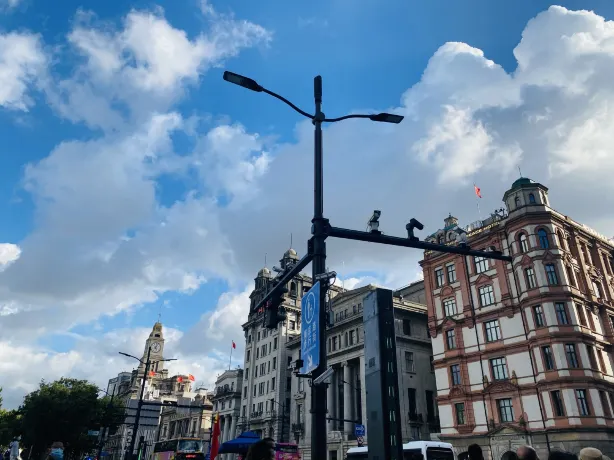
My second visit to West Lake was great; the boat tour was excellent. The dock was easy to find, the staff were very friendly, provided clear explanations, and helped with any issues. There were also sightseeing buses, which were nice but a bit pricey. Taking the boat tour and then walking around was both perfectly fine.

West Lake
user-avatar
小小导游爱旅游11 December 2024
4.0
Anqing Museum, a comprehensive museum integrating collection, research and exhibition, is a great place to learn about Anqing's history and culture. The museum has a rich collection of everything from ancient cultural relics to modern and contemporary artworks. Each exhibit carries a piece of history and tells a story, allowing people to gain knowledge and feel the charm of culture while appreciating it.

Anqing Museum

user-avatar
舒伊尔服斯机25 June 2023
5.0
After the 2023 Dragon Boat Festival holiday, I drove back to Shanghai. I arrived in Chizhou at 8 pm and stayed overnight. The next morning, I went to the nearby Qishan Pingtian Lake Scenic Area. I didn't expect it to be an unexpected surprise trip. There were not many tourists and the experience was very good. The scenic area is free and you can drive in. There are some free parking lots in the scenic area. The scenery of lakes and mountains is no less than that of West Lake.

The Qishan Pingtian Lake Scenic Area

user-avatar
206***307 November 2026
5.0
With the convenience of the ticketing app, purchasing tickets is a breeze. Jiuhua Mountain is a place of outstanding people and abundant blessings, with numerous bodhisattvas; a sincere wish will surely be granted. The air is fresh, making it an excellent place for exercise.

Jiuhua Mountain

user-avatar
sky_rainy9 November 2026
4.0
This trip to Huangshan with my mother was truly admirable. Despite her advanced age, she persevered and climbed to the Guest-Greeting Pine, enduring the treacherous terrain. The foggy weather that day obstructed visibility, preventing us from seeing the full panorama of the peaks, which was a slight disappointment. However, the joy of hiking together as mother and son transcended the scenery itself. Overall, it was an unforgettable experience. I recommend choosing a clear day to summit and see the entire panorama, and I highly recommend this magnificent trip.

Mount Huangshan Scenic Area

user-avatar
M37***459 November 2026
4.0
Many people come to Wangxian Valley just to catch a glimpse of the lights on the cliff and leave. The right way to experience Wangxian Valley is to slow down and immerse yourself in the autumn scenery, folk customs, and beautiful mountain accommodations.

Wangxian Valley

Trip Moments in Zongyang

Popular cities near Zongyang

Frequently asked questions

How can I contact Trip.com customer support?

Get help anytime, anywhere within 30 secondsContact customer support

Change and cancellation policies vary by attractions and tours. Please check the product details page for more information.

Ticket prices may vary between weekdays and weekends, as well as during peak and off-peak seasons. When booking with Trip.com, you can also use Trip Coins to get extra savings. For more tips on booking discounted tickets, please visit Trip.com for the latest information.