Things to do in Yushu Prefecture
Explore top experiences
Top 10 attractions in Yushu Prefecture

Kunlun Mountain Pass
The Kunlun Pass is the only way for Qinghai and Gansu provinces to Tibet. The Kunlun Mountains are 2,500 kilometers long from east to west, with an average altitude of 5,000 meters, and stand to the south of Golmud City. The Kunlun Mountains are full of ravines and contain endless magnificence, mystery and richness. The western section of the Karakoram Mountains is the natural boundary between the Tarim Basin and the northern Tibetan Plateau. The eastern Kunlun Mountains are composed of three major mountain ranges, the northern branch of the Altun Mountains-Qilian Mountains, the middle branch of the Kunlun Mountains, and the southern branch of the Tanggula Mountains. Standing at the Kunlun Pass, you can see the East and West Kunlun Mountains. Looking east, in the silent snowy wilderness, the Yuxu Peak stands alone and majestically, overwhelming the mountains, creating a unique natural landscape in the world of ice and snow. The Kunlun Pass is a permafrost desert landform. The geology is composed of complex metamorphic rocks that were strongly eroded in ancient times, with hills and low mountains and ridges composed of Tertiary sediments. Plums, tiger claw ear grass, and other plateau permafrost desert wild plants grow in the valleys on the hillsides. On the south side of the Kunlun Pass Monument, there are the Kunlun Pass Monument and the Jiesang Suonandajie Monument to commemorate this outstanding Tibetan son who sacrificed his life to protect the wildlife in Hoh Xil.Qumarleb County · >100km from downtown

Sanjiangyuan National Nature Reserve
Sanjiangyuan National Nature Reserveis located in the southern part of Qinghai Province, bordering Sichuan Province to the east and Golmud City and Dulan County of Qinghai Province to the north. It covers a total area of over 316,000 km2. Sanjiangyuan National Nature Reserve is the source of the Yangtze River, Yellow River, and Lancang River. The reserve has four notable characteristics: First, it is one of the largest nature reserves in China, with an area equivalent to twice the size of Shandong Province. Second, it is a high-altitude wetland in China, with an average elevation of around 4,000 m. According to preliminary calculations by scientists, 25% of the Yangtze River's total water volume, 49% of the Yellow River's total water volume, and 15% of the Lancang River's total water volume originate from this region. Third, it is a region with concentrated biodiversity in high-altitude areas of the world, with a wide variety of wildlife. Fourth, the ecosystem of the Three Rivers basin is highly sensitive. Sanjiangyuan National Nature Reservealso includesGyaring Lake and Ngoring Lake, which are known as the "sister lakes at the source of the Yellow River," and is therefore hailed as the "Water Tower of China."Chindu · 42.3km from downtown

Sonam Dargye Protection Station
The Suonandajie Protection Station in the Hoh Xil Nature Reserve is 4,479 meters above sea level. It is one of the five protection stations that was built earlier and has more facilities. Hoh Xil Mongolian means "blue mountain ridge", known as "beautiful girl", and Tibetan language calls the area "Aqinggongjia". It is about 280 kilometers wide from north to south, 200-400 kilometers long from east to west, and covers an area of 45,000 square kilometers. The average elevation of the entire reserve is above 4,600 meters, with an elevation of 6,860 meters. The vast area is mainly composed of small and medium undulating mountains and high-altitude hills, terraces and plains, with a low temperature of minus 46°C.Qumarleb County · >100km from downtown

Jiegu Temple
Jiegu Temple is called "Jiegu Dunzhu 椤" in Tibetan, which means "Jiegu Yichengzhou". Jiegu Temple is famous in Tibetan areas of my country for its magnificent architecture, numerous monks, rich cultural relics, and many eminent monks. The entire monastery is built on the mountain, and it looks like a multi-storey pavilion from a distance. The main building "Duwen Sangzhou Gyatso" scripture hall is designed by the Sabian Temple Da Khenpo Bad Qiujun and the living Buddha I of Gana, a number of Songque Pawen designs. , With the support of Dege Dzogchen Monastery, Zhawu Maigen Living Buddha presided over the construction, which can accommodate 1000 Zhawa chanting. In addition, the Lecture Hall, Jokhang Hall, Maitreya Hall, Jiana and Wenbao Living Buddha Institute are all large in scale and have their own characteristics.Yushu City · 2km from downtown

Sanjiangyuan National Park
Sanjiangyuan National Park is the headwaters of three major rivers: the Yangtze, the Yellow River, and the Lancang River. It is a typical representative of alpine ecosystems, known as an alpine biological germplasm resource bank. Across this vast land, glaciers, snow-capped mountains, alpine grasslands, and wetlands and lakes complement each other. It is home to many rare wild animals, where protected species such as Tibetan antelopes, snow leopards, wild yaks, and black-necked cranes thrive. In recent years, with intensified ecological protection efforts, the local environment has transformed, restoring the thousand-lake landscape where lakes are scattered like stars, and providing a stable supply of high-quality fresh water to downstream areas annually. By implementing integrated protection and systematic management of mountains, rivers, forests, farmlands, lakes, grasslands, deserts, and glaciers, a win-win situation for ecological protection and livelihood improvement has been achieved. This is not only a vivid practice of ecological civilization construction but also a significant achievement in safeguarding the source of life and building a solid ecological barrier.Zadoi · 23.9km from downtown

Qinghai-Tibet Plateau
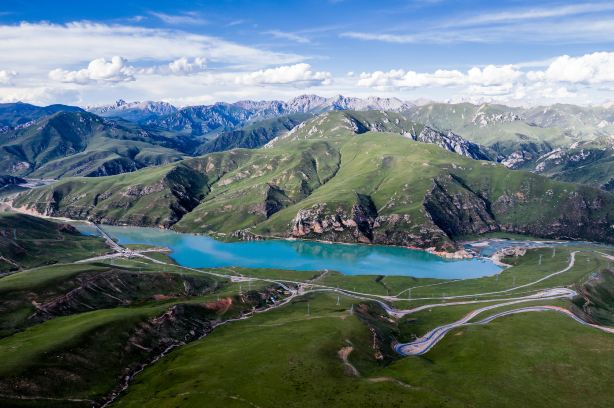
Across the vast interior of Asia lies a pure land known as the "Roof of the World"—the Qinghai-Tibet Plateau. With its high average altitude, majestic and rugged natural landscapes, and mysterious, profound cultural heritage, it has become a dream destination for countless travelers. Its beauty lies in how nature has generously spilled its palette, creating breathtaking visual wonders. It is the cradle of rivers, where snow-capped mountains, glaciers, and wetlands intertwine to nurture surging waters. Explore this land, where wild yaks and Tibetan antelopes roam freely across the vast Gobi, telling tales of the miracles of the wilderness, while lakes reflecting the blue sky and white clouds weave together a feast of color. Beyond its natural scenery, this is a cultural treasure trove that carries the weight of faith and the memories of time. Once a vital passage on the ancient Silk Road and theTang-Tibet Ancient Path, it has left behind countless precious historical imprints.Zhidoi County · >100km from downtown

Gyanak Mani in Xinzhai
新寨嘉那嘛呢石经城 was built in 1715. It was founded by the first Gyanak Songchö Palden of Jiegu Monastery, which is why it is also known as the "Gyanak Mani Pile."Mani pilesare called "Doboong" in Tibetan, meaning "100,000 scripture stones." To the south isXinzhai Monastery, and the other sides are walled with Mani stones, with prayer flags hanging high on the walls. Over more than 300 years of accumulation, it is said that there were once 2.5 billion Mani stones of various kinds. These scripture stones vary in size and shape, with some as large as a tabletop and others as small as an egg. They are all engraved with Buddhist images, most commonly the Tibetan six-syllable mantra. Especially precious are the tens of thousands of exquisite Mani stones engraved with laws, calendars, art treatises, and various Buddhist images. Some have entire sets of Buddhist scriptures carved onto many stones, even including the back and front covers, forming sets of "scripture books." To the east of theMani pileare eight white pagodas and a huge prayer wheel. The other side is almost entirely covered with Mani stones carved with Buddhist images, featuring exquisite craftsmanship and harmonious color combinations. Many stone carvers live in Xinzhai. At the foot of this Mani city, they carve devoutly to accumulate merit for themselves and pray for all sentient beings, accompanied by the clinking sound of stone carving and the six-syllable mantra chanted from their mouths.Yushu City · 5.4km from downtown

Ga'er Temple
Ga'er Temple is located in the ecological corridor transitioning from the Qinghai-Tibet Plateau to the Hengduan Mountains. It features a warm and humid climate and possesses canyon forest landscapes rarely seen in the Three-River Source region. It concentrates diverse landscapes such as alpine meadows, primeval forests, plateau lakes, rushing rivers, ancient temples, cliff caves with pagodas, ancient villages, and a natural breeding area for macaques. In the valley, ancient trees tower into the sky, green pines and cypresses cover the cliffs, and the stream at the bottom of the valley winds like a silver ribbon, connecting multiple mountain lakes. Tibetan-style dwellings on the mountainside interweave with grasslands and wheat fields, forming a rich, layered natural landscape. Ga'er Temple, situated on the cliff, is the cultural core of the canyon. The temple is at an altitude of over 3,700m and is divided into the Upper Temple and the Lower Temple. It houses a prayer wheel said to have been left by Princess Wencheng when she entered Tibet, which has been turning for a thousand years. This hidden gem integrates geological wonders, primitive ecology, and a thousand years of culture, making it an ideal place for travelers to experience the canyon scenery of the Qinghai-Tibet Plateau.Nangqian · 41.7km from downtown

Yuzhu Peak
Yuzhu Peak is 6178 meters above sea level and is the highest peak in the Kunlun Mountains. There are many peaks of about 5,000 meters on both sides, and modern glaciers are developed on the north and south slopes. The terrain is characterized by gentle south slopes and steep north slopes. The mountain-shaped landform of Yuzhu Peak is an entry-level route for snow mountain climbing. Its southern slope route is clear and clear, and the climbing technical requirements are relatively low, but the height of the base camp is relatively high, which is 4,800 meters above sea level. At the same time, the southern slope of Yuzhu Peak has been weathered into a steamed bread-shaped peak, with a gentle slope and no avalanche problem. The north slope is relatively complex, with various terrains such as ice cracks, ice tower forests, ice steep slopes, and blade-shaped ridges, which are especially suitable for mountaineering training activities of large troops.Qumarleb County · >100km from downtown

Princess Wencheng Temple
Princess Wencheng Temple, located in Bainagou, south of Jiegu Town, is more than 3,700 meters above sea level, with an area of more than 80 square meters and a height of 13 meters. It is built on a rock cliff. The Buddhist hall is exquisite, quiet and elegant. The main Buddha statue enshrined in the Buddhist hall is called "Jue Nang Ba Nuo Ze" in Tibetan. According to legend, this Buddha statue has the same blessing and virtue as the Sakyamuni statue enshrined in the Jokhang Temple. It has a history of more than 1,300 years. The main Buddha, located in the middle and about 8 meters high, is dignified, dignified, demure and kind, and sits on the double lion pedestal. The other eight Bodhisattvas have both the early style of Tubo and the artistic characteristics of the Central Plains of the early Tang Dynasty. On the rock wall near the Buddhist hall, there are neatly carved Buddhist scriptures in both Tibetan and Chinese languages, "The King Sutra of Samantabhadra Bodhisattva" and "The Heart Sutra of Prajna Paramita", as well as many lines of Sanskrit and Chinese, Buddhist pagodas, and six characters. Truth etc. Under the cliff 20 meters to the right of the Buddhist hall, there is a clear mirror-like spring called Princess Spring. According to legend, Princess Wencheng used to wash up by the spring during her stay here. This Buddhist hall is a relatively magnificent and precious historical and cultural relic left by Princess Wencheng when she entered Tibet in the 15th year of Tang Zhenguan (AD 641). Statues were erected on the stone walls to show their nostalgia, so a temple was built. This temple has become a symbol of unity between Tibetans and Han, and a Buddhist hall for believers to worship. The incense is full of incense and it lasts for a long time. The local Tibetan people regard it as a "Blessed Land" on the Yushu Plateau.Yushu City · 12.5km from downtown
Experiences you can't miss in Yushu Prefecture
Featured Travel photography in Yushu Prefecture
View all Travel photography
FromTWD 5,416

FromTWD 542

5.0/5
· 2 reviewsInstant confirmation
Book now for today
FromTWD 542

5.0/5
· 1 reviewInstant confirmation
Book now for today
FromTWD 542

FromTWD 1,625


Featured SIM card in Yushu Prefecture
View all SIM card
4.6/5
· 70.7k reviews· 2.1mil bookedFree cancellation
Book now for today
Fast-selling Wi-Fi & SIM cards
50% off
Limited-time sale
FromTWD 3TWD 6

4.5/5
· 6.7k reviews· 197k bookedFree cancellation
Book now for today
10.701k bookings in 7 days
50% off
Limited-time sale
FromTWD 3TWD 6

4.6/5
· 23.8k reviews· 666.2k bookedFree cancellation
Book now for today
91.2% of travelers recommend
50% off
Limited-time sale
FromTWD 3TWD 6

4.5/5
· 10k reviews· 245.5k bookedFree cancellation
Book now for today
Similar travellers pick
50% off
Limited-time sale
FromTWD 3TWD 6

4.7/5
· 5.5k reviews· 140.7k bookedFree cancellation
Book now for today
92.5% of travelers recommend
50% off
Limited-time sale
FromTWD 3TWD 6

4.6/5
· 2.3k reviews· 59.2k bookedFree cancellation
Book now for today
90.8% of travelers recommend
50% off
Limited-time sale
FromTWD 3TWD 6

4.6/5
· 9.2k reviews· 243.7k bookedFree cancellation
Book now for today
21 consecutive positive reviews
50% off
Limited-time sale
FromTWD 3TWD 6

4.6/5
· 32.2k reviews· 950.8k bookedFree cancellation
Book now for today
Fast-selling Wi-Fi & SIM cards
50% off
Limited-time sale
FromTWD 3TWD 6
Free things to do in Yushu Prefecture
Kunlun Mountain Pass
Qumarleb County · >100km from downtownSanjiangyuan National Nature Reserve
Chindu · 42.3km from downtownSonam Dargye Protection Station
Qumarleb County · >100km from downtownJiegu Temple
Yushu City · 2km from downtownGyanak Mani in Xinzhai
Yushu City · 5.4km from downtownGa'er Temple
Nangqian · 41.7km from downtownPrincess Wencheng Temple
Yushu City · 12.5km from downtown
Tongtian River
Chindu · 26.5km from downtown
Hoh Xil Tibetan Antelope Viewing Platform
Zhidoi County · >100km from downtown
Hoh Xil Budongquan Spring
Zhidoi County · >100km from downtown
What travellers say about Yushu Prefecture

M29***5112 June 2025
5.0
Kunlun Mountain has a prominent position as the "ancestor of all mountains" in the cultural history of the Chinese nation. The ancients called Kunlun Mountain the "ancestor of dragon veins" in China. Chen Yi's poem "Ode to Kunlun Mountain" says: "Kunlun's courage is so great that it is not famous for its hills and valleys." Kunlun Mountain is like an old man who has experienced many vicissitudes of life, bathing in the wind and wind all his life, and silently reading the spring and autumn. Summer vacation is coming soon. Friends who like self-driving tours can start from Xining along the "Gansu-Qinghai Grand Loop", along National Highway 109 or Beijing-Tibet Expressway, and rest for one night after arriving in Golmud, and set off the next day. Along the way, there are "Nachitai Hot Spring", Taoist Palace "Wuji Dragon and Phoenix Palace", "Khekexili" and other attractions.
Kunlun Mountain Pass

非凡轶生4 August 2023
5.0
The Sanjiangyuan National Nature Reserve is located in the heart of the Qinghai-Tibet Plateau and southern Qinghai Province. As of February 2020, it has a total area of 123,100 square kilometers. It has jurisdiction over 12 townships and 53 administrative villages. It is the source of the Yangtze River, the Yellow River, and the Lancang River. It is known as the Chinese Water Tower and the Asian Water Tower. [1] It is the largest nature reserve in China; the highest natural wetland in China; and the nature reserve with the most concentrated biodiversity in the world's high-altitude areas.
Sanjiangyuan National Nature Reserve

M28***8618 December 2024
5.0
It is a very worthwhile attraction to visit. The snow-covered nature reserve has Tibetan antelopes, Tibetan wild donkeys, eagles, and if you are lucky, you can also see wild yaks and wild wolves. Sanjiangyuan International Park and the Sonam Darje Conservation Station are built to commemorate Sonam Darje's efforts to protect the Tibetan antelope, which makes people stand in awe.
Sonam Dargye Protection Station

M52***8317 January 2025
5.0
Jiegu Temple is located on Jiegu Mountain in Jiegu Town, Yushu, at an altitude of more than 3,700 meters. Jiegu Temple has a long history and profound origins. It is the largest Tibetan Buddhist temple in Yushu. The main buildings of Jiegu Temple are the cathedral, the Buddhist hall, the pagoda, etc. Standing on the top of Jiegu Temple and looking far into the distance, the green mountains are surrounded by clouds and mist, and the winding water of Batang River is like a ribbon, passing through Jiegu Town, connecting King Gesar Square, Jiegu Temple Town, and Yushu State Museum.
Jiegu Temple

GY悠然游24 May 2025
5.0
五月初夏,青藏高原景色怡人,波浪起伏的山峰白雪皑皑,星罗棋布的湖泊碧水如镜,黄色茫茫的草地一眼望不到边。被称为世界屋脊与亚洲水塔的青藏高原,全世界海拔最高,面积最大,气候独特,辐射墙,日照多,气温低,多夜雨,日夜温差大,冬季风大干燥,夏季温凉多雨,推荐5-10月去旅行较好。
Qinghai-Tibet Plateau

CD云上12 April 2021
4.0
It is said that there are 3 billion Mani stones in Xinzhai, and one circle is 3 kilometers. The city of Janamani is more than 850 kilometers away from Xining, with an altitude of 4,500 meters. The huge pile of Mani stones, a large prayer hall, a Buddhist hall, 10 large prayer wheels, more than 300 small prayer wheels, and more than a dozen pagodas together constitute this pilgrimage site. The number of Janamani stone carvings, the length of time they took to carve, and the scale of the carvings are rare in the world. Legend has it that more than 300 years ago, the famous first Janam Living Buddha picked up a natural Mani stone here, and immediately realized his mission: to benefit sentient beings and prosper Buddhism here. So he continued to carve Mani stones here. Since then, on the side of the majestic and beautiful mountain slope at the edge of Jiegu Town, a huge city built of stones engraved with Mani scriptures was finally born, which was the result of the hard work of the first Jiana Living Buddha and countless Buddhist believers. It was raised inch by inch and expanded foot by foot almost every day. By 1955, the number of Mani stones in Jiana Mani City reached 2.5 billion.
Gyanak Mani in Xinzhai

不可触碰撞的鱼25 September 2020
5.0
Gar Monastery is located in Nangqian County, Yushu Tibetan Autonomous Prefecture, Qinghai Province. It is located on a mountain with an altitude of more than 3,700 meters and is divided into the upper and lower temples. The north side of the mountain is full of strange peaks and cliffs, and the wind is cold, but the south side is slightly sloping and warm and sunny. The hundreds of buildings of Gar Monastery are irregularly distributed on this large hillside on the south side of the mountain, from bottom to top, until the top of the mountain. Gar Monastery has a history of nearly 1,000 years. It is said that more than 700 years ago, Guru Padmasambhava practiced in this town. The treasure of the town is a pair of peculiar prayer wheels, which are said to be the dowry brought by Princess Wencheng when she married Songtsen Gampo in Tibet. During this long time, this pair of prayer wheels placed in the upper temple of Gar Monastery were turned day and night by two lamas on duty. The constantly turning prayer wheels have accompanied the Tibetans deep in the plateau through thousands of years of wind and rain. The peaks around the Gar Monastery are of various shapes, some like balls, some like pillars, some like doors, some like walls, and some rocks like various animals. There are fewer trees on the top of the mountain, and occasionally encountering a few trees is enough to make people marvel. These weathered pines and cypresses, each with a unique shape, beautiful posture, vigorous branches and leaves, and strong character, survive tenaciously in the narrow cracks of the strange rocks, fully demonstrating the beauty of life in nature. There are also colorful prayer flags flying in the wind, draped all over the mountain, entangled everywhere, one after another, until the top of the mountain. Looking around from the upper temple of Gar Monastery, you can see that the mountains have become lower, the trees are far away, the road is like a snake dance, the house is like a box, the water is like a mirror, and the clouds are like flowing smoke. When you are there, you will feel a hundred feelings. The geographical location of Gar Monastery is relatively remote, with only about 10 households around it. Except for monks, few people come here. Gar Monastery currently has three living Buddhas. As the monks in the monastery have always adhered to the Buddhist idea of great compassion and equality of life, they have lived in harmony with the animals in the mountains for many years and never killed them. There are many higher animals such as macaques, stone sheep, roe deer, yellow sheep, sika deer, elk, foxes, wolves, snow leopards and nearly 100 bird species such as snow chickens, pheasants, golden pheasants, eagles, vultures, and owls living here. On the road of about 76 kilometers from Nangqian to Gar Monastery, there are alpine grasslands, ancient salt ponds, virgin forests, and forest streams. The most rare is that this section has a canyon forest landscape rarely seen on the Qinghai-Tibet Plateau. Starting from Nangqian, drive along National Highway 214 to 1024 kilometers and turn south to enter the gravel road to Baizha Forest Farm. Continue for about 25 kilometers, and then go west to enter the Barong Valley (also known as Gar Monastery Canyon). Drive about 15 kilometers to the end of the canyon. The road to Gar Monastery is rugged and difficult to travel, and it is even more muddy and difficult to travel in the frequent rainy days in summer, so it is best to drive an off-road vehicle. If you want to fully appreciate the cultural customs of Gar Monastery, appreciate the nearby natural scenery, and have close contact with wild animals, you need to stay in the local area. You can stay in Bamai Township not far from the entrance to Baronggou, or you can stay in the unoccupied houses of the monastery.
Ga'er Temple

果汁分你一半✔12 August 2021
5.0
Yuzhu Peak, located 10 kilometers east of Kunlun Pass, 160 kilometers south of Golmud, Qinghai, is the highest peak in the eastern section of Kunlun Mountain. It is gentle in the south and steep in the north. The end of the glacier on the south slope is about 5,100 meters above sea level; the glacier on the north slope extends to 4,400 meters. The top of the peak is covered with ice and snow all year round, with no exposed rocks. The ice and snow slope is relatively gentle. The glaciers below the grain snow basin are retreating continental glaciers due to the high temperature every year, rapid melting, little precipitation, and greater melting than accumulation. The Yuzhu Peak area has a continental climate with an annual rainfall of only 200 mm. However, in high-altitude areas above 5,000 meters above sea level, affected by high-altitude convective air currents, the rainfall is hundreds of millimeters higher than that in the front of the mountain. The average annual temperature is minus 5 degrees Celsius, and the extreme minimum temperature can reach minus 30 degrees Celsius. The climbing season is from May to October. The weather is colder and the oxygen content is lower in May. July, August, September and October are more suitable for climbing.
Yuzhu Peak

亲亲股太乐18 January 2023
5.0
Princess Wencheng and Songgan Zangbu are a famous period in Chinese history, and there is their sacred castle in the remote Tibetan area. People who travel here like to come here to take a look. Feel this beautiful moment.
Princess Wencheng Temple


