Things to do in Yanjin
Explore top experiences
Top 10 attractions in Yanjin

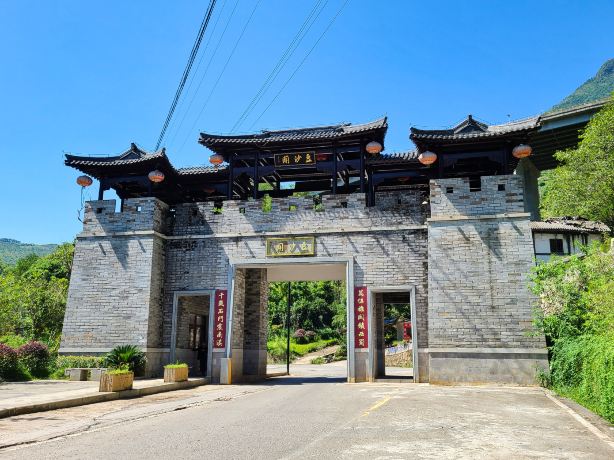
Dousha Gate Ancient Town
Doushaguan Scenic Area is located 22 kilometers southwest of Yanjin County. It consists of 60 scenic spots in four areas, including Doushaguan, Sangushui, Lianhuadong and Dalishan, covering an area of about 70 square kilometers. The landscape includes the majestic and dangerous ancient post road Doushaguan, the gorgeous scenery of Laoli Mountain, the round hills and peaks with stars holding the moon, the dreamy and blurred natural maze, the precious flowers all over the mountains, the towering ancient trees, the picturesque Sangushui waterfall, and the rich and ancient cultural relics. It is a tourist attraction in northeastern Yunnan on the way to Sichuan and the northwest. Doushaguan was formerly known as Shimenguan. It was the first dangerous pass for the ancients to enter Yunnan from Shu. The turbulent Guanhe River split the steep stone mountain into two like a sharp sword, forming a huge stone gate, locking the ancient Sichuan-Yunnan road. The rock wall on the west bank is engraved with large characters such as "Southern Yunnan Hub" and "Its Danger is Like This", and it is known as the "First Pass in Southern Yunnan". Doushaguan has the famous "Five-foot Road" ruins. The Five-foot Road was first built in the Qin Dynasty. It is now about 350 meters long and five feet wide. Each stone step is different in width and height. There are dozens of horse hoof prints on the road. It is an important passage from Sichuan to Yunnan, to Myanmar and India, the "Shu-Shendu Road" (ancient Southwest Silk Road). Doushaguan has a Tang stele pavilion, and on the rock wall inside the pavilion is the famous Tang Yuanzi Moyan. Yuan Zi was the imperial envoy Zhongcheng of the Tang Dynasty and a famous calligrapher. This Moyan was carved by Yuan Zi when he passed by Shimenguan when he was on a diplomatic mission to Yunnan in 794 AD (the 10th year of Zhenyuan in the Tang Dynasty). It has now been listed as a national key cultural relic. On the Dongyan rock wall facing the Moyan, you can see the mysterious ancient "Bai people hanging coffin" burial. There are 5 ancient Bai people hanging coffins in existence, which are of great value for studying the rise and fall of the Bai people and are precious cultural relics.Yanjin · 13.8km from downtown

Wuchidao Scenic Area
The Wuchi Road is an ancient official road connecting Yunnan and the mainland. Although this road is narrow, it has the same significance as the 50-step wide "Chiaodao" built by Qin Shihuang in other parts of the country. It is an important trade route between Yunnan and Shu.Yanjin · 14.1km from downtown

Bo People Hanging Coffins
Hanging coffin tombs are wooden coffins suspended on wooden piles inserted into cliffs, or placed in cliff holes or in cliff crevices. The selected cliffs are often steep and dangerous, and ordinary people cannot climb. Tourists can fully understand this special way of burial.Yanjin · 14.2km from downtown


Huangguoshu Scenic Area
The Huangguoshu Scenic Area is located in Anshun, Guizhou, centered around the Huangguoshu Waterfall. Surrounded by deep gorges, dense vegetation, and dotted with limestone caves and stone forests, it is a typical karst landscape area. The waterfall's name originates from the locally abundant "Huangguoshu" (Ficus virens). Ming Dynasty traveler Xu Xiake visited and documented this site, contributing to its fame. The scenic area primarily consists of three main sections: the Great Waterfall, Tianxing Bridge, and Doupotang. Most travelers follow the sequence of Doupotang, Tianxing Bridge, and finally the Great Waterfall, saving the most spectacular view for last. The grand waterfall has a drop of nearly 80 m and a width of over 100 m. The Baishui River plunges from the cliff top into Rhinoceros Pool, creating a vast mist. Multiple viewing platforms around it allow visitors to experience its grandeur, wonder, steepness, and beauty from different angles—above, below, front, back, left, and right. A particularly unique experience lies behind the waterfall: a 100 m long Water Curtain Cave runs horizontally through its midsection, featuring cave windows and halls. Reaching through a window, one can touch the cascading water. The cave served as the filming location for the Water Curtain Cave in the 1986 TV series Journey to the West. Due to the heavy humidity inside, bringing a raincoat in advance is recommended. Tianxing Bridge is renowned for its harmonious blend of rocks, water, trees, and caves—where rocks rise from the water, caves hide within rocks, and trees stand beside caves. The stepping stones along the path are engraved with dates, allowing travelers to find their own "birthday stone." The attraction is divided into upper and lower sections. Many travelers turn back after completing the upper section, missing the Silver Chain Waterfall in the lower part—where water cascades like silver chains into a funnel-shaped pool, the highlight of Tianxing Bridge. The Doupotang waterfall is located approx. 1 km upstream from the grand waterfall. With a width of over 100 m at its crest, the water spreads out smoothly like a beaded curtain. During the high-water season, its deep roar earns it the nickname "roaring waterfall." The scene of the four pilgrims leading their horse across the river in the 1986 TV series Journey to the West was filmed here. In summer and fall, the waterfalls are full and powerful, while in winter and spring, the flow becomes gentler, offering different viewing experiences. Nearby, visitors can also enjoy local snacks like sticky rice, love tofu, and Anshun spring rolls.China · Zhenning

Chengdu Du Fu Thatched Cottage Museum
Du Fu Thatched Cottage is the former Chengdu residence of the famous Tang Dynasty poet Du Fu. Du Fu lived here for nearly four years. During his stay, he created hundreds of poems. This place is thus regarded as the “holy land” of Chinese literature. Today's Du Fu Thatched Cottage has survived multiple dynasties and been restored many times. The most important architecture of the place is his former residence, the thatched house. This former residence was built with the architectural characteristics of the western Sichuan civilian residences.China · Chengdu

Mount Emei
Mount Emei is one of the four famous mountains of Chinese Buddhism, and it is also the temple of Samantabhadra Bodhisattva. There are numerous Buddhist monasteries in the mountains that combine to give this place a holy and serene atmosphere. The scenery in the mountains are beautiful. The four seasons each have their own characteristics. If you are lucky, you can see the sunrise and sea of clouds. Do note that the monkeys in Mount Emei are notoriously naughty. They are not afraid of people, and even take the initiative to ask tourists for food.China · Emeishan City

Chengdu Wuhou Shrine Museum
The Chengdu Wuhou Shrine Museum is a temple dedicated to honoring Shu Han heroes such as Liu Bei and Zhuge Liang. Its origins date back to 221 AD during the first year of the Zhangwu era under Emperor Zhaolie of Shu Han, when Liu Bei's Hui Ling Mausoleum was constructed. The Han Zhaolie Temple was also built during the same period. Approx. around 500 AD during the Northern and Southern Dynasties period, the Wuhou Shrine was relocated from Chengdu's "Shaocheng" to the vicinity of Hui Ling Mausoleum and Han Zhaolie Temple, maintaining this layout until the Ming Dynasty. In 1390 during the 23rd year of the Hongwu era, Zhu Chun, the Ming Prince of Shu, visited the Chengdu Wuhou Shrine Museum for worship. Citing that "monarch and subject should be united as one," he merged Hui Ling Mausoleum, Han Zhaolie Temple, and Wuhou Shrine into a single complex. As Zhuge Liang's influence among the common people surpassed that of Liu Bei, the site became colloquially known as "Wuhou Shrine." The cultural relics area of the Chengdu Wuhou Shrine Museum mainly consists of the Hui Ling Mausoleum, Han Zhaolie Temple, Wuhou Shrine, and the Chengdu Wuhou Shrine Museum - Sanyi Temple, with the main structure being the Wuhou Shrine. The shrine is divided into the main gate, second gate, Liu Bei Hall, passage hall, Chengdu Wuhou Shrine Museum - Zhuge Liang Hall, and Chengdu Wuhou Shrine Museum - Sanyi Temple, all aligned along a central axis from south to north. The shrine houses 50 statues of Shu Han heroes including Liu Bei and Zhuge Liang, along with numerous stone inscriptions and plaques related to Zhuge Liang and Three Kingdoms culture. The famous "red wall and bamboo shadows" of Chengdu are located within the attraction. Don't forget to take photos. The garden area of Chengdu Wuhou Shrine Museum, located on the west side of the shrine, features architectural structures such as the stone archway gate, three-arched gate, square pavilion, Jiexin Hall, and burial chamber. It is the only northern-style mausoleum complex in southwest China. The shrine is adjacent to Jinli Ancient Street (Jinli Folk Custom Area), making it convenient to visit both sites together.China · Chengdu

Hongya Cave
Hongyadong commercial street is located on Cangbai Road of Yuzhong District, Chongqing City. It is at the intersection where the Yangtze River and the Jialing River meet. Most of its buildings are “Diaojialou” style, which reflects traditional architectural features of Bayu. It is a great place to go if you want to check out the old streets of Chongqing, appreciate the two rivers, or try local cuisines. At the same time, it is home to a bustling night scene, making it a fascinating attraction for photographers.China · Chongqing
Leshan Giant Buddha
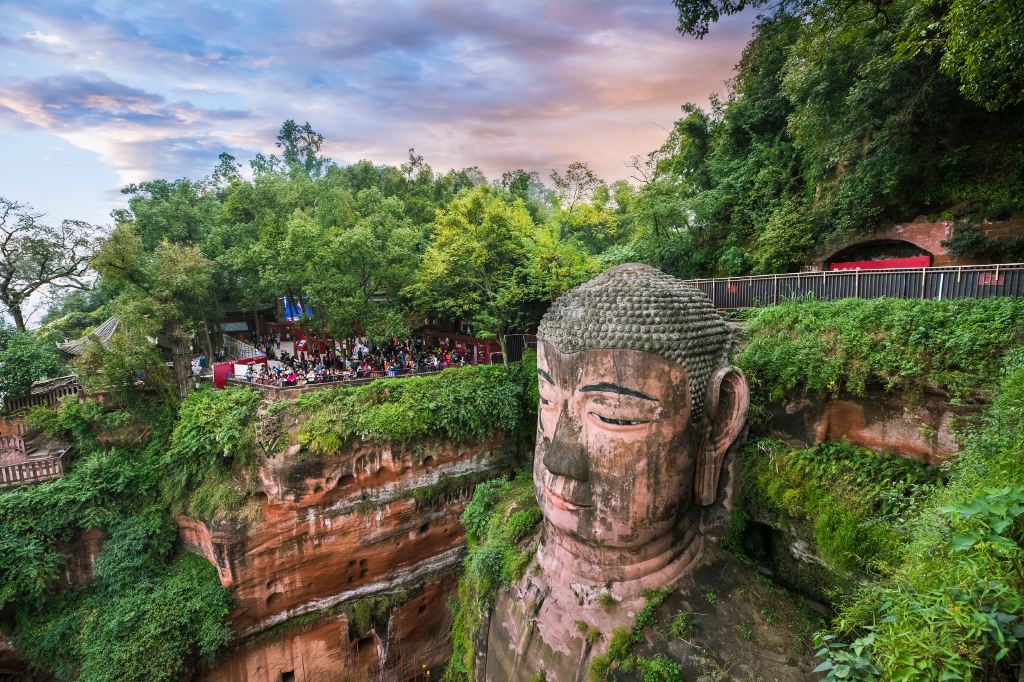
The Leshan Giant Buddha, also known as the Lingyun Giant Buddha, is situated on the cliff of Qiluan Peak on Lingyun Mountain at the confluence of the Min River, Qingyi River, and Dadu River in Leshan, Sichuan. It is a colossal seated stone statue of Maitreya carved during the Tang Dynasty, standing approx. 70 m tall, with a single instep spacious enough to accommodate over a hundred people. Legend has it that the turbulent waters at the confluence once frequently capsized passing boats. To calm the currents, the monk Haitong of Lingyun Temple initiated the carving of the Buddha. Over several generations, craftsmen continued the construction, which took approx. ninety years to complete. On the cliff to the right of the Buddha, an inscription from the Tang Dynasty titled "Jiazhou Lingyun Temple Great Maitreya Stone Statue" remains to this day, revealing its original name—the Great Maitreya Stone Statue of Jiazhou Lingyun Temple. The common route to visit the giant Buddha is to first arrive at Lingyun Temple beside the Buddha's head, then descend along the winding Jiuzhaigou plank road built against the cliff. View the Buddha's spiral hair buns and robe folds up close, and reach the platform at the Buddha's feet to look up at the full figure. Only then can one truly appreciate the grandeur of "a mountain being a Buddha, and a Buddha being a mountain." Lingyun Temple has continuous incense offerings, and many travelers also join their palms here to pray for blessings. For a different perspective, take a boat cruise or view from the riverside of Leshan ancient city: the continuous mountain outlines of Wuyou Mountain, Lingyun Mountain, and Guicheng Mountain resemble a giant reclining Buddha facing upward, with the grand Buddha seated precisely at its chest—creating the marvel of "Buddha within Buddha." The river view also captures the grand Buddha's full profile alongside the scenery of three rivers, making it especially effortless for travelers with limited stamina or those seeking panoramic shots.China · Leshan

Zhijin Cave Scenic Area
Zhijin Cave Scenic Area is a magnificent and uniquely shaped treasure trove of cave resources discovered in China. The cave is filled with various formations such as stalagmites, stone pillars, stone buds, and flagstones, creating a mesmerizing array of karst views. Since the entire attraction features a one-way walking route, visitors must complete the full journey upon entering. After exiting, they can take electric bikes back to the entrance. In the cave, you can admire various rock formations such as stalagmites, stone pillars, stone sprouts, and flagstones, creating diverse karst views. The cave passages crisscross in twists and turns, with stone peaks scattered throughout. The myriad of breathtaking scenes leaves visitors marveling at nature's craftsmanship.China · Zhijin
Experiences you can't miss in Yanjin
Featured Food & drink in Yanjin
View all Food & drink
FromTWD 703


3.0/5
· 1 reviewFree cancellation
FromTWD 703
Featured Day tours in Yanjin
View all Day tours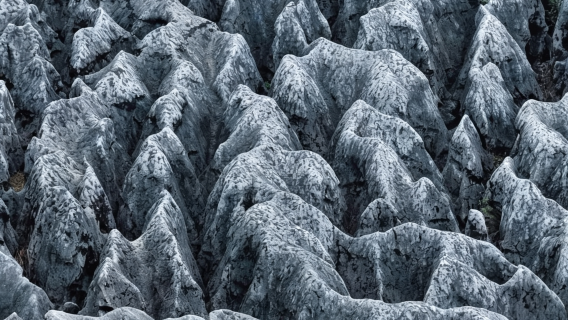
FromTWD 8,473



Free things to do in Yanjin
Dousha Gate Ancient Town
Yanjin · 13.8km from downtownWuchidao Scenic Area
Yanjin · 14.1km from downtownBo People Hanging Coffins
Yanjin · 14.2km from downtownHuangguoshu Scenic Area
China · ZhenningBook now for tomorrowChengdu Du Fu Thatched Cottage Museum
China · ChengduBook now for tomorrow, Cancel anytimeMount Emei
China · Emeishan CityBook now for tomorrow, Cancel anytimeChengdu Wuhou Shrine Museum
China · ChengduBook now for tomorrowHongya Cave
China · ChongqingLeshan Giant Buddha
China · LeshanBook now for tomorrowZhijin Cave Scenic Area
China · ZhijinBook now for tomorrow, Cancel anytime
What travellers say about Yanjin

M50***419 August 2026
4.0
The Dousha Pass Five-Foot Road Scenic Area wasn't as magnificent as I'd imagined, and the core area wasn't very large either; a round trip took less than an hour. However, the hanging coffins of the Bo people on the opposite cliff were quite amazing. Although Dousha Ancient Town isn't large, it has a long history, and various shops and restaurants line both sides of the street, making it quite lively.
Dousha Gate Ancient Town

小灰灰_1666 October 2021
5.0
In the third century BC, after the Qin State occupied Bashu, Li Bing, the governor of Qin and Shu, built the first inland access to Yunnan, the "Bai Dao", from Baidao (today's Yibin) through Shimen Pass to Qianqingchi (Zhaotong), by piling up firewood and burning stones. It is very meaningful and worth a visit!
Wuchidao Scenic Area

哈哈岛张易之5 May 2020
5.0
The Bai people's hanging coffins are located in the cracks of the cliffs on the opposite bank, 150 meters away from the Guanlou. There are 6 coffins left. From the telephoto lens, it can be seen that the hanging coffins are all carved out of whole wood and placed in the cracks of the rocks with wooden bars to avoid rain. Despite the two earthquakes in July 2006, the hanging coffins were not damaged. The hanging coffins are suspended in the cracks of the cliffs hundreds of meters above the water surface of Guanhe River. The coffin thieves are unable to climb up, and the placement of the hanging coffins is now a mystery.
Bo People Hanging Coffins

程程for18 October 2026
4.0
It feels like Huangguoshu Waterfall has boosted the entire city of Anshun. It's a huge tourist attraction, not just around the site, but also in the surrounding areas. There are three separate areas for transportation alone, and we even got our navigation wrong. Even with the VIP pass, we were still exhausted. I can't imagine what it would have been like without it. But finally, we saw Huangguoshu Waterfall – it was breathtaking and beautiful, definitely worth the ticket price. If you can't book the Water Curtain Cave, I suggest not coming at all.
Huangguoshu Scenic Area

Anonymous user19 October 2026
5.0
My visit to Du Fu Thatched Cottage in Chengdu was a wonderful experience. Located beside the Huanhua Stream, the cottage is surrounded by lush greenery, offering a tranquil and serene environment far removed from the hustle and bustle of the city. Thatched cottages, covered walkways, and ancient steles are scattered throughout, creating an elegant scene perfect for a leisurely stroll.
Walking and reading the poems and prose in the exhibition halls, I felt as if I could see Du Fu's life here. What moved me most was that even in poverty, the poet still had the world in his heart. Here, you can not only see the scenery but also experience a rich poetic culture.
The signage within the garden is clear, and there are abundant resources for explanation. The only drawback is the large number of tourists during holidays. Overall, this is a scenic spot that combines beautiful scenery with cultural heritage; visitors who love classical poetry should definitely come and experience the spirit of the poet saint.
Chengdu Du Fu Thatched Cottage Museum

Lawrence KSC17 October 2026
5.0
A must-visit sightseeing destination near Chengdu! The entire area has a beautifully clean and nice environment with breathtakingly beautiful scenery as you walk up to the summit. It is an incredibly nice place to take photos, making it the perfect spot for a holiday that leaves you with nothing but good memories.
Mount Emei
道非非16 October 2026
4.0
Overall, the explanation was good and very detailed, covering many historical anecdotes. Without the explanation, it would have been a rushed experience, and my impression of the Romance of the Three Kingdoms was far from reality 😅 I've really forgotten all my history. How can you come to Chengdu without visiting the Wuhou Shrine? And you definitely need to listen to a guided tour when you visit Wuhou Shrine. Because I was traveling with elderly people, I chose a private guided tour. What I didn't understand was that they never charged extra for the headsets, which was awkward and uncomfortable.
Chengdu Wuhou Shrine Museum
Anonymous user5 October 2026
5.0
The Two Rivers Ferry is absolutely fantastic! The 15 yuan ticket is incredibly cost-effective! Here's a great route for families with kids: After visiting Jiefangbei and Kuixinglou, see Hongyadong during the day. If you're traveling with a 6-year-old and don't want to brave the crowds at Hongyadong at night, the stilted buildings during the day are just as beautiful. Afterward, take the Two Rivers Ferry to Danzishi, disembark, and explore Danzishi Old Street, Nanbin Road, and Xiahaoli. Then, take the light rail/bus or taxi back. The whole route is smooth and relaxing. The boat ride is novel and fun, and the kids especially loved it, remaining enthusiastic about exploring the shopping streets afterwards. At the pier, there's a large bowl of freshly cut watermelon for 10 yuan – watch it being cut right in front of you! It's sweet and refreshing. I highly recommend this route for families!
Hongya Cave

Ras Yen18 October 2026
5.0
Honestly we were not amazed how big was the buddha statue carved on the cliff but our mind was carried away by the history of the entire area especially after visiting the museum, which located at the main entrance before entering the park. It's also highly recommended to purchase the sightseeing ride (RMB15 both ways) to save time and able to fully see the park in a full loop
Leshan Giant Buddha

M64***1212 October 2026
5.0
The Zhijin Cave Scenic Area in Guiyang, a UNESCO Global Geopark, boasts breathtaking karst cave wonders that leave visitors in awe. The 6.6-kilometer-long Zhijin Cave is a spectacular sight, with its myriad shapes and forms of stalactites and stalagmites. 👍
Zhijin Cave Scenic Area


