
Things to do in Travnik
Explore top experiences
Top 10 attractions in Travnik

Vlašić
Central Bosnia Canton · 8.9km from Travnik

Vodeni park Ribica
Central Bosnia Canton · 11.1km from Travnik


Old Bridge Mostar
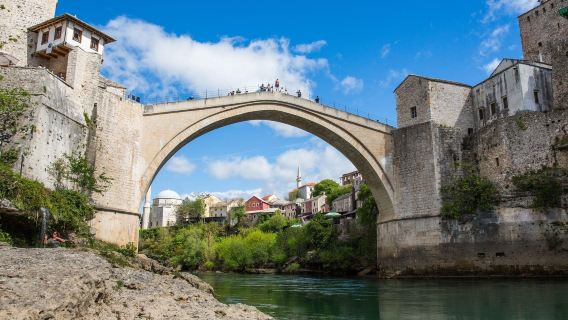
Old Bridge Mostar spans the Neretva River and is the symbol of the city of Mostar, as well as a representative work of Ottoman architectural art in the Balkan region. This single-arch stone bridge was built by order of Ottoman Sultan Suleiman the Magnificent, using locally sourced limestone. The stones were secured with iron clamps and molten lead. The arch span is about 27m, and the bridge deck is about 20m above the water. At each end of the bridge stands a guard tower—the Halebija Tower and the Tara Tower. The city's name, "Mostar," is derived from the bridge keepers who historically guarded the bridge. The old bridge was destroyed by artillery fire in 1993 during the Bosnian War. After the war, it was rebuilt strictly according to its original appearance with the support of international forces, using some of the original bridge stones salvaged from the riverbed, and reopened in 2004. In 2005, the old bridge and the Old Bridge Mostar area were inscribed on the UNESCO World Heritage List. The diving tradition on the old bridge dates back hundreds of years and was once a rite of passage for local young men. Since 1968, an official annual summer diving competition has been held, where local divers leap from the top of the bridge into the icy Neretva River, making it one of the most recognizable views in Mostar.Mostar · 99.1km from Travnik

Latin Bridge
Latin Bridge spans the Miljacka River and is one of the city's historic stone bridges. A bridge has stood on this site since the 16th century. The structure is built of stone with multiple arches and a simple design, representing one of Sarajevo's notable examples of Ottoman-era bridge architecture. Today, it remains an important historical landmark in Sarajevo and serves as a pedestrian crossing. The surrounding riverbanks, streets, and historic buildings together form the urban landscape of Sarajevo's old town. Nearby, a museum dedicated to the Sarajevo assassination and the history of the Austro-Hungarian period draws visitors interested in learning about this chapter of history.Stari Grad · 73.3km from Travnik

Sahat kula na Musali
Central Bosnia Canton · 683m from Travnik

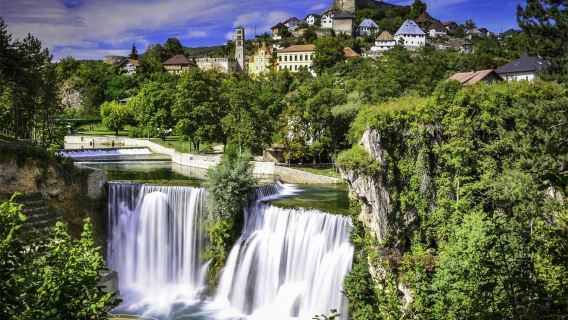
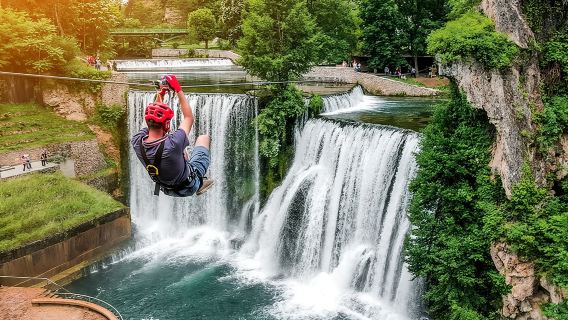
Pliva Waterfall
Pliva Waterfall has abundant water flow and is impressive, surrounded by dense forests, clear rivers, and rolling mountains. The scenery is beautiful, making it a great place to get close to nature.Jajce · 34km from Travnik

Vranduk Fortress
Zenica-Doboj Canton · 20.5km from Travnik

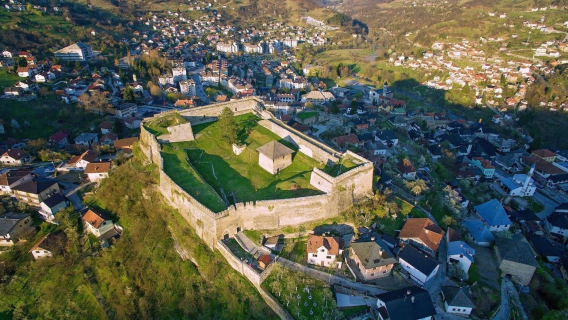
Yellow Fortress
Yellow Fortress is an important component of the city's Ottoman-era defensive system and one of the structures within the Vratnik historical defensive area. Built primarily of stone, it features thick defensive walls and cannon emplacements. Constructed along the mountain terrain, it once served the military function of guarding the city's eastern entrance and surrounding areas. The site preserves historical stone walls and an open platform, serving as both a tangible remnant for understanding the Ottoman-era military architecture of Sarajevo and a popular viewpoint frequently visited by locals and tourists. From here, you can overlook Sarajevo's old town, the dense red rooftops, and the surrounding mountains.Stari Grad · 73.6km from Travnik

Sarajevo City Hall
Sarajevo City Hall sits adjacent to the Miljacka River and is a public building with a distinct Neo-Moorish style. The exterior features a decorative facade of alternating yellow-brown and red, characterized by horseshoe arches, intricate geometric patterns, colorful decorations, and symmetrically arranged windows, creating a solemn yet magnificent appearance. Inside, a white marble staircase connects the floors, featuring rich details on the railings, capitals, and walls, with stained glass windows above. The walls and ceilings are hand-painted, incorporating design elements from the Islamic art of Northern Africa and the Iberian Peninsula. Its striking exterior, spacious atrium, and exquisite decorations make it a representative architectural landmark of Sarajevo.Stari Grad · 73.5km from Travnik

Neretva River
Neretva River originates in the Dinaric Mountains within Bosnia and Herzegovina, flows south through Bosnia and Herzegovina, then enters Croatia, and empties into the Adriatic Sea, with a total length of approximately 225 km. It is an important river in the Adriatic Sea basin and one of the representative rivers of the Dinaric Karst region. Its upper reaches are dominated by mountainous views, with the water flowing through narrow canyons, limestone valleys, and forest zones; the middle reaches pass through towns such as Konjic and Jablanica, with hillsides, villages, and reservoirs visible along the banks; when flowing through Mostar, the river passes through the city center, where its clear, blue-green water creates a scenic view against the stone banks and ancient bridges. After entering Croatia in its lower reaches, the river channel gradually widens, forming a vast delta near the river mouth, which is dotted with wetlands, reed beds, farmland, and waterways, and serves as an important habitat for various birds and aquatic life.Mostar · 96.7km from Travnik
Experiences you can't miss in Travnik
Featured Cultural experiences in Travnik
View all Cultural experiences
Free cancellation
Instant confirmation
Book now for today
FromAU$ 11.20
Free cancellation
Book now for today
20% off
Limited-time sale
FromAU$ 10.22AU$ 12.78
5.0/5
· 77 reviewsFree cancellation
Book now for today
77 consecutive positive reviews
FromAU$ 60.61
5% off
Limited-time sale
FromAU$ 74.44AU$ 78.36
5.0/5
· 51 reviewsFree cancellation
Book now for today
51 consecutive positive reviews
5% off
Limited-time sale
FromAU$ 53.17AU$ 55.97

Free cancellation
Book now for tomorrow
5% off
Limited-time sale
FromAU$ 45.58AU$ 47.98

Free cancellation
Book now for today
20% off
Limited-time sale
FromAU$ 10.22AU$ 12.78
Free cancellation
Instant confirmation
Book now for today
FromAU$ 11.20
Featured Food & drink in Travnik
View all Food & drink
FromAU$ 115.91

5.0/5
· 2 reviewsFree cancellation
Book now for tomorrow
5% off
Limited-time sale
FromAU$ 94.34AU$ 99.31
Free cancellation
Book now for tomorrow
5% off
Limited-time sale
FromAU$ 47.85AU$ 50.37

5.0/5
· 14 reviewsFree cancellation
Book now for tomorrow
5% off
Limited-time sale
FromAU$ 74.44AU$ 78.36
Featured Day tours in Travnik
View all Day tours
4.9/5
· 277 reviews· 30 bookedFree cancellation
Book now for tomorrow
99.3% of travelers recommend
FromAU$ 139.65
5.0/5
· 1 reviewBook now for tomorrow
FromAU$ 228.95
4.9/5
· 64 reviews· 43 bookedFree cancellation
Book now for tomorrow
96.9% of travelers recommend
FromAU$ 139.65
Book now for tomorrow
FromAU$ 209.87
Free cancellation
Book now for tomorrow
FromAU$ 1,217.86
Book now for tomorrow
FromAU$ 1,430.93
5.0/5
· 2 reviewsBook now for tomorrow
57 travellers saved
FromAU$ 214.64
Featured Outdoor experiences in Travnik
View all Outdoor experiences
FromAU$ 128.79
FromAU$ 174.72
Free cancellation
Book now for tomorrow
FromAU$ 1,130.08

FromAU$ 167.42
Free things to do in Travnik
Vlašić
Central Bosnia Canton · 8.9km from TravnikVodeni park Ribica
Central Bosnia Canton · 11.1km from TravnikOld Bridge Mostar
Mostar · 99.1km from TravnikLatin Bridge
Stari Grad · 73.3km from TravnikSahat kula na Musali
Central Bosnia Canton · 683m from TravnikPliva Waterfall
Jajce · 34km from TravnikVranduk Fortress
Zenica-Doboj Canton · 20.5km from TravnikYellow Fortress
Stari Grad · 73.6km from TravnikSarajevo City Hall
Stari Grad · 73.5km from TravnikNeretva River
Mostar · 96.7km from Travnik
What travellers say about Travnik

利和博10 August 2025
5.0
Stari Most (also known as the Old Bridge of Mostar) is a 16th-century single-arch stone bridge in Mostar, Bosnia and Herzegovina, spanning the Neretva River. After standing for over 400 years, the bridge was destroyed on November 9, 1993, during the Bosnian War. After reconstruction, it reopened on July 23, 2004. In 2005, the bridge and surrounding area were designated a UNESCO World Heritage Site.
A must-see in Bosnia and Herzegovina! Encounter Ottoman history under Mostar's Old Bridge. Recommended: A 16th-century Ottoman masterpiece! A leap of faith for bridge jumpers! 🌉
Transportation Tips
📍Address: Stari Most, Mostar 88000, Bosnia and Herzegovina
🚗Drive/Bus: 2 hours from Sarajevo, within walking distance of the Old Town.
3 Must-Dos
Watch the Old Bridge Jump: Traditional diving performances are held every day at noon! Locals jump into the Neretva River from the 24-meter-high bridge (tips allow for impromptu jumps).
📸Camera location: Rocky banks east of the bridge (morning with favorable light).
Visit the Old Bazaar: Ottoman-style bronzeware street at the bridge head, handmade coffee pots, and blue-eye pendants.
Recommendation: Lamb under sac at Šadrvan Restaurant.
Nighttime Magic Moment: At sunset, the bridge illuminates and the minaret calls to prayer evoke a sense of time travel!
Pitfall Prevention Tips
⚠️ The cobblestones are extremely slippery! Wear non-slip shoes.
⚠️ Bargain on souvenirs starting at 50% off.
#BalkanTravel #Old Bridge of Mostar #Bosnia and HerzegovinaTourism #OttomanArchitecture #UniqueEurope
Old Bridge Mostar

天乐可乐23 May 2025
4.0
Check out the Latin Bridge in Sarajevo.
An assassination attempt near the Latin Bridge is known as the fuse of World War I.
In 1914, a Serbian assassin shot and assassinated the Austro-Hungarian Crown Prince and his wife who were riding in a carriage near the Latin Bridge at the location of the footprints, triggering the First World War.
Latin Bridge

BerlinTraveler202316 May 2023
5.0
This is the only city in the world with a waterfall as the town square. It is very unique! Well worth a visit.
Pliva Waterfall

139***455 April 2020
5.0
The Yellow Fort is a fortification built during the Ottoman Turkish period. It is now an observation deck. Both tourists and locals love to come here to watch the sunrise and sunset. It is very intoxicating to enjoy the dusk and overlook the old city of Sarajevo.
Yellow Fortress

佟贝勒爷23 January 2021
4.0
Sarajevo Old Town Hall is located on the Miljac River and is very eye-catching. It is the most magnificent building built during the Austro-Hungarian occupation of Sarajevo and a symbol of world civilization.
It was built in 1892 with funding from the Austro-Hungarian Empire. The architectural style is a mixture of neoclassicism and Andalusian style, known as pseudo-Moorish style. The architectural structure is symmetrical and uses a lot of geometric shapes. The architectural style is inherited from Andalusia, that is, the architectural style in Morocco and Andalusia, Spain. The shadow of neoclassical style can be seen in the columns. This is because the Andalusian style became the "exotic style" sought after by mainstream European countries during that period, so this kind of mixed pseudo-Moorish style was born.
The project of Sarajevo Old Town Hall was supervised by Alexander Wittek, who proposed a pseudo-Moorish design plan, combining the perfect architectural styles of the East and the West. Since its first opening on April 20, 1896, the building has become the most important symbol of Sarajevo. It is the seat of the Sarajevo government. After World War II, it became the library of the National University of Bosnia and Herzegovina. On August 25-26, 1992, during the Bosnian War, the building was hit by shells and nearly 90% of the library collection was burned, making it one of the symbols of the siege of Sarajevo. The building was rebuilt in 1996 and officially opened to the public on May 9, 2014, which happened to be Europe Day and Victory over Fascism Day.
Sarajevo City Hall

枫原没有万叶12 June 2025
5.0
The Neretva River is a flowing emerald code in the Balkan Peninsula - it cuts through the chest of the karst landform, and uses the millennium turbulence to polish out the arc of the Mostar Old Bridge. On the riverbed, the stone foundation of the Ottoman Empire and the shells of the war years are sleeping. When divers jump into the cracks of time, the green water becomes a canvas, dyeing the 400-year-old bridge shadow, the mottled bullet-hole walls on both sides, and the silhouette of the monastery on the cliff into a dynamic historical scroll. The river water not only hides the ingenuity of geological movement, but also surges with the alternating pulse of war and peace. Every ripple tells us: nature and civilization have always coexisted in each other's reflection.
Neretva River

