
Things to do in Siem Reap
Explore top experiences
Top 10 attractions in Siem Reap


Angkor Wat
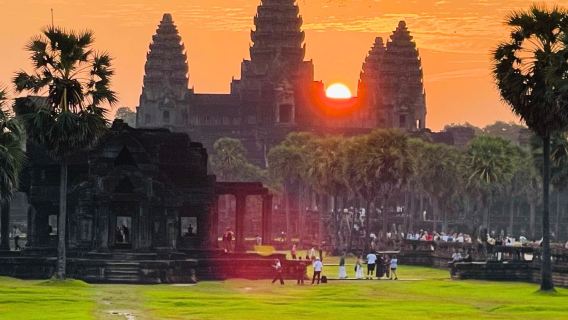
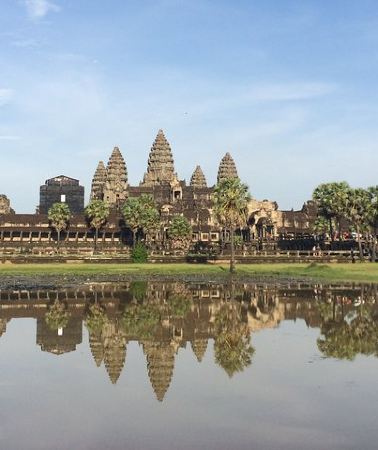
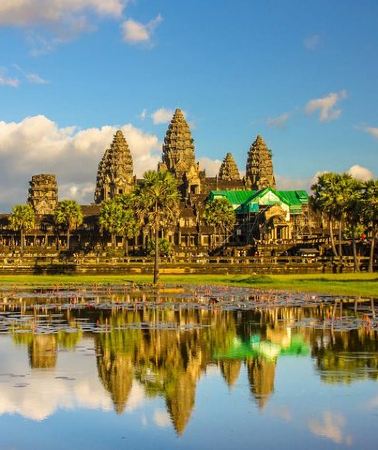
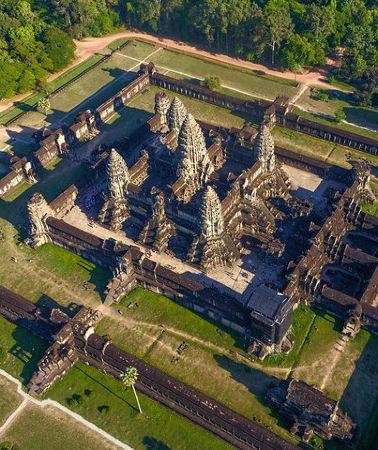
Angkor Wat is located in Siem Reap, Cambodia. Built in the early 12th century as the state temple and mausoleum for Khmer King Suryavarman II, it took over 30 years to complete. While earlier Angkor kings primarily worshipped Shiva, this temple was dedicated to Vishnu. Later, it gradually transformed into a Buddhist monastery and remains one of the few Angkor monuments where religious functions continue today, with monks still visiting. The entire complex is modeled after Mount Meru from Hindu mythology, featuring a wide moat and outer walls enclosing three elevated concentric galleries, with five central towers arranged in a quincunx pattern—the silhouette depicted on Cambodia's national flag. Unlike most temples in Angkor, Angkor Wat faces west, creating its iconic sunrise scene: at dawn, standing by the pond in front of the west gate, visitors watch the sun rise behind the five towers, their reflections mirrored on the water. The outer gallery walls are adorned with extensive bas-reliefs, including the awe-inspiring Churning of the Ocean of Milk depicting gods and asuras pulling a giant serpent. Scattered across the walls are over a thousand apsara carvings, each with unique hairstyles, attire, and dance poses worth examining closely. Enter through the west gate via the causeway and follow the central axis inward—this layered progression offers deeper immersion than a hurried visit. Arrive early to secure a prime sunrise photography spot by the pond. Note that temple steps are steep, some with narrow risers, so wear comfortable, slip-resistant shoes. As a religious site, visitors must cover shoulders and knees and avoid climbing or leaning on carvings. △ Experience the true stories and mysterious legends of Angkor Wat, with every spot being a great photo opportunity. △ Today, Angkor Wat remains mysterious and magnificent, attracting thousands of travelers from around the world.Siem Reap · 6.5km from downtown

Angkor Archaeological Park
Angkor Archaeological Park is a vast complex of structures left by the Khmer Empire, scattered across the jungles and fields north of Siem Reap. It covers a vast area, encompassing dozens of temple ruins and ancient city remains. The core of the park consists of two main parts: Angkor Wat and Angkor Thom. Angkor Wat is the best-preserved structure in the entire site, originally a Hindu temple that later incorporated Buddhist beliefs. Five towers rise above layers of galleries, the inner walls of which are covered in bas-reliefs depicting scenes from Hindu epics and the history of the Khmer dynasty, featuring extensive narratives and numerous figures. The silhouette of this building is also used as the design on the flag of Cambodia. Angkor Thom is the site of the ancient capital of the Khmer Empire. The stone bridges outside the city gates are lined with statues of devas and asuras churning the Ocean of Milk. Bayon Temple at the center of the city is famous for its dozens of towers with four-faced Buddhas, each face carved with a serene, smiling expression, known as the "Smile of Khmer." Ta Prohm is renowned for its unique view of giant tree roots intertwined with stone structures.Siem Reap · 6.5km from downtown

Angkor Thom
Tongwangcheng, also known as Great Angkor and Angkor Thom, was the last capital of the Khmer Empire. It was destroyed by war and rebuilt several times. It was the "heart" of Angkor's monuments. At its peak, it had a population of millions. Today, the moat bridge, the city gate, and the remains of the Bayon Temple, Bapuang Temple, and the Palace in the Sky are the main attractions of the tour. The entire Tongwang City is square, with a perimeter of 14 kilometers and a moat with a width of 100 meters. There are 5 city gates in the whole city, above which there are four-sided Buddha statues facing the four directions, and there is a bridge across the moat outside each gate. The south gate and the north gate are the gates for people to pass through, the east gate is used for funerals, and the west gate is for criminals. These four gates all lead to the Bayon Temple in the center of the city. The East Gate was once the filming location of the movie "Tomb Raider", and there is a "Victory Gate" on the north side of the East Gate that leads directly to the palace, which is dedicated to the king and the triumphant army. Tour guide The general way to visit Tongwang City is from the south gate. There are 27 stone statues on both sides of the moat bridge outside the gate. The stone statues are about 2.5 meters high and sit in a kneeling shape, holding the snake king "Wasuki" in his arms. This is the legend The Indian myth of "churning the sea of milk". From the south gate to the north to the center of Tongwang City, you can see the Bayon Temple, which is a magnificent and important building in the city. The top of its pagoda is the "Khmer Smile", and the reliefs on the walls of the cloister are also It is worth watching carefully, and it is recommended to spend more time visiting here. To the northwest of the Bayon Temple is the Ba Puang Temple. This common three-story platform building in Angkor used to be the center of the old royal city. The bottom floor was carved with various animal statues, but the top has collapsed. To the north of Bapuang Temple is the Palace in the Sky. Although it is called a palace, it is actually a temple in the palace. A golden pagoda was built on the top platform, but it is no longer visible. The real palace is about 200 meters northeast of the palace in the sky. Because it is a wooden structure, it no longer exists, and only the entrance remains. Not far from the original location of the palace, there are symmetrical war elephant steps and leprosy king steps. If you enter Tongwangcheng from the Victory Gate, you can see it if you walk straight ahead. The War Elephant Step is the king's reviewing stand, and it is also the place where the celebration ceremony and the elephant fighting meeting are held. The surviving giant elephant stone sculpture is its major feature. The Leprosy Steps were the site of the royal crematorium at that time, named after a genderless statue of the "Leprosy King" at the top of the platform. In addition to these well-known ruins, there are other buildings such as the Zodiac Pagoda in Tongwang City. If you have time, you may wish to visit them one by one. It takes a long time to visit Tongwangcheng in one visit. You can bring your own food to eat in the city, and then please take away the garbage. Of course, you can also enter and exit Tongwangcheng multiple times, and each time you see some scenic spots, it will be more calm.Siem Reap · 9.4km from downtown

Pub Street
Siem Reap's Pub Street is located next to the bustling old downtown. This street has dozens of different bars, pubs and clubs, many of which are popular with tourists. The bars here are quite unlike traditional pubs and clubs, in that many of them also serve full meals. During daylight hours you can enjoy authentic Southeast Asian cuisine at the restaurants which line the street and, once night falls, you can relax with a drink at the bar while you experience Siem Reap's unique nightlife. Furthermore, many of the bars and restaurants on Pub Street also sell English-language books, postcards, souvenirs and handicrafts.Siem Reap · 58m from downtown

Bayon Temple
Bayon Temple is the center and the essence of Tongwang City (that is, Greater Angkor). It was built at the end of the 12th century as a temple built by King Jayavarman VII for himself. Not only can you find the famous "Khmer Smile" here, you can also admire the rich and vivid reliefs on the cloisters. Many people choose to watch the sunrise at the Bayon Temple in the morning, so there are often crowds in the morning. In fact, the Bayon Temple in the evening is also worth visiting, not only to appreciate its relatively quiet side, but also to watch the sunset here. The entire Bayon Temple building is divided into three floors, the lower two floors are square, and the walls of the cloister are engraved with reliefs; the top floor is circular, with large and small pagodas erected. Originally there were 49, but now there are only 37 left. The larger stupa in the middle is about 40 meters high, and the others are surrounded by stars like the moon. The over 100-meter-wide corridor originally had a wooden roof, but now only broken walls and huge stone pillars can be seen. On the walls of the existing cloister, you can see very rich reliefs. The inner layer is mainly about myths and religious stories, such as stirring the sea of milk and the image of God Vishnu. The outer layer is based on real life, ranging from ancient war accounts to ordinary People's life, the scenery of Tonle Sap Lake, etc. These vivid reliefs seem to be telling a distant story, and they are precious historical relics that must be seen. The top of the pagoda is engraved with a huge four-faced Buddha. The four sides of the Buddha statue represent compassion, compassion, joy, and equanimity, and they all have a peaceful smile. If you look closely, you will find that these smiles have subtle differences, and the slightly upturned corners of the mouth can't tell whether they mean tolerance or ridicule, as if there is a secret that the world will never understand. And this is the "Khmer Smile" that makes Angkor Wat famous in the world.Siem Reap · 9.6km from downtown

Ta Prohm Temple
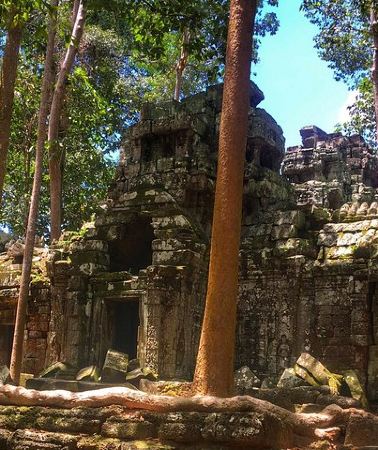
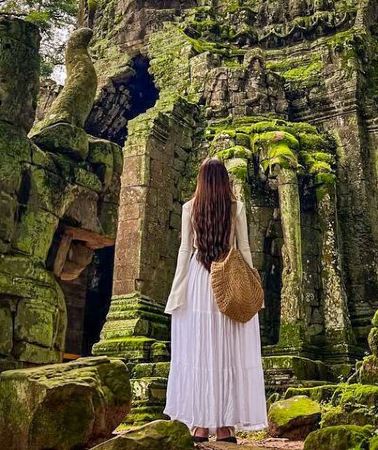
Ta Prohm Monastery, also known as "Ta Prohm Monastery", is located in the east of Angkor Wat. It was built by Khmer King Jayavarman VII in 1186 to commemorate his mother, so it is also called "Mother Temple". It was built of large stones and was once a shrine with high monks, priests and dancing girls. It had the dual function of a temple and a monastery, but over time it was invaded by wild tropical trees, which climbed like python-like roots. The temple is full and penetrates deep into the building, causing the internal stone towers and walls to collapse, and the originally regular building has become a "labyrinth" due to the interlacing of gravel and plants. This unique natural and cultural wonder has also become the location for the film "Tomb Raider". In addition to the wonders of being integrated with the tree, the architecture of the Ta Prohm Temple itself is also very beautiful, especially the various sculptures are worth watching. It has 4 porticos and the main hall faces east. On the outer wall of the east gate, there is a depiction of a patron saint holding a mace and a stupa on his head. Entering from here, you will pass through the "Dancers Corridor". The top of the corridor is an elegant and romantic fairy relief. The temple is surrounded by trees and has not been renovated. It is dedicated to the "Goddess of Wisdom" (reportedly shaped in the image of the king's mother), and the dome is a delicate lotus pattern. Today, the temple is still being swallowed by nature, invading trees that grow within the stone, tearing the building apart while also supporting it so that it doesn't collapse completely. The temple and the tree roots are closely intertwined with me in you and in me, creating a difficult problem for the protection of cultural relics. Whether this amazing tangled spectacle will disappear in the future is still unknown.Siem Reap · 9.6km from downtown

Preah Khan Temple
Sacred Sword Temple is adjacent to the northeast of Tongwang City. It was built in the 12th century. According to legend, it was built by Jayavarman VII to commemorate his father. It is one of the largest temples in Angkor and is very imposing. It is said that it was the temporary residence of the king when Tongwangcheng was built. The interior of Shengjian Temple is in the shape of a cross, with the central church in the center, four gates in the east, south, west, and north connected by vaulted corridors on all sides, and a corridor outside the gate. To the east is the main entrance. There is a Tibetan scripture pavilion. It is a double-storey building of Angkor Wat. Its circular pillars have a Mediterranean style. It is said that this place was once used to store the holy sword. Many tourists will enter from the west gate and leave from the east gate after visiting the temple, which can save time and walk less. Play guide At the entrance of the temple, you can see several statues of Shura and Asura with long snakes in their hands "stirring the sea of milk", but many statues have no heads, and there is a sandstone lotus wall next to it, and the Buddha statues on it are also already destroyed. Outside the door, you can often see young people who set up stalls selling paintings. Entering the door is the vaulted corridor leading to the central church. Both sides of the corridor are supported by thick square stone pillars, which look like countless stone gates going deep all the way. The stone gate is decorated with statues of gods, and there are many statues of dancing fairies on the walls, with graceful postures. Although many statues have broken heads and limbs, and the reliefs are also incomplete, the skillful carving techniques and vivid figures are still worthy of careful appreciation. You can also see the "Linga" stone carvings in the vaulted corridor, which is a major attraction of Shengjian Temple, but many of them have been stolen, and only the base is left. This stone carving with a square base and a raised column in the middle is a sacred object for the worship and reproduction of the ancient Khmers, symbolizing the endless reproduction of life. It is said that touching these stone carvings will be prolific. Continue to go inside until the central church, there is a spiral-shaped Buddha stone pagoda, which is a precious treasure in the holy sword temple, tourists are eager to take pictures hereSiem Reap · 12km from downtown

Phnom Bakheng Temple
Phnom Bakheng is located about 1.5 kilometers northwest of Angkor Wat, near the south gate of Angkor Thom. This hill is about 65 meters high and is the highest point in the vicinity, from which you can overlook Angkor Wat. Phnom Bakheng is built on the hill, a Hindu temple dedicated to Shiva. The most attractive thing about Phnom Bakheng is the magnificent sunset here. There are two ways to reach the top of Phnom Bakheng, one is walking and the other is riding an elephant. To enter Phnom Bakheng on the top of the hill, you need to climb steep steps. When you reach the top of the hill, you will find Phnom Bakheng, which has a five-level pyramid-like base. There are five pagodas on the top of the temple mountain, symbolizing the five peaks of Mount Xumi. In addition to the central tower, there are many small towers below, which are arranged symmetrically according to strict geometric patterns, but many pagodas are now incomplete. Although Phnom Bakheng has long been dilapidated, the view here is very wide. To the west is the vast West Pond, to the southeast is Angkor Wat in the jungle, and to the south you can overlook the Tonle Sap Lake. As the sun sets, the beautiful scenery of Angkor under the golden halo is both romantic and beautiful, and unforgettable.Siem Reap · 7.7km from downtown

Terrace of the Elephants
The War Elephant Step, also known as the Dou Elephant Terrace, is located in the city of Tongwang. The War Elephant Step has three platforms, about 350 meters long and 2-3 meters high. The long base is carved with many lifelike elephant heads and long trunks. You can go north after visiting the Bayon Temple in the center of Tongwang City, and it is not far from the War Elephant Steps. If you enter Tongwangcheng from Victory Gate, you can reach it by walking straight. The southern stairs are pillared with three elephants, supporting the elephant's head and platform, and the trunk of the elephant is rolled with lotus flowers. On the surrounding walls, there are many statues of Hindu gods, god lions, god birds, rhinos, hippos and other animals, which are lifelike, and you can also see reliefs about hunting scenes. Some of the carvings are still complete to this day, which shows the exquisite artistic attainments of the time. During the Angkor period, a grand elephant-fighting conference was held here every year. Only the elephants who won the big battles could become the king's mounts, and these giant elephant stone statues seemed to tell you the story of the tragic elephant-fighting. Alternatively, you may wish to step onto the platform, facing the open space ahead, and imagine the grand occasion when the king wearing the golden crown reviewed the infantry, cavalry, carriages and war elephants lined up across the central square. If you happen to be here at dusk and walk on it, it will be desolate, and you can't help but be filled with emotion. On the War Elephant Platform, you can also see the opposite Zodiac Pagoda. It is said that it used to be the place where prisoners were imprisoned and tried. You can stop by and take a look.Siem Reap · 10.1km from downtown

Bapoun Temple
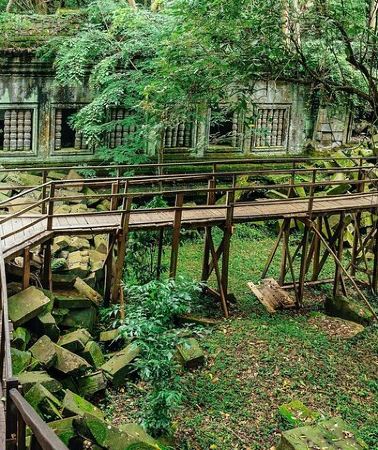
The Bapuang Temple in Tongwang City is located about 200 meters northwest of the Bayon Temple. This building is very majestic and existed before the construction of Tongwang City. Since most of the temple buildings have collapsed, there are not many carvings left in the temple, and the many stones may give you a deep impression of it. From the Bayon Temple, there is a 200-meter long walkway leading to the Bapuang Temple, which is supported by three rows of circular low stone pillars. There is a cross-shaped pavilion in the middle of the aisle, and there are ponds on both sides of the aisle. You can see the classic water reflection landscape in Angkor monuments. In the rainy season, walking on the walkway full of water on both sides will give you a feeling of walking in the water. Before arriving at the temple, there were thousands of stones that originally belonged to the temple building, and they could no longer be restored. Looking up at the temple, the pyramid-shaped Mount Sumeru Temple consists of three layers of platform bases, which are very high and the stairs are quite steep. It is conceivable how devout pilgrims were at that time. The stairs before and after the main tower are closed, and visitors need to take the newly built wooden escalator on the side to climb, which is also very steep and can be used with both hands and feet. There is a closed cloister on each plinth of the temple, and there are towers in the middle and four corners of the four sides of the cloister. Climbing up to the top, you can see a small stone pagoda, which used to be the golden copper roof of the Ba Puang Temple, but now it has been damaged beyond recognition. There are four hollow stone gates on the top of the stone tower, which is fascinating. The stone tower is forbidden for tourists to climb, so you can only watch it from here. Standing on the top floor of Bapuang Temple and watching the surrounding scenery, it is very enjoyable. Looking down, you can also see the hundreds of stone pillars in the temple that used to support the causeway, but the causeway no longer exists. Going down from the top floor, walking to the back of the temple, looking up, there is a reclining Buddha with a length of more than 70 meters and a height of 9 meters on the parapet of the second-floor platform, which is very rare in the ancient ruins of Angkor. This was built later when the Ba Puang Temple was transformed into a Buddhist temple. Unfortunately, most of them have collapsed or have not been completed, and it is difficult to see its overall appearance and demeanor. The head of the reclining Buddha is on the north side of the wall, while the positions of the arms, legs, feet, etc. require you to continue to imagine and guess.Siem Reap · 9.9km from downtown
Experiences you can't miss in Siem Reap
Featured Cultural experiences in Siem Reap
View all Cultural experiences
Free cancellation
Instant confirmation
Book now for tomorrow
5% off
Limited-time sale
FromMXN$655.71MXN$690.23
4.9/5
· 8 reviews· 25 bookedFree cancellation
Instant confirmation
Book now for today
FromMXN$603.28

5.0/5
· 2 reviewsFree cancellation
Instant confirmation
Book now for tomorrow
FromMXN$548.99

23 booked
Free cancellation
Instant confirmation
Book now for tomorrow
5% off
Limited-time sale
FromMXN$495.43MXN$521.51
Free cancellation
Book now for today
FromMXN$300.1
Free cancellation
Instant confirmation
5% off
Limited-time sale
FromMXN$1,107.43MXN$1,165.72
5.0/5
· 2 reviewsFree cancellation
Instant confirmation
FromMXN$735.82
Featured Food & drink in Siem Reap
View all Food & drink![Siem Reap Morakot Angkor restaurant [Khmer traditional Apsara dance]](https://ak-d.tripcdn.com/images/0354p12000j60qo9c846C_C_568_320.jpg?_fr=wc)
4.6/5
· 31 reviews· 272 bookedBook now for tomorrow
90.3% of travelers recommend
FromMXN$386.53
5.0/5
· 2 reviewsFree cancellation
Instant confirmation
Book now for tomorrow
FromMXN$462.52
![Siem Reap Amazon Angkor Restaurant buffet [Apsara dance performance]](https://ak-d.tripcdn.com/images//0581k12000n19xfkv57A6_C_568_320.jpg?_fr=wc)
4.9/5
· 8 reviews· 86 bookedFree cancellation
FromMXN$324.11
5.0/5
· 6 reviewsInstant confirmation
Book now for tomorrow
FromMXN$703.83

Free cancellation
Book now for tomorrow
5% off
Limited-time sale
FromMXN$367.74MXN$387.1
FromMXN$733.18
Free cancellation
Book now for tomorrow
5% off
Limited-time sale
FromMXN$367.74MXN$387.1
Featured Day tours in Siem Reap
View all Day tours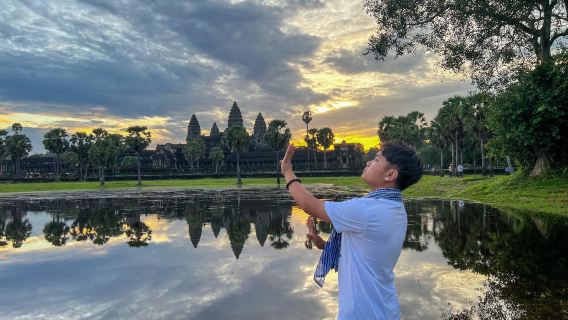
4.9/5
· 135 reviews· 483 bookedInstant confirmation
Book now for tomorrow
74 consecutive positive reviews
FromMXN$399.45
5.0/5
· 43 reviews· 134 bookedInstant confirmation
Book now for tomorrow
43 consecutive positive reviews
FromMXN$819.92
5.0/5
· 36 reviews· 148 bookedInstant confirmation
Book now for tomorrow
36 consecutive positive reviews
FromMXN$399.45
4.9/5
· 12 reviews· 142 bookedFree cancellation
Instant confirmation
FromMXN$273.31
5.0/5
· 20 reviews· 239 bookedFree cancellation
Instant confirmation
Book now for tomorrow
FromMXN$378.43
5.0/5
· 20 reviews· 132 bookedFree cancellation
Instant confirmation
Book now for tomorrow
FromMXN$273.31
![1-day private charter tour of Angkor Wat small circuit in Siem Reap, Cambodia [Angkor Wat + Bayon Temple + Phnom Bakheng]](https://ak-d.tripcdn.com/images/0350p12000tgxsiol30FC_C_568_320.jpg?_fr=wc)
4.8/5
· 120 reviews· 141 bookedFree cancellation
95% of travelers recommend
FromMXN$828.28
FromMXN$819.92
Free things to do in Siem Reap
Angkor Wat
Siem Reap · 6.5km from downtownAngkor Archaeological Park
Siem Reap · 6.5km from downtownAngkor Thom
Siem Reap · 9.4km from downtownPub Street
Siem Reap · 58m from downtownBayon Temple
Siem Reap · 9.6km from downtownTa Prohm Temple
Siem Reap · 9.6km from downtownPreah Khan Temple
Siem Reap · 12km from downtownPhnom Bakheng Temple
Siem Reap · 7.7km from downtownTerrace of the Elephants
Siem Reap · 10.1km from downtownBapoun Temple
Siem Reap · 9.9km from downtown
More ways to travel from Siem Reap
Private Tours in Siem Reap
View More Private Tours in Siem Reap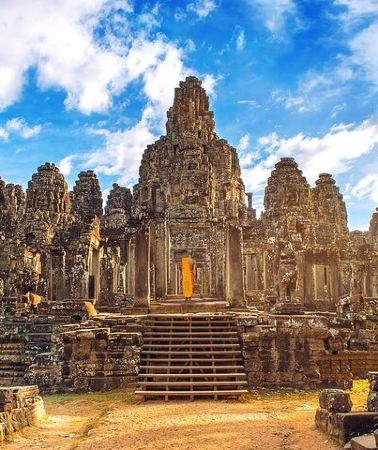

Group Tours in Siem Reap
View More Group Tours in Siem Reap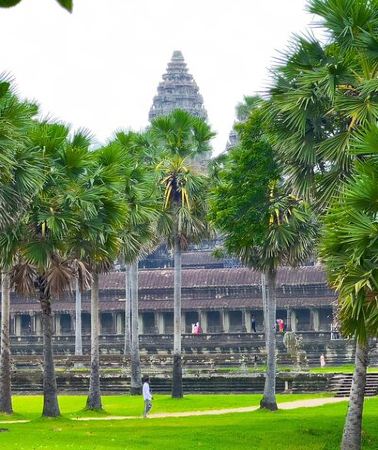


What travellers say about Siem Reap

_TT***905 October 2026
4.0
Worth visiting at least once. The scale of Angkor Wat is impressive, and seeing the temples up close feels very different from just seeing photos online. Go early if you can, especially for sunrise, and be prepared for quite a bit of walking. The heat can also be intense, so bring water and wear comfortable shoes.
Angkor Wat

徐徐霞客Rr5 August 2022
5.0
Angkor Archaeological Park is a very nice place. If you love history, you will definitely be interested in it. In addition to some historical buildings, there are also some religious buildings that are very novel, and the vegetation here is also very ancient.
Angkor Archaeological Park

Lsh7898 September 2026
5.0
Business Hours:Address:Tips:Reasons to Recommend:Reasons to Recommend:Angkor Thom siem reap province
Angkor Thom

bongchroungh8 June 2026
5.0
Pub Street is a vibrant and lively area with plenty of restaurants, bars, and entertainment. The atmosphere is fun and welcoming, making it a great place to spend an evening in Siem Reap. While busy and tourist-focused, it offers a good variety of food, drinks and nightlife option
Pub Street

E38***0523 July 2026
5.0
The smiling faces of Bayon Temple are its most captivating feature, with over 200 massive stone countenances carved into 54 towers. Scholars believe these serene, enigmatic smiles represent Avalokiteshvara, the bodhisattva of compassion, or the powerful King Jayavarman VII himself. As you walk through the upper terrace, these giant faces look down on you from every angle, creating a surreal and deeply spiritual atmosphere. The daytime sun casts beautiful shadows across the stone features, bringing their calm expressions to life. It is an unforgettable sight that forms the creative heart of the entire temple experience.
Bayon Temple

Tana_Tevy31 August 2024
5.0
Ta Prohm Temple at dawn is a magical experience, offering a serene and almost mystical atmosphere. As the sun begins to rise, the soft light filters through the thick jungle that surrounds the temple, casting long shadows and illuminating the massive roots of ancient trees that have entwined themselves around the stone structures. The interplay of light and shadow creates an ethereal scene, with the temple appearing as if it’s emerging from the jungle itself.The quietness of the early morning adds to the sense of wonder, with only the sounds of birds and the rustling of leaves breaking the silence. The temple, famous for its intertwined trees and ruins, takes on a different character at dawn—more peaceful and introspective compared to the busy hours later in the day.This is a time when the temple feels most like a living part of the forest, with nature and human creation blending seamlessly. Walking through the temple at this hour, you can almost imagine what it must have been like when it was first rediscovered, hidden away and forgotten by the world.If you’re planning to visit Ta Prohm at dawn, it’s best to arrive early to experience this tranquil moment before the crowds arrive, allowing you to truly appreciate the beauty and history of this remarkable site.
Ta Prohm Temple

lkm61721 August 2026
5.0
Preahkhan temple is best , in siem reap culture Business Hours:Address:Tips:Reasons to Recommend:
Preah Khan Temple

博士小美女13 May 2023
5.0
Phnom Bakheng is a small hill 1.5 km northwest of Angkor Wat, about 70 meters high, and is the only commanding height nearby. To the west of the hill is the open West Baray, and to the southeast in the jungle is Angkor Wat. From the top of Phnom Bakheng, you can overlook Angkor Wat from a high vantage point. Phnom Bakheng is the result of the relocation of the capital by King Yasovarman I, who moved the capital from the area of the Roluos temple complex to the Phnom Bakheng area. The area around the Roluos temple complex was already full of buildings of previous kings, and was not suitable for the young monarch to realize his urban planning. The seat of Yasodharapura, centered on Phnom Bakheng, was the capital of Cambodia until the 15th century.
Phnom Bakheng Temple

suifeng201921 April 2021
4.0
The Elephant Platform is the platform for the king to review troops. It faces the avenue leading to the Gate of Victory. The soldiers who returned triumphantly from the Gate of Victory were reviewed by the king here. There are many exquisite carvings on the outer wall, which are worth appreciating carefully.
Terrace of the Elephants

长脸张少侠14 June 2025
4.0
【Baphuon】
Baphuon
Baphuon was built in the mid-11th century (1060) by King Udayadyavarman II and dedicated to Shiva (Hinduism) in the Baphuon style.
The magnificent Baphuon described by Zhou Daguan is now difficult to recognize due to poor preservation. The French were forced to leave Angkor in 1972 due to war, when they were repairing the temple. Although Baphuon is located in Angkor Thom, its history dates back to the 11th century, and the city was established later. An interesting feature of Baphuon is the bas-reliefs carved on small pieces of bricks inside.
The outbreak of the Cambodian civil war destroyed all the records of the year, and the restoration work resumed in the 1990s, facing the problem of how to put the piles of stones back. The temple was not opened to the public until 2011 and is still under restoration. From the perspective of form, this temple also has a large enclosure, but only a pyramid-like remnant of the central tower remains. Behind the temple is a magical reclining Buddha, which was built by Buddhists in the post-Angkor period (16th century) using huge stones. Although it was not completed, the mouth, eyes and nose of the reclining Buddha's head are clearly discernible, and the shape of the body is also very obvious. This fully illustrates that even though the Khmer Empire weakened and collapsed, the political center moved to Phnom Penh.
Bapoun Temple

