Setubal

Things to do in Setubal

Search attractions or local attractions & tours
Search

Explore top experiences

Top 10 attractions in Setubal

View all Attractions
Jerónimos Monastery
No. 3 of Best Things to Do in Portugal

Jerónimos Monastery

9.5
4.4/5
490 reviews
The Jerónimos Monastery is located in Belém. This grand white structure is the most prominent landmark of this port city, and together with the adjacent Church of the Order of St. Mary, it represents a masterpiece of Portuguese Manueline architecture. In 1983 with nearbyBelém TowerAlong with being listed as a UNESCO World Heritage site, the Jerónimos Monastery is also the final resting place of explorer Vasco da Gama. A glorious history. Construction of the Jerónimos Monastery began in 1501 under King Manuel I to commemorate da Gama's historic voyage, taking nearly 100 years to complete. The church and monastery's connected walls stretch over 100 meters, occupying almost the entire street. This grandeur reflects Portugal's unrivaled maritime dominance in its heyday. The Jerónimos Monastery lacks a sufficiently open space in front for capturing a full panoramic view, but there's no need to fret—the exquisite carvings on its exterior walls are captivating enough to warrant prolonged admiration. The Virgin Mary holding the infant Jesus and the lively angels appear so lifelike they seem imbued with vitality. Exquisite carved decorations. The southern portal of the Jerónimos Monastery is particularly ornate, standing two stories tall with numerous intricate reliefs. The central spandrel features the coat of arms of Manuel I, while the arch's upper reliefs depict scenes of St. Jerome removing a thorn from a lion's paw and St. Jerome in the desert, all carved with astonishing realism and craftsmanship. Though less elaborate than the southern portal, the main entrance is equally distinctive, with carvings above the arch showing the Nativity scene and statues of Manuel I, the Virgin Mary, St. Jerome, St. John, and other saints flanking the doorway. The Jerónimos Monastery's interior is spacious and hallowed, with towering Gothic vaults in the main hall. The central altar is adorned with gold and green carvings, while a nearby altar holds a statue of St. Jerome made of crimson-glazed ceramic. The Church of the Order of St. Mary. Adjacent to the monastery, the Church of the Order of St. Mary is also well worth visiting. Upon entering, one immediately sees da Gama's sarcophagus, while on the opposite side lies Portuguese poet Luís de Camões, whose works represent the pinnacle of Portuguese Renaissance literature. The chapel is lavishly decorated, with its massive transverse nave roof in front of the main altar—supported without any pillars—considered an engineering marvel of the Middle Ages and long hailed as a masterpiece. The second floor houses a crucifixion figure, and the elegant cloisters offer a panoramic view of the Jerónimos Monastery's courtyard, showcasing distinctive Portuguese charm—a perfect spot to pause and appreciate.Lisbon · 33.4km from Setubal
São Jorge Castle
2026 Europe 50 - Night Attractions

São Jorge Castle

8.5
4.5/5
257 reviews
São Jorge CastleIt is one of the ancient buildings in Lisbon and a major historical monument and tourist attraction in Lisbon. The castle is built onAlfamaThe high point of the area was a fortress when the Moors occupied Lisbon in the Middle Ages. Located on a commanding hillside, its presence can be seen from almost every corner of Lisbon. The castle originally belonged to the earlier Visigoths. After the Moorish invasion, it underwent large-scale expansion, and its walls, up to 8 m thick, still impress with their grandeur today. Here, people can better appreciate the city's architectural art, whether fromAlfamaTo the futuristic castles and drawbridges in the distant city, or in the urbanCarmo churchThe open-air ruins can be seen at a glance.  National monument The architectural complex known as Lisbon castle and Lisbon city walls was classified as a national monument under the decree issued on June 16, 1910. The monument is owned by the Portuguese state and was temporarily transferred to Lisbon city hall on September 13, 1934, with the complete transfer finalized on May 31, 1942. On June 8, 1979, the revised terms of transfer for São Jorge Castle were officially enacted. Following the resolution of the Lisbon municipal council in October 1995, São Jorge Castle was placed under the management of the municipal company Empresa de Bairros Históricos de Lisboa (EBAHL). In 2003, this management responsibility was transferred to the municipal company Empresa de Gestão de Equipamentos e Animação Cultural (EGEAC). The site consists of a castle, the ruins of the Alcázar palace, the Plaza de Armas, a spacious viewing platform overlooking the entire city, a museum exhibition area, an archaeological exhibition area, several garden areas, and the city walls. The monument covers an area of approx. 4 hectares, surrounded by a massive perimeter wall and city walls, with one section of the wall coinciding with part of the boundary of Lisbon's old castle. Space and view In the past, there were no trees inside or outside the city walls; even if there were, the quantity was far less than today. In the days when the castle was merely a fortress to be conquered, it was absolutely unacceptable to provide the enemy with any tools for climbing or even setting fires, thereby facilitating their siege. The castle garden was built in the 1950s and is one of the earliest view architecture works in Portugal. Its designer, architect Gonçalo Ribeiro Telles, conceived this garden precisely when the castle completely ceased its military use, aiming to complement the historic site while providing visitors with a highly comfortable leisure area.Lisbon · 29.7km from Setubal
Belém Tower
2026 Global 100 - Best Things to Do

Belém Tower

8
4.6/5
669 reviews
Belém Tower is a classic landmark of the Portuguese harbor and a symbol of Lisbon, witnessing countless voyages and departures, returns and reunions of ships during the Age of Discovery. This fortress was commissioned by King Manuel I and designed by military architect Francisco de Arruda, built between 1514 and 1520. It served both as a stronghold guarding the river mouth and a ceremonial gateway for explorers embarking on or returning from voyages. Originally standing isolated on a rocky outcrop in the river, it has since become connected to the mainland due to the riverbank's gradual expansion. The tower and irregular hexagonal bastion, constructed with Lisbon's local cream-colored limestone, are masterpieces of Manueline style: stone-carved ropes wind around the tower, while knots, crosses of the Order of Christ, armillary spheres, and reliefs of flora and fauna adorn its surface. Particularly striking is the stone rhinoceros on the bastion's turret base, modeled after the actual rhino brought from India to Lisbon in 1515 via new sea routes—later gifted to the Pope—and immortalized in Dürer's famous woodcut. Over the centuries, the site functioned successively as a customs house, prison, telegraph station, and lighthouse. In 1983, it was inscribed on the UNESCO World Heritage list alongside the nearby Jerónimos Monastery. The stone rhinoceros at the base stands out as a tribute to Portuguese explorers' overseas achievements. At sunset, Belém Tower takes on a special charm, and strolling along the harbor while enjoying the sea breeze makes for a delightful experience. barrier After crossing the drawbridge and passing through the main entrance, you arrive at the bastion of Belém Tower. The wall features 16 emplacements for cannons to defend against enemies. At the center of the roof, there is a Gothic-style rectangular skylight that serves as a ventilation shaft for the bastion, allowing the smoke from cannon fire to dissipate quickly. Beneath the bastion's floor are several storage rooms, with the largest one accessible via the staircase on the northern side. Platform To the right of the main entrance of Belém Tower, a steep staircase leads to the polygonal platform at the top of the bastion, with a sentry box at each corner featuring observation windows and pepperbox-shaped roofs. At the center of the platform, a railing encircles the courtyard below, with a statue of Our Lady of Victory placed on its southern side. From the bastion platform, you can admire the southern facade of Belém Tower up close, where the balconies and railings are exquisitely decorated with stone carvings. Particularly striking is the stone-carved shield of King Manuel I, adorned with lifelike floral motifs above it. Tower top Ascend the stairs on the right side of the platform to enter the interior of Belém Tower. Follow the spiral staircase to reach the top platform, where you can enjoy the beautiful scenery of Lisbon's harbor.: The Tagus River, Jerónimos Monastery, Monument of the Discoveries, the Christ the King statue on the opposite bank, the 25th of April Bridge, and more are all in full view. The occasional sailing boats drifting on the sea also form a beautiful sight.The wind is strong on the top platform of Belém Tower, please take precautions against wind and keep warm.Lisbon · 33.7km from Setubal
Lisbon Cathedral
No. 16 of Best Things to Do in Portugal

Lisbon Cathedral

7.2
4.4/5
133 reviews
Lisbon Cathedral was built during the reign of King Afonso Henriques, following the reconquest of Lisbon from the Moors. It is believed that the cathedral's construction began in 1147. After the conquest of Lisbon by Portugal's first king and the knights of the Second Crusade, the reorganization of the Lisbon diocese commenced. An English crusader named Gilbert of Hastings was appointed bishop, and the construction of the cathedral began, concluding in the early 13th century. This Romanesque structure, designed by Master Roberto, features a Latin cross plan with three naves, a three-story gallery above the side aisles, a prominent transept, and a tripartite apse, sharing many similarities with the Old Cathedral of Coimbra built years earlier. However, over the centuries, the church underwent numerous modifications: some to meet the needs and trends of different eras, others due to the countless disasters Lisbon endured. For instance, the Gothic cloister, begun during the reign of King Dinis (1261–1325), is unique for its location at the rear of the church. The sanctuary and ambulatory were commissioned by King Afonso IV (1325–1357) to accommodate pilgrims venerating the relics of Saint Vincent and to establish his pantheon. It is the only Gothic cathedral ambulatory in Portugal, completed during the reign of King João I (1357–1433). Two centuries later, in 1649, a new sacristy in the Mannerist style was added. The 1755 Lisbon earthquake destroyed part of the buildings. The Gothic sanctuary, the Holy Sacrament chapel, the nave roof, the south facade tower, and the lantern tower all collapsed. Between 1761 and 1785, the Holy Sacrament chapel was rebuilt. The south tower, nave roof, and new sanctuary were completed by architect Reinaldo dos Santos between 1769 and 1771. In the early 20th century, Lisbon Cathedral underwent revivalist restoration, removing some Baroque additions. Augusto Fuschini and António do Couto Abreu later designed a new church based on the existing medieval structure. Fuschini rebuilt the vaults, restored and reopened windows, and added battlements to the top of the building. Under António do Couto Abreu's direction, the central nave's vault was rebuilt, the facade was restored, the rose window was remade, and other modifications gave the building its current neo-Romanesque style. Listed as a national monument since 1910, it was grandly reopened in 1940 during the Estado Novo regime. Seven years later, it celebrated the 800th anniversary of Lisbon's reconquest from the Moors and the 300th anniversary of Lisbon's independence. Today, it is one of Lisbon's landmarks and one of its most important monuments: a place of immense historical, architectural, religious, and spiritual value, worthy of deeper understanding—a fusion of faith and history.Lisbon · 29.3km from Setubal
Lisbon Oceanarium
2026 Europe 50 - Family-friendly Attractions

Lisbon Oceanarium

7.2
4.5/5
120 reviews
The Lisbon Oceanarium is one of Europe's largest marine life aquariums, housing thousands of marine animals and plants across hundreds of species. Creatures from oceans worldwide swim together here: sharks, rays, barracudas, groupers and moray eels dart about, while the slow-moving ocean sunfish often captivates visitors for extended periods—this giant bony fish, extremely difficult to keep in captivity, is one of the facility's signature residents. The main tank is surrounded by four habitat exhibits: the rocky coasts of the North Atlantic, Antarctic shores, the temperate Pacific's giant kelp forests and the tropical coral reefs of the Indian Ocean, separated only by massive acrylic panels. No matter which level visitors view from, the same "open ocean" reappears from fresh perspectives, creating an illusion of one continuous marine environment rather than isolated exhibits. Sea otters are another star attraction, with their dexterous feeding habits drawing crowds, while penguins and puffins each have their devoted fans. The aquarium's mascot is a sea otter named Vasco, paying homage to Portuguese explorer Vasco da Gama. The Ocean Building is connected to the administration building by a bridge, symbolizing the ramp people will walk along to embark on an unforgettable journey to explore the fascinating marine world. A moored ship, ready to set sail. The Ocean Building is surrounded by water and boasts unique architectural features, evoking two captivating images: an island standing in the middle of the ocean and a docked ship, ready to set sail and embark on a journey of exploration. The design of this building aims to host an exhibition that always surprises visitors. All four sides of the building mimic the geological formations of coastal areas and blend with the recreated view contours inside, which can be seen through the glass walls. To better showcase various views, the building's glass walls are coated with a film that filters sunlight of different intensities. The magnificent main aquarium holds approximately 5 million liters of water, representing the global ocean and hosting over a hundred species from the four major oceans. Surrounded by four distinct marine habitats, the aquarium creates the illusion of being in a single, unified ocean. The exhibition covers terrestrial and marine ecosystems, as well as various environments, ranging from the North Atlantic habitats to tropical habitats formed by the Indian Ocean, and further to the Antarctic coastal zones and the giant kelp forests commonly found in the temperate Pacific regions.Lisbon · 31.7km from Setubal
Pena Park
No. 1 of Best Things to Do in Portugal

Pena Park

9.8
4.9/5
17 reviews
Pena Park is a vast royal woodland garden that embraces the Pena Palace, spreading across the heights of the Sintra hills. Created in the mid-nineteenth century by King Ferdinand II of Portugal alongside the palace, it covers more than two hundred hectares of rolling terrain and deep forest. Paths crisscross the grounds like a maze, linking stone bridges, grottoes, fountains, and trellised pavilions; combined with the mist that often hangs over the hills, wandering here feels much like stepping into a fairy-tale forest. Looking down from one side of the palace, the whole expanse of greenery spreads across the slopes like a sea, with the red-and-yellow palace towers as the focal point of the scene. The garden has a distinctly Romantic character: the king ordered trees brought in from distant continents, and North American redwoods, Chinese ginkgos, Japanese cedars, and magnolias can all be seen here. In the ravine known as the "Queen's Fern Garden," groves of tree ferns from Australia and New Zealand grow along the stream in dense green profusion. On the lakes of the Lake Valley stand duck houses shaped like castles, one of them modeled after the Moorish Castle; in the woods stands a knight-like "Warrior Statue" by the sculptor Rusconi; and on the western side of the park, the "Countess's Chalet" is a Swiss mountain chalet style building, its exterior painted with wood-grain patterns and trimmed with cork, surrounded by camellias and azaleas and set among giant granite boulders—a retreat the king built for his second wife, a former opera singer. Visiting tips: the park is large, with many slopes and dense branching paths, so wear comfortable shoes and allow most of a day to stroll at leisure; don't just rush back and forth to the palace—follow the paths deeper into the woods, where the Lake Valley, the Fern Garden, and the Countess's Chalet are often quieter and more rewarding to explore, and good for photos too; when the camellias bloom in winter, the park's colors are especially rich.Sintra · 52.1km from Setubal
National Palace of Pena
No. 1 of Night Attractions in Portugal

National Palace of Pena

9.8
4.6/5
605 reviews
Pena Palace, a royal retreat, is a dazzling, unique, and ornate structure that resembles a fairytale castle. The palace itself is a melting pot of architectural styles, incorporating Gothic, Renaissance, Moorish, and Manueline elements (the architectural style of the reign of King Noël I of Portugal), and is the brainchild of Ferdinand of Saxe-Coburg-Gotha, husband of Queen Maria II of Portugal in the 19th century. Not only is it a national monument of Portugal, but it is also one of the Seven Wonders of the Ancient World. Located atop a hill in the São Pedro de Penaferrim parish of Sintra, near Lisbon, it is clearly visible from Lisbon on a clear day. In 1995, it was inscribed as a World Heritage Site as part of the Sintra Cultural Landscape. Today, it is frequently used for state activity by the Portuguese president and other government officials. However, in the Middle Ages, it was merely a chapel dedicated to Our Lady of the Nile. In 1493, King João II and his wife visited the site. His successor, Manuel I, built a monastery there, which was reduced to ruins after the Lisbon earthquake in 1755. Ferdinand II purchased the ruins and the merchandise hills and commissioned the German engineer Eschweg to design the palace, which incorporated elements of Gothic, Manueline, Moorish, and Renaissance styles. Construction began in 1842 and was completed around 1854, making it one of the representative works of European Romantic palaces.Sintra · 52.2km from Setubal

Traveller favourites curated for you

Experiences you can't miss in Setubal

Featured Culture & history in Setubal

View all Culture & history
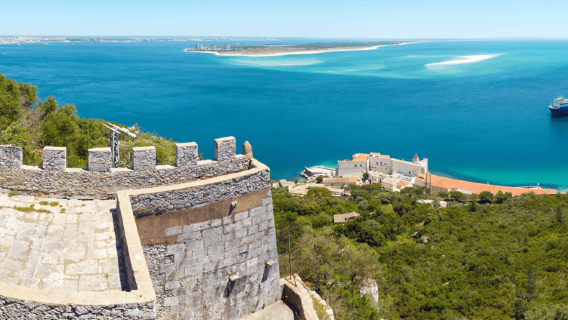
From Lisbon: Comporta and Setúbal Trip with Horseback Riding
󱌍
5% off
Limited-time sale
From£ 198.17£ 208.6
Setúbal Secrets & Arrábida Mountain Magic: From Lisbon | Private
󱌍
Duration: 8 hrs
Free cancellation
Book now for tomorrow
5% off
Limited-time sale
From£ 118.91£ 125.17

Arrábida & Azeitão Wine Tour from Lisbon: Private Full-Day
󱌍
4.2/5
· 6 reviews
Duration: 8 hrs
Free cancellation
Book now for tomorrow
From£ 291.63
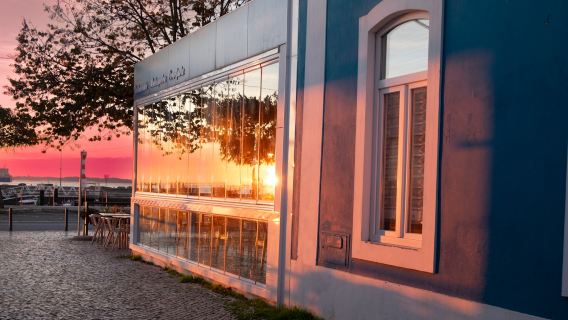
Setubal Audio Tour: Heritage Walk
󱌍
Duration: 1 hr
English
Free cancellation
Book now for today
20% off
Limited-time sale
From£ 5.33£ 6.67
Lisboa Card for 24h, 48h or 72h
󱌍
4.7/5
· 29 reviews· 733 booked
Duration: 24–72 hrs
English
Free cancellation
Book now for tomorrow
72 travellers saved
From£ 25.87
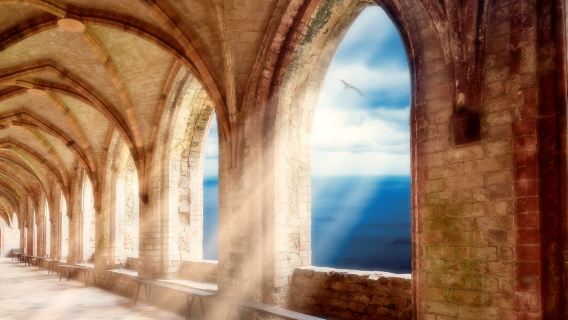
Lisbon Card (City Transport Pass + Jerónimos Monastery + São Jorge Castle and 51 other attractions)
󱌍
4.0/5
· 1 review· 38 booked
Duration: 24 hrs
English
Book now for today
From£ 37.65
1-day tour to Sintra, National Palace of Pena, Cape Roca and Cascais in Portugal (including admission ticket reservation)
󱌍
4.8/5
· 4 reviews· 34 booked
Duration: 6.2 hrs
English
Free cancellation
63 travellers saved
From£ 71.39

Featured Food & drink in Setubal

View all Food & drink
Arrabida Wine Tour - Lisbon: Wineries-Tastings-Tile Factory
󱌍
5.0/5
· 47 reviews
Duration: 9 hrs
Free cancellation
Book now for tomorrow
47 consecutive positive reviews
5% off
Limited-time sale
From£ 71.34£ 75.1
Discover Setúbal's Secrets: Wine, Culture and Arrábida Magic
󱌍
5.0/5
· 2 reviews
Duration: 8 hrs
Free cancellation
Book now for tomorrow
5% off
Limited-time sale
From£ 118.91£ 125.17
Arrabida and Sesimbra Small-Group Day Trip from Lisbon with Wine Tasting
󱌍
4.9/5
· 150 reviews
Duration: 9 hrs
Free cancellation
Book now for today
62 consecutive positive reviews
From£ 61.22
Setúbal Wine Tour with Visit and Tasting at 2 Wineries
󱌍
4.3/5
· 62 reviews
Duration: 4 hrs
Free cancellation
Book now for tomorrow
From£ 82.90
From Lisbon: Serra da Arrábida, Sesimbra and Setúbal Wines
󱌍
4.9/5
· 76 reviews
Duration: 9 hrs
Free cancellation
97.4% of travelers recommend
5% off
Limited-time sale
From£ 42.09£ 44.31
Lisbon WineTour : Premium Tastings “Wine & Food” (All-Inclusive)
󱌍
Duration: 7–10 hrs
Free cancellation
Book now for today
From£ 109.68
From Lisbon: Arrábida Day Tour & Wine Tasting
󱌍
4.0/5
· 2 reviews
Duration: 8 hrs
Free cancellation
Book now for tomorrow
5% off
Limited-time sale
From£ 63.42£ 66.76

Featured Day tours in Setubal

View all Day tours
Setúbal: Boat transfer to Desert Island with free time
󱌍
4.6/5
· 5 reviews
Free cancellation
Book now for tomorrow
5% off
Limited-time sale
From£ 19.82£ 20.87
Arrábida - Sesimbra: Nature Jeep Tour
󱌍
4.7/5
· 7 reviews
Duration: 3 hrs
Free cancellation
Book now for tomorrow
5% off
Limited-time sale
From£ 47.56£ 50.07
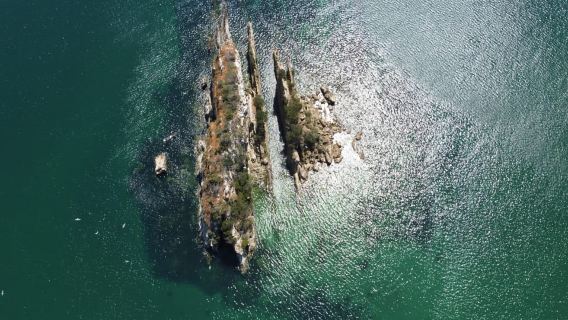
Setúbal: Arrábida Galapos Beach Boat Transfer
󱌍
Free cancellation
Book now for tomorrow
5% off
Limited-time sale
From£ 26.16£ 27.54
Setubal Today's weatherClear 8-20℃
Setubal weather for the next 2 days11/5: 10-19℃, 11/6: 14-20℃

Free things to do in Setubal

What travellers say about Setubal

user-avatar
锅里盛钱23 September 2026
5.0
A must-see landmark in Lisbon, the Jerónimos Monastery is a masterpiece of Manueline architecture and a UNESCO World Heritage Site along with the Belém Tower. Features: 1. Double-layered cloisters: The essence of the monastery, the two-tiered arcades are intricately carved with nautical elements. Sunlight filters through the arches, creating layers of interplay of light and shadow, perfect for stunning photos. 2. The cathedral: Its interior columns branch upwards like tree trunks, and its magnificent, open vaulted ceiling houses the remains of navigator Vasco da Gama and poet Luís Camões.

Jerónimos Monastery

user-avatar
Anonymous user25 October 2026
5.0
Really nice place overall. Good views and show inside as well. Don't book via Trip.com. It is OVER PRICED here. Book directly from the website to skip the line and enter. However if you get the ticket at the ticket office, you could get a physical ticket.

São Jorge Castle

user-avatar
Soghepardo2 October 2026
5.0
Alfama, Lisbon’s oldest soul: winding streets, colorful tiles, historic charm, and soulful Fado echoing from hidden corners. 🇵🇹✨ A true Lisbon gem.

Alfama

user-avatar
OffWeGoAgain19 December 2025
4.0
Belém Tower is one of Lisbon’s most iconic and historically important sites, deeply connected to Portugal’s Age of Discoveries. Even though the tower is currently covered with scaffolding, the area is still absolutely worth a visit. The riverside promenade nearby is perfect for a relaxed walk, with beautiful views of the Tagus River and a great Lisbon atmosphere. A place you shouldn’t skip when exploring the city.

Belém Tower

user-avatar
盖勒敏丁大全19 June 2020
4.0
The oldest Catholic church in Lisbon is located halfway up a hill in the old town of Alfama. Behind it is the site of a Roman theater, which is being excavated and repaired. It was well preserved even after the Lisbon earthquake! The stained glass in the church is beautiful!

Lisbon Cathedral

user-avatar
Annie长翅膀的喵21 June 2025
4.0
发现者纪念碑,在贝伦塔旁边,是为纪念葡萄牙航海家恩里克王子逝世500周年而建的地标性建筑,位于里斯本贝伦区特茹河畔,形如帆船,象征葡萄牙大航海时代的辉煌历史。‌ 纪念碑前的广场铺设巨型航海罗盘图案,中央为标注葡萄牙航海路线的世界地图。

Monument to the Discoveries

user-avatar
RnE-RDMT14 August 2026
4.0
The Lisbon Oceanarium is excellent value for money and a perfect rainy-day pick if you want to see impressive marine life. It’s one of Europe’s largest indoor aquariums, with a huge central tank featuring sharks, rays, sunfish, and tuna, plus diverse habitat zones. Plan 2–3 hours; adult tickets are around €25 but can be discounted depending on promos. Nearby, you can ride the cable car and explore Parque das Nações

Lisbon Oceanarium

user-avatar
Anonymous user7 October 2026
5.0
Definitely worth the visit. It is beautiful. Try to get there later in the afternoon so the clouds will clear and you get to see far.

Pena Park

user-avatar
136***6921 September 2026
5.0
There were no security checks at Pena Palace, so you could bring a selfie stick in—unfortunately, I didn't know that beforehand. The main gate leads to the gardens. Then you have to climb the hill to reach Pena Palace at the top; there are electric carts available for seniors. The time you queue to enter the castle at the top of Pena Palace is based on your reservation time; it takes about half an hour from the gate to the castle. We didn't know this beforehand and were quite late, but they still let us in. Pena Palace is so brightly colored, like a castle from a fairy tale. Pena Palace (Palácio da Pena) – located on a hilltop in Sintra near Lisbon, is a masterpiece of 19th-century European Romantic architecture and one of Portugal's most photogenic landmarks. I. Background: From Monastery Ruins to Royal Summer Palace * Origin: A small chapel dedicated to Our Lady of Pena was built on the hilltop in the 12th century. In the early 16th century, King Manuel I ordered the construction of a monastery on the site. * Disaster: The 1755 Lisbon earthquake almost completely destroyed the monastery; only the chapel survived. * Rebirth: In 1838, Ferdinand II ("King of Arts"), husband of Queen Maria II, purchased the ruins and surrounding land, commissioning the German architect Baron von Eschweg to rebuild the summer palace on the original site. Construction took place between 1842 and 1854. * Status: Predating Neuschwanstein Castle in Germany by about 30 years, it is one of the earliest Romantic palaces in Europe. II. Architecture: A "Hodgepodge" of Four Styles The most captivating aspect of Pena Palace is its blend of Gothic, Manueline, Moorish, and Renaissance styles. The exterior walls are predominantly bright yellow and burgundy, creating a fairytale-like atmosphere when shrouded in mist. * Old Wing: The remains of a 16th-century monastery, including a chapel and cloisters, with a predominantly old rose color scheme. * New Wing: A 19th-century expansion, including the main hall and a circular tower, with a predominantly ochre color scheme. State offices are concentrated here. * **Iconic Gate:** The Triton Gate, with its half-human, half-fish sculpture of Neptune and blue-and-white tiles, is the most iconic feature of Pena Palace. * **Penaeus Sanctuary Chapel:** Located at the heart of the complex, dedicated to Our Lady of Pena, its altar and vaulted ceiling are the palace's most sacred and historically significant parts. III. Must-See Highlights * **Red and Yellow Exterior:** The pale yellow towers, wine-red domes, and blue-and-white tiled arcades create Pena Palace's most classic image. * **Royal Rooms:** The Swan Hall, the Royal Bedroom, and the colorful tiled arcades retain their 19th-century original appearance, exquisitely retro. * **Mounttop Terrace:** Overlooking the town of Sintra and the Moorish Castle, with panoramic views of the Atlantic Ocean on clear days. * **Penaeus Park:** Spanning approximately 200 hectares, it boasts over 500 species of trees from around the world, making it one of the most diverse gardens in Europe. Interestingly, the castle's collection includes a piece of porcelain belonging to an elderly Chinese couple, reflecting their yearning for the mysterious East during the Age of Exploration.

National Palace of Pena

Popular cities near Setubal

Frequently asked questions

What are the must-do things in Setubal?

Don't miss these attractions in Setubal: Jerónimos Monastery, São Jorge Castle, and Alfama. If you like Culture & history, try From Lisbon: Comporta and Setúbal Trip with Horseback Riding. If you enjoy Food & drink, try Arrabida Wine Tour - Lisbon: Wineries-Tastings-Tile Factory.

You can give Arrabida Wine Tour - Lisbon: Wineries-Tastings-Tile Factory and Discover Setúbal's Secrets: Wine, Culture and Arrábida Magic a try. Before you go, please check their opening hours and menus online. Reservations are recommended, especially during peak hours.

When choosing a tour, start with how much time you have and the kind of experience you're looking for. Trending options right now include 1-day tour to Arrabida Natural Park and Sesimbra in Portugal (including wine tasting at two wineries), Setúbal: Boat transfer to Desert Island with free time, and Arrábida - Sesimbra: Nature Jeep Tour. Check the real-time availability and itinerary before you book.

As of 4 November 2026, the reference price for day tours and activities in Setubal is around GBP 19.82 – GBP 66.76. Rates vary by duration, group size, transport, tickets, meals, and any special admission requirements. Before you book, please confirm the billing currency and whether the price is quoted per person or per group.

Get help anytime, anywhere within 30 secondsContact customer support

Change and cancellation policies vary by attractions and tours. Please check the product details page for more information.

Ticket prices may vary between weekdays and weekends, as well as during peak and off-peak seasons. When booking with Trip.com, you can also use Trip Coins to get extra savings. For more tips on booking discounted tickets, please visit Trip.com for the latest information.