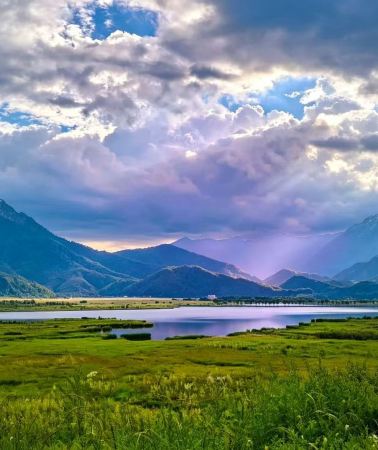
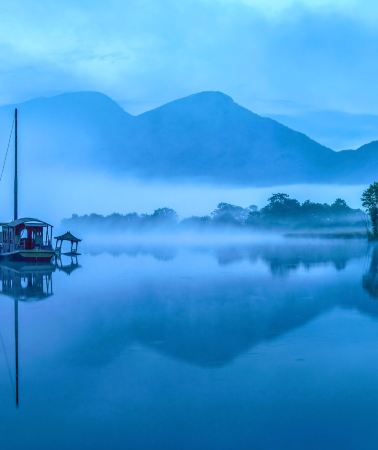
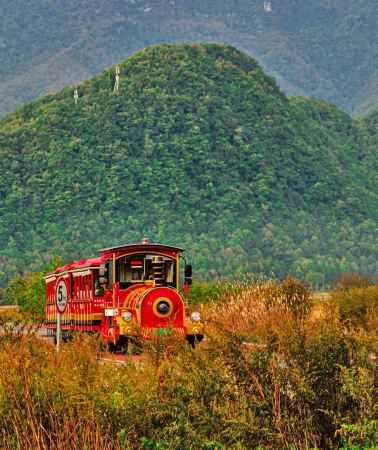
Jingyuan

Things to do in Jingyuan

Search attractions or local attractions & tours
Search

Explore top experiences

Top 10 attractions in Jingyuan

View all Attractions
Kongtong Mountain
No. 6 of Fall Viewing Attractions in Gansu

Kongtong Mountain

6.8
4.5/5
2.7k reviews
Kongtong Mountain has a long history and rich cultural connotations. It is the holy place where the ancestor of humanities, Xuanyuan Huangdi, climbed the mountain and asked questions. According to legend, Emperor Xuanyuan visited the western frontier after his achievements and personally visited Kongtong Mountain to ask Guangchengzi, who lived in seclusion in Kongtong Mountain, for advice on how to govern the country and maintain health. Kongtong became famous forever. Kongtong is the cradle of religion where the three religions unite and respect and prosper together. According to Taoist classics, the predecessor of Laozi, the founder of Taoism, was Guangchengzi who practiced in Kongtong, and Guangchengzi was the teacher of the Yellow Emperor. Therefore, Kongtong Mountain is known as "the first Taoist mountain in the world." In addition, Buddhism and Confucianism have made great progress in Kongtong Mountain. Kongtong Mountain is the birthplace of the Kongtong School, the five major martial arts schools in China. Kongtong martial arts is one of the five major martial arts schools along with Shaolin, Wudang, Emei and Kunlun. Kongtong martial arts is closely connected with Taoist culture. It is mysterious and strange, with unique characteristics. It is a wonder of Chinese martial arts. Kongtong Mountain belongs to the Danxia landform in high-altitude areas, which has extremely high scientific research value and extremely beautiful natural scenery. The ancients commented that "Kongtong's mountains and rivers are the best in Guansai", and another commented that "it has the majesty of the mountains in the north and the beauty of the mountains in the south." Kongtong Mountain is one of the country's first batch of 5A-level tourist attractions, a national geological park, one of the "50 Places Worth Visiting for Foreigners in China", and one of the first batch of "Chinese Tourism Culture Demonstration Sites". It is a natural kingdom of animals and plants, with various species of animals and plants. There are more than 1,300 species, and the forest coverage rate reaches more than 90%.Pingliang · 18.8km from Jingyuan
Shaanxi History Museum
2026 Asia 100 - Family-friendly Attractions

Shaanxi History Museum

9.5
4.8/5
35.1k reviews
Historical background: The Shaanxi History Museum is located to the northwest of the Giant Wild Goose Pagoda and is one of Xi'an's signature attractions. Planning for the museum began in 1977, the foundation stone was laid in November 1986, and it was officially completed and opened on June 20, 1991, when it was named the Shaanxi History Museum. In 2016, it was selected by the Chinese Cultural Relics Society and the Architectural Society of China for inclusion in the "Architectural Heritage of China in the 20th Century." Museum features: It is a large modern museum, and its completion marked a new milestone in the development of China's museum industry. This building complex features Tang-style architecture with a "central hall and four corner towers," arranged in an orderly hierarchy with varied heights, presenting a solemn grandeur that integrates national tradition, local characteristics, and the spirit of the era. The museum covers an area of 65,000 square meters and houses over 1.7 million cultural relics, ranging from simple stone tools used in the earliest stages of ancient humans to various artifacts from social life before 1840, spanning more than one million years. The cultural relics are not only numerous and diverse in type, but also of high quality and broad value. The collection is a dazzling array of treasures. It is an art palace showcasing Shaanxi's history and culture and ancient Chinese civilization, and is known as the "pearl of the ancient capital and treasure house of China." The museum houses many treasures, including bronzes from the Shang and Zhou dynasties, pottery figurines from various dynasties, gold and silverware from the Han and Tang dynasties, and murals from Tang tombs, most of which are treasures from the prosperous periods of the Han and Tang dynasties, and among them are fine pieces that the state prohibits from being taken out of the country. Treasures in the collection: There are three exhibition halls in the center of the museum. The first exhibition hall displays cultural relics from the prehistoric civilization of the Lantian Man 1.15 million years ago to the Qin Dynasty; the second exhibition hall displays cultural relics from the Han Dynasty and the Wei, Jin, Southern and Northern Dynasties; the third exhibition hall mainly features cultural relics from the prosperous Tang Dynasty. Each exhibition hall has its own treasure. Special exhibition halls are located on both the east and west sides of the central hall. The west side houses the "Special Exhibition of Tang Dynasty Treasures (Treasures gallery, artifacts unearthed from Hejiacun)", and many fine gold and silverware pieces from the High Tang period have been moved here for display. The east side houses the "Exhibition of Tang Dynasty Mural Treasures," which displays a number of authentic Tang tomb murals. Yu Ding The Yu ding is placed in the first exhibition hall at the museum entrance, and can be regarded as the treasure of the first exhibition hall. What is placed here is a replica; the genuine artifact is kept in storage. Inscription on the outer wall: The inscription reads "Under the vast heaven, there is no land that is not the king's; within the shores of the land, there is no one who is not the king's subject," reflecting the land ownership system of the Western Zhou period. The inner wall of the Yu Ding bears a four-line inscription of 28 characters, the gist of which is: in the early eighth month of a certain year, Wang Jiang took back the land originally granted to Shi Lu and regranted it to Yu, whereupon Yu had this ding cast to commemorate the event. Empress's jade seal: One of the treasures worth seeing in Exhibition Hall 2 is this jade seal of a Han dynasty empress, displayed on its own. The seal is made entirely of Hetian mutton-fat jade from Xinjiang, and is carved on top with a chi tiger, symbolizing royal power. Tri-colored glazed pottery figurine of a camel carrying musicians: This world-famous tri-colored glazed pottery figurine of a camel carrying musicians is located in the third exhibition hall of the museum, and its overall appearance and colors are well preserved. Seven men are seated on the camel's back, holding different musical instruments. Among them, the figurine holding clappers has its ear inclined and its attention focused, as if intoxicated by the beautiful music. In the middle, a woman is performing, and the camel has its mouth wide open, gazing upward toward the sky, as if also joining its master in singing loudly. Gold-inlaid agate cup with animal-head design: This artifact, located in the special exhibition "Special Exhibition of Tang Dynasty Treasures," is one of the first sixty-four national treasures listed by the National Cultural Heritage Administration that are permanently prohibited from being exhibited abroad. In addition, there are a black-glazed oil-spot bowl, a celadon-glazed ewer with a handle and bottom-fill design, a gilt silver bamboo-joint bronze incense burner,Gold bowl with mandarin duck and lotus petal designAnd many other treasures.China · Xi'an
Yanzhi Gorge

Yanzhi Gorge

2.7
4.6/5
28 reviews
Yanzhi Gorge is located on the east side of Yangcao Village, Huanghua Township, 8 kilometers northeast of Jingyuan County. It is adjacent to Kongtong Mountain in the east, Liupan Mountain in the west, and Laolongtan in the south. The canyon is 45 kilometers long and formed 800 million years ago. of the Ordovician. The name "Rouge" evolved from the ethnic minority "Yanzhi" and "Yanzhi" tribes that thrived here in the Spring and Autumn Period. A long time ago, Rouge Gorge and the surrounding area, with lush vegetation and dazzling crimson everywhere, was not only a good place for people to farm, but also a resort for collecting rouge, so the mountain was named Rouge Mountain. The ethnic minorities living here wear rouge clothes, use rouge powder, and eat rouge flowers. They are inseparable from rouge flowers and plants. They are called "Yanzhi" and "Yanshi" by other surrounding ethnic groups. "Yan" means "Yan" in ancient Chinese. The meaning of "red" agrees with the modern "rouge". Rouge Gorge not only has a poetic name, but also has a rich cultural heritage. Rouge Gorge is dangerous in the east and strange in the west, embroidered in the south and the north. Under the miraculous sculptures of natural art masters, strange peaks and rocks have risen. With a wonderful posture and lifelike appearance, the rock peaks of Yanzhi Gorge are characterized by strange rocks, cliffs and cliffs, and the overall structure is characterized by "secret, mysterious, strange and dangerous".Jingyuan · 10.1km from downtown

More things to do

Group Tours in Jingyuan

View More Group Tours in Jingyuan
Jingyuan Today's weatherOvercast 0-12℃
Jingyuan weather for the next 2 days11/3: 0-9℃, 11/4: 0-11℃

Free things to do in Jingyuan

What travellers say about Jingyuan

user-avatar
Anonymous user29 September 2026
4.0
A great place for hiking, with tons of negative ions! Currently, three areas are open to the public, with Xiaonanchuan as the core attraction. The botanical garden is still under construction and not recommended for now. Liangdianxia is Genghis Khan's summer retreat and doesn't require a long visit. PS: A thorough visit to Xiaonanchuan takes about an hour. It's recommended to enter by water. After reaching the end of the path, climb a short flight of stairs and then hike a little further. You can take a shuttle bus back to the bus stop (ticket price is 10 yuan). The walk down to the bus stop without the shuttle bus is 3km. It's best to visit in the morning.

Liupan Mountain National Forest Park

user-avatar
Anonymous user21 October 2026
5.0
This is the premier Taoist site and definitely worth a visit. The mountain is very high, and the steep steps are difficult to climb up and even more difficult to descend. We took the scenic area bus to Zhongtai, climbed the Imperial City, and then walked to Xiangshan. We took the scenic area bus down the mountain in 40 minutes.

Kongtong Mountain

user-avatar
135***164 October 2026
5.0
The canyon where the Lotus Garden Scenic Area is located is also known as "Fragrant Water Canyon," "Wild Lotus Valley," or "Lotus Garden." Located west of Jingyuan County, the canyon is lush with vegetation, including pines, cypresses, red willows, and birches. The wild lotus, botanically known as *Ligustrum lucidum*, is commonly called wild lotus because its leaves resemble lotus leaves. The abundant wild lotus and flowing streams surrounding Fragrant Water Mountain give it a majestic and beautiful appearance. The grassy gully, about 4 kilometers long, is expansive and spectacular, with lush wild lotus growth and towering, opposing peaks.

Wild Lotus Valley

user-avatar
M42***8114 September 2020
5.0
I went there during the May Day holiday. The scenery was nice, with green mountains and clear water. It was a good place to escape the summer heat. The Vienna 3 Hotel where I stayed at night was also very good. The room was very clean and the service was very good. It is in the new district, next to Guyuan No. 1 Middle School. It is worth recommending!

Laolongtan

user-avatar
小蕾带你去旅行12 September 2025
5.0
It is worth a visit here, there are glass plank roads and tall jungles

Liupan Mountain

user-avatar
Felipe Socheuk1 November 2026
5.0
It's nice to see up close a little piece from the China history. You get to see the real work they have done over 2,000 years ago. And to imagine they did it with so many details, and so many soldiers, horses.

Emperor Qinshihuang's Mausoleum Site Museum

user-avatar
juventuslover31 August 2023
5.0
The sky is high and the clouds are light, I can see the geese flying south. If you don't reach the Great Wall, you are not a hero, I have traveled 20,000 kilometers. On the top of Liupan Mountain, the red flag is fluttering in the west wind. Today, I have the long rope in my hand, when will I tie up the blue dragon? --Mao Zedong's "Qingpingle·Liupan Mountain" Travel with poetry, follow the red footprints, walk the Long March again, and check in the last mountain that the Red Army crossed during the Long March, "Mountain of Victory" Liupan Mountain

Liupan Mountain Red Army Long March Tourist Area

user-avatar
Anonymous user1 November 2026
5.0
Rated top 3 museum in china. A must go place in Xian. Many artifacts. But must get a guide to share Very difficult to get tickets. Engaged a guide from trip com with entrance ticket. But the place is super crowded. Queue to museum is super long and messy. Still a good place to visit to know history

Shaanxi History Museum

user-avatar
非你不渴27 June 2021
5.0
Xiaonanchuan is the place with the most waterfalls in Liupanshan National Forest Park. It is so clear and undulating that it is called Little Jiuzhaigou. There is also a saying that if you don't visit Xiaonanchuan, you have wasted your trip to Liupanshan.

Xiaonanchuan

user-avatar
薇风怡人8 August 2023
4.0
Although it was cloudy, I still felt that the canyon scenery was beautiful, and the picturesque scenery was completely different from Liupanshan Forest Park. The scenic area is generally very pristine, with very few artificial constructions, so the road is not very easy to walk on. The road on the cliff is very narrow, only one person wide. It is not recommended for people with acrophobia, the elderly and children to go there, as it is not convenient to take care of them. However, for young people who have a spirit of challenge and love nature, it feels like hiking in the wild, which is a good experience.

Yanzhi Gorge

Trip Moments in Jingyuan

Popular cities near Jingyuan

Frequently asked questions

How can I contact Trip.com customer support?

Get help anytime, anywhere within 30 secondsContact customer support

Change and cancellation policies vary by attractions and tours. Please check the product details page for more information.

Ticket prices may vary between weekdays and weekends, as well as during peak and off-peak seasons. When booking with Trip.com, you can also use Trip Coins to get extra savings. For more tips on booking discounted tickets, please visit Trip.com for the latest information.