Jianning

Things to do in Jianning

Search attractions or local attractions & tours
Search

Explore top experiences

Top 10 attractions in Jianning

View all Attractions
Golden Lake
No. 7 of Fall Viewing Attractions in Fujian

Golden Lake

6.7
4.3/5
2.6k reviews

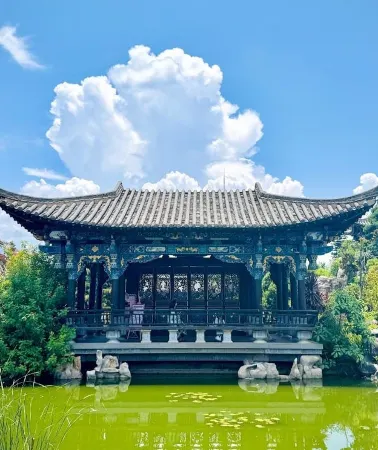
📸The scenic wonder of Jin LakeUnlockThe best lake and mountain in the worldThe hidden red rock wonderland Jin Lake is located in Taining County on the southern side of the Dashanling Mountains in the middle section of the Wuyi Mountains in northwestern Fujian Province. It was named after the gold-rich sands in the Jinxi River basin. The vast and profound lakes perfectly blend with the diverse Danxia wonders, creating a harmonious balance between masculine strength and feminine grace, as well as boldness and delicacy, forming a myriad of spectacular waterborne Danxia landscapes. The highlight moment of Jin Lake: - 2005: SelectedGlobal geoparkIt has become one of the five major parks in Taining Global Geopark. - 2010: Selected as a core component"China Danxia" world natural heritage; - 2011: AwardedNational 5A scenic areaThe attraction covers a total area of 140 km², including 36 km² of water area. Key highlights | The perfect collision of danxia landforms and emerald waters: The red cliffs and emerald waters are the two essences of Jin Lake. The majestic and picturesque mountains blend harmoniously with the serene and elegant lake, creating a perfect fusion of strength and grace. The crimson cliffs extend into the heart of the lake, while the clear waters embrace the mountain ranges, showcasing both grandeur and delicate beauty. This rare waterborne Danxia wonderland in China brims with vitality, where the auspicious harmony of mountains and waters converges. Must-visit attractions | Nature's wonders and cultural marvels at every step: -Tianji waterfallThe Baishuiji waterfall cascades down between two opposing peaks, standing approx. 20 m high and approx. 10 m wide. Under sunlight, it resembles strings of bright pearl curtains descending from the sky, presenting a spectacular and dynamic sight. The Tianji water curtain is located at the junction of different geological layers, with the lower stratum consisting of hard volcanic rock formed over 300 million years ago, while the upper layer...65-million-year-old soft Danxia sedimentary rockAfter prolonged erosion by flowing water, the soft rock layers were worn away while the hard rock layers formed cliffs, creating a spectacular waterfall view as the water cascades down. -Ganlu templeThe "soul's eye" of Jin Lake, also the prototype model for the Great Buddha Hall of Nara, Japan. It is embedded in an inverted triangular rock cave and adoptsA single pillar stands on the ground without a single tileThe unique design of this temple features the entire structure supported by a single red pillar, constructed entirely of wood without a single iron nail, making it an architectural marvel. Legend has it that the spring water here is as clear, sweet, and refreshing as nectar, hence the name. -Yuanyang LakeEvery winter and spring, flocks of mandarin ducks come here to overwinter in pairs, hence the name "Yuanyang Lake". This is a typical example of Danxia landform.Peak cluster viewThe mountain bases are connected and have not been completely eroded through, preserving their unique natural formations. -Chibi red cliffsOne of the iconic views of Jin Lake, featuring a massive naturally formed imprint on the cliff face."Xian"Opposite the character, cursive script faintly appears on the peach-shaped red cliff.LongevityThe characters "xian" and "shou" complement each other perfectly, forming a natural masterpiece crafted by nature's divine hand. -Slanted sky on landThe unique geological wonder of Jin Lake, unlike ordinary narrow gorges, features tilted rock crevices formed by composite joints and perennial water erosion, creating tensile fractures.A unique sense of "slant",You have to experience it in person to truly understand. -Shili PinghuNestled among rolling mountains and dotted with islands, the landscape blends water, hills, and sky into one harmonious palette. The scenery transforms with the weather: sparkling waves on sunny days, misty mountains in the rain, with mountain fog, sunrise, and sunset each offering their own charm—like a living ink painting. In the distance,Mao'er MountainIt is one of the landmarks of Jin Lake, standing at an altitude of 516 m, resembling a golden cat crouching with its head raised, gazing into the distance; upon closer inspection, it appearsThree sword peaksThe view features three towering rock pillars resembling swords piercing the sky, representing the iconic Danxia peak cluster landform.

Taining · 21.7km from Jianning
Taining Global Geopark
No. 2 of Night Attractions in Sanming

Taining Global Geopark

5.8
4.5/5
128 reviews

Taining Global Geopark of ChinaLocated in Taining County, Sanming City, Fujian Province, China, it is a national-level scenic area featuring Danxia landforms, natural landscapes, and cultural history, as well as an important component of the World Natural Heritage and Global Geopark. Core Features: 1. Danxia landform wonders: Taining boasts typical youth-stage Danxia landforms and is renowned as the "Grand Canyon Garden." The attraction features abundant views of peak forests, rock caves, meandering streams, and narrow valleys, earning it the title "Where China's Danxia Story Begins." Main attractions:Dajin Lake(Water Danxia)Zhaixia Grand Canyon,Shangqingxi(Bamboo rafting),Jiulong Pond(Nighttime Light Show),Zhuangyuan Rocketc. 2. Cultural and historical heritage: Taining is the hometown of Zou Yinglong, the top scholar in the Song Dynasty, known as the "Ancient Town of Han and Tang Dynasties, Famous City of Two Song Dynasties," preservingShangshu Mansion(Former residence of Li Chunye, Minister of War during the Ming Dynasty)Ming and Qing Dynasties GardenAncient architectural complex. The Danxia caves preserve ancient cliff burial sites of the Baiyue people and thousand-year-old Buddhist temples.Ganlu Rock TempleHistoric sites like the Hanging Temple. 3. Ecology & folk culture: The scenic area boasts high forest coverage and rich biodiversity, serving as a natural oxygen bar. Experience unique local cultureMeilin Opera(National-level intangible cultural heritage),Nuo dance,Black Rice Festivalfolk activities

Taining · 29km from Jianning
Ganluyan Temple

Ganluyan Temple

4.7
4.5/5
48 reviews

Ganluyan Temple is hidden deep within a red rock ravine. A red rock on the left resembles a large bell, while the one on the right looks like a giant drum, leading to the saying "a drum on the right and a bell on the left, the temple lies in between" to describe its location. In front of the bell and drum rocks stand three ancient pine trees. The inscription on the temple's mountain gate features a poem by Zou Shu, a scholar from the Song Dynasty, praising the temple's architectural features and scenery. Ganluyanis a natural cave that is narrow inside and open outside, standing about 80m high and 30m deep. The upper and lower parts of the cave are conglomerate, while the middle layer is sandstone. The spring water that seeps through is filtered by the rock layers, making it as clear, sweet, and refreshing as sweet dew, which is why the temple is named Ganluyan Temple. The temple was first built in the 16th year of the Shaoxing reign of the Southern Song Dynasty (1146 AD). The upper part of the cave is over 30m wide, while the lower part is only over 10m wide, forming an inverted triangle. The ancients solved the challenge of the rock's wide-top and narrow-bottom structure by using a single pillar to support the sky, which is also what makes the rock temple so magical. A single pillar stands on the ground, supporting four pavilions built above it. The entire complex of multi-story, double-eave, hip-and-gable roof buildings—including the Upper Hall, Shen Pavilion,Guanyin Pavilion, and Nan'an Pavilion—is supported by this single pillar, with not a single tile on the roof. It is truly worthy of being called a "Hanging Temple," "Feilai Temple," or "Single-Pillar Temple." The entire temple is made of wood, connected by T-shaped brackets without the use of a single iron nail. It is a rare ancient wooden architectural complex in southern China. According to research, when the Japanese monk Chōgen visited Fujian in the 12th century, the "insert brackets" he used extensively in the construction of the world-famous Great Buddha Hall at Tōdai-ji in Nara after returning to Japan were modeled after the T-shaped brackets ofGanluyan. In the 1950s, Ganluyan Temple was designated as a provincial-level cultural relic protection unit. The Beijing Architectural Research Institute sent experts to investigate and published photos of the temple in "People's Pictorial." In the early 1960s, a fire broke out in the temple, and the buildings were destroyed. The existing temple was rebuilt according to the original architectural style.

Taining · 23.4km from Jianning
Wangxian Valley
2026 Global 100 - Night Attractions

Wangxian Valley

9
4.5/5
26.8k reviews

Wangxian Valley is located at the northern foot of Lingshan Mountain, hidden among mountain streams and gorges. It was formerly an abandoned granite quarry and, after years of ecological restoration, has been built into the valley town it is today. The attraction is structured around the Jiuniu Stream Gorge, where streams flow through the valley and waterfalls cascade in layers; the Sandie Waterfall and Sankou Pot are among its most recognizable natural views. In summer, visitors can also experience gorge rafting that winds through the ancient town. The cliffside building complex on Baihe Cliff is the attraction's signature view. On the nearly 100-meter-high cliff face, cantilevered guest rooms, plank walkways, and viewing platforms climb upward in a zigzag pattern, looking up from the valley floor like pavilions in the sky. After nightfall, the cliff lights come on one after another, and the entire valley resembles a painted scroll of lights; standing on Lanyue Bridge and gazing at the full panorama of Baihe Cliff is a classic photo spot here. The Yanpu Old Street in the valley restores the appearance of traditional dwellings in northeastern Jiangxi, with rammed earth walls, bluestone slab paths, and horse-head walls interwoven throughout. Workshop Street is lined with traditional handicraft workshops for brown sugar, brewing, papermaking, cloth dyeing, and more, where you can watch ancient production methods on site; Mingchan Alley gathers intangible cultural heritage crafts such as bamboo weaving and woodwork. Bawei Street offers a dazzling array of Jiangxi-style snacks such as dengzhan guo and taro dumplings. When visiting, it is recommended to enter the attraction in the afternoon so that you can clearly see the gorge landforms in daylight without missing the spectacular lighting after nightfall. The entire route requires walking and climbing stairs, so comfortable, slip-resistant shoes are advisable.

China · Shangrao
Kulangsu
2026 Asia 100 - Best Things to Do

Kulangsu

8.7
4.5/5
54.6k reviews

Kulangsu is located in the southwest corner of Xiamen, Fujian Province, facing Xiamen Island across the Lujiang Strait. The island covers an area of about 1.88 km² and is a "garden on the sea, island of pianos, and exhibition of architecture from around the world" that blends nature with culture. In 2017, it was inscribed on the World Cultural Heritage List as "Kulangsu, a Historic International Settlement." The island is a bedrock island with a winding coastline and many natural harbors and reefs; its terrain is mainly hilly, with the highest peak, Sunlight Rock, at 92.7 m above sea level. It has a subtropical maritime monsoon climate, warm and humid, with spring-like weather all year round, making it suitable for visiting throughout the year. Motor vehicles are prohibited on the island, so there is no noise of traffic—only birdsong, flowers, waves, and piano music. Hundreds of historic buildings from the late 19th century to the mid-20th century still stand, spanning Gothic, Victorian, Baroque, Nanyang arcade, and traditional Minnan courtyard styles, and are acclaimed as a "World Architecture Expo" and a living specimen of a modern East Asian international community. Representative buildings include the Bagua Mansion (Organ Museum), Shuzhuang Garden, Haoyue Garden, the former site of the HSBC Mansion, Trinity Church, and the former residence of Lin Yutang. The island has a profound musical cultural heritage. Since the late Qing Dynasty, Western music was introduced through missionary schools. The density of pianos on the island has long ranked among the highest in the country, and musical masters such as Yin Chengzong and Xu Feiping were born here, earning it the reputation of "Island of Pianos" and "Island of Music." The Piano Museum houses century-old antique pianos, and the Organ Museum holds a giant pipe organ. Piano music is often heard among the streets and alleys, and the tradition of family concerts continues to this day. The core attractions on the island each have their own distinctive features. Sunlight Rock is the highest point on the island; from the summit, visitors can enjoy a 360° panoramic view of the entire island, Xiamen main island, and the Taiwan Strait, and there is a saying that "you haven't truly visited Xiamen until you've climbed Sunlight Rock." Shuzhuang Garden was the private residence of the wealthy Taiwanese merchant Lin Erjia, designed to "hide the sea within the garden and embrace the mountains as scenery," blending Jiangnan garden aesthetics with mountain and sea views; the garden's Piano Museum houses nearly a hundred antique pianos. Haoyue Garden features a 15.7 m tall granite statue of Zheng Chenggong facing the sea, built to commemorate the national hero who recovered Taiwan. Bagua Tower is a landmark building on the island, blending Chinese and Western architectural aesthetics, and houses hundreds of antique organs. Yuyuan Garden, Gulang Stone, Yanwei Mountain Ecological Park, and other cultural and natural attractions are scattered across the island, linking together a century of charm and the poetry of mountains and sea. Tour tips Island access: You need to take a ferry from the ferry terminal on Xiamen Island to get there. There is no general admission ticket; core attractions require separate tickets or a combo ticket. Mode of travel: Walking tours across the island; paid sightseeing electric carts are available; motor vehicles are prohibited. Recommended season: suitable all year round; spring and fall (April-May, October-November) offer comfortable weather and blooming bougainvillea, making the scenery especially beautiful.

China · Xiamen
Tengwang Pavilion Tourist Area
2026 Global 100 - Night Attractions

Tengwang Pavilion Tourist Area

8.7
4.5/5
30.1k reviews

Tengwang Pavilion Tourist Area is located on the east bank of the Gan River in Nanchang, with the riverside Tengwang Pavilion as its centerpiece. Originally built in the fourth year of the Yonghui era of the Tang Dynasty by Li Yuanying, Prince of Teng and son of Emperor Gaozu of Tang, it gained eternal fame through Wang Bo's "Preface to Tengwang Pavilion." Alongside the Yellow Crane Tower and Yueyang Tower, it is hailed as one of the "Three Great Towers of Jiangnan." Historically destroyed and rebuilt nearly thirty times, the current structure is a Song-style replica completed in 1989, designed based on Liang Sicheng's reconstruction sketches. With its green tiles and layered eaves, it remains a landmark of Nanchang to this day. The main pavilion follows a "three visible, seven concealed" layout: appearing as a three-story structure with encircling corridors from the outside, while actually containing seven interior floors—nine levels including the two-tiered base symbolizing ancient city walls. Turquoise-roofed galleries extend north and south from the base's flanks, connecting at their ends to auxiliary pavilions named "River-taming" and "Greenery-embracing," forming a mountain-shaped silhouette with the main tower. Below, an artificial lake and the nine-bend wind-and-rain bridge add classical garden charm to the majestic architecture. Each floor of the pavilion offers something remarkable. The white marble relief "A timely wind delivers Tengwang Pavilion" in the first-floor preface hall depicts the legend of Wang Bo riding the wind to compose his famous preface. The second-floor mezzanine features the long scroll painting "Gallery of eminent figures," gathering Jiangxi's historical luminaries like Tao Yuanming, Ouyang Xiu, Wang Anshi, and Tang Xianzu in one artwork. The third-floor mural "Linchuan dream" recreates Tang Xianzu's staging of "The peony pavilion" here. The fourth-floor "Land of wonders" painting compresses Jiangxi's iconic landscapes—Mount Lu, Sanqing Mountain, Dragon-Tiger Mountain, and Poyang Lake—into a single masterpiece. The fifth floor is the highlight for panoramic views: its central hall displays a bronze tablet inscribed with Su Dongpo's calligraphic version of "Preface to Tengwang Pavilion," while the east hall exhibits a scale model of the pavilion. Strolling the veranda offers sweeping views of the Gan River and modern skyline across the water. The top floor bears the plaque "Ninth heaven," with its west hall housing an antique-style theater flanked by replica ancient instruments like chime bells and stone chimes. Above, spiral-arranged bracket sets adorn the caisson ceiling, and between the double eaves hangs Su Dongpo's gilded "Tengwang Pavilion" plaque. After descending from the main pavilion, take time to explore the garden area: the square in front of the pavilion, the grand Song-style archway, the antique street lined with calligraphy and antique shops, and the small Suzhou-style garden Fuchang Garden with its lake reflections and bridge views—perfect for slowing your pace. To experience the poetic scene of "a solitary wild duck flying with the sunset glow, while the autumn water blends with the vast sky," an evening ascent to the pavilion is ideal. The fifth-floor corridor offers an expansive view, making it a prime spot to admire the sunset over the Gan River.

China · Nanchang

More things to do

Group Tours in Jianning

View More Group Tours in Jianning
Jianning Today's weatherShowers 15-21℃
Jianning weather for the next 2 days11/15: 14-24℃, 11/16: 15-20℃

Free things to do in Jianning

What travellers say about Jianning

user-avatar
Anonymous user7 October 2026
5.0
Ganlu Temple and Yixiantian at Dajin Lake have nice scenery and don't require much physical exertion. There weren't many people during the National Day holiday, so there were no long queues, which is an advantage of less-visited attractions. However, we weren't allowed to take a boat back; we took a tour bus instead. And for safety reasons, no one was allowed to go up to the deck to see the lake view, which was a bit of a pity.

Golden Lake

user-avatar
夜雨伴笙15 October 2026
5.0
We went up the mountain on the second day after the Mid-Autumn Festival. We took a bus to the foot of the mountain, then a cable car up to the hiking trail, and stayed overnight at the summit. The accommodation was on the mountain, and you still had to walk a bit further to reach the top. Overall, it was a pretty good experience.

Minjiangyuan Ecological Tourism Area

user-avatar
Anonymous user30 September 2026
5.0
I think this place is great except for the slightly inconvenient transportation. Hikers will love it. There aren't too many steps, and the forest coverage is very high. There are also unique rock formations to see. It's a very enjoyable experience!

Zhaixia Grand Canyon

user-avatar
wbclawyer28 November 2020
4.0
Taining Danxia landform is quite unique, and Taining Danxia caves are relatively perfectly developed. There are more than 60 large single caves and more than 100 niche-shaped cave groups in Taining World Geopark. Countless caves of various shapes and sizes constitute the unique Danxia micro-landform landscape, which can be called the "Danxia Cave Museum".

Taining UNESCO Global Geopark

user-avatar
M29***338 May 2026
5.0
Dajin Lake is beautiful and charming. The stories of Minister Ye and Minister Li are truly unforgettable.

Taining Global Geopark

user-avatar
粉红色的猴17 January 2022
5.0
Taining Ganluyan Temple is located on the west bank of Jinhu Lake in Taining, Fujian Province, and on the west side of Changtan Human-Shaped Mountain. It is one of the two magical hanging temples in my country and the most famous rock temple in Taining. The rock temple is hidden in the deep ravines of red rocks. A thick pillar supports four multi-story buildings. It is a masterpiece in the history of Chinese architecture and is famous both at home and abroad.

Ganluyan Temple
user-avatar
走遍天下XZ11 January 2021
4.0
In the Dajin Lake Scenic Area in Taining, Sanming, in addition to Ganlu Temple, there is another very interesting attraction, which is the "Skyline on the Water". Two mountains that are very close to each other, when the middle is filled with water, form this kind of landscape. There are cliffs on both sides, and you can't see the top at a glance. Large ships can't enter, and you need to go to another dock to change to a small boat to enter.

Fujian Dajin Lake Danxia Landform National Geopark - Yixiantian on water

user-avatar
F.May.Tau13 November 2026
5.0
This stay exceeded my expectations. The location is excellent and convenient; the room was thoroughly cleaned and odor-free; the bathroom had a separate shower and toilet, stable water pressure and temperature, and good soundproofing, making it very quiet at night. The staff were friendly and responsive. The breakfast had a good variety of options and was reasonably tasty. Overall, the facilities and service were excellent, and I recommend staying here.

Wangxian Valley

user-avatar
M10***338 November 2026
5.0
Gulangyu Island truly is a garden by the sea, with lush greenery and excellent air quality, well worth taking your time to explore and appreciate. Be sure to climb to the top of Sunlight Rock; from there, you can enjoy panoramic views of the entire island. Highly recommended.

Kulangsu

user-avatar
Heather13 November 2026
5.0
I initially wandered around the perimeter of the Tengwang Pavilion, but after buying a ticket and going inside, the most breathtaking moment was seeing the entire building directly in front of me. I marveled at the ingenuity of generations of craftsmen, which has created the evidence that the Tengwang Pavilion remains in the world today.

Tengwang Pavilion Tourist Area

Trip Moments in Jianning

Popular cities near Jianning

Frequently asked questions

How can I contact Trip.com customer support?

Get help anytime, anywhere within 30 secondsContact customer support

Change and cancellation policies vary by attractions and tours. Please check the product details page for more information.

Ticket prices may vary between weekdays and weekends, as well as during peak and off-peak seasons. When booking with Trip.com, you can also use Trip Coins to get extra savings. For more tips on booking discounted tickets, please visit Trip.com for the latest information.