
Things to do in Hotan Prefecture
Explore top experiences
Top 10 attractions in Hotan Prefecture


Yotkan Ancient City
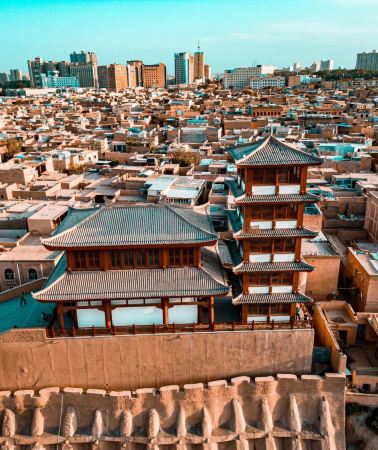
Yotkan Ancient CityThe Ancient Khotan Art Gallery of the Western Regions Yotkan Ancient City is a large-scale immersive historical and cultural attraction centered around the ancient Khotan culture of China's Western Regions, integrating representative artistic elements from the region. It showcases both the Buddhist art that flourished during the Western Regions period and the Central Plains Tang Dynasty culture admired by ancient Khotan, along with the brilliant cultural treasures accumulated throughout Hotan's long history. Using modern culture and technology, it recreates the prosperous scenes of China's Western Regions era. The attraction is located in Bagqi Town, Hotan County, Xinjiang. Hotan, anciently known as Khotan, was a key town on the southern route of the ancient Silk Road and has been an inseparable part of China since ancient times. Nestled against the Kunlun Mountains to the south and the vast desert to the north, it marks the starting point of China's Jade Road, the origin of the Kunlun myth of the Queen Mother of the West, and the first stop of Buddhism's eastward spread into China. Here, the world's four great civilizations collided and blended, gradually forming a unique regional culture that scholars have dubbed the "Oriental Pearl" of the Western Regions. YotkanLegend has it that this was the capital of the ancient Khotan Kingdom during the Han and Tang dynasties. It is now located in Ailaman Village, Bagqi Town, Hotan County. According to legend, in the 1860s...Karakash RiverThe river changed its course, carving out a long, deep trench that revealed a wealth of historical artifacts from the Han to Song dynasties—this is the mysterious Yotkan Ruins. In 2020, the Yotkan Ancient City cultural tourism project grandly launched, reviving the millennia-old cultural heritage. Rooted in ancient Khotan culture and inspired by historical records of royal cityscapes, it blends cultural essence with architectural aesthetics. Featuring square layouts, red walls, and white structures across its 156-acre site, the project meticulously integrates diverse spaces: food streets, artisan workshops, folk culture zones, jade treasure markets, royal promenades, bar districts, boutique homestays, poverty alleviation product displays, and five cultural exhibition halls. This revitalizes Hotan's tourism landscape while crafting a distinctive regional identity. Yotkan,Legend has it that this was the capital of ancient Khotan during the Han and Tang dynasties. In the local language, it carries two meanings: "Land of Kings" and "Quilt," symbolizing the precious civilizations buried beneath this land. The architectural aesthetics of the Western Regions Royal City Scenic area overallThe architectural design adopts square fortifications, red walls, and white structures as its primary elements. Inspired by a 10th-century mural of the Khotan Kingdom's capital preserved in Dunhuang's Cave 454, the layout reveals a square royal city with two gates, corner towers at each wall, a surrounding moat, and inner governmental offices and temples. The restoration of Yotkan Ancient City also draws from historical records describing the ancient western ruins of Khotan—the Akspili Ancient City (meaning "White City"). Additionally, influenced by "Sand-Buried Khotan," the outer walls feature sand mounds to recreate the historical appearance of the ancient city. Inside the attractionThe layout is well-arranged, with most buildings featuring the Xinjiang "Ayiwan" residential style. "Ayiwan" is a Uyghur term meaning "bright dwelling," characterized by intricate wood carvings of animals, figures, and flowers, showcasing exquisite craftsmanship. This architectural style dates back 300–400 years, with its prototype emerging as early as the late Han to Tang dynasties. The *Travel Notes of Song Yun* records that Khotan had "houses and markets everywhere, with city walls and flowers resembling Luoyang, distinguished only by its flat-roofed buildings." All nations rejoice with Khotan Awakening a dream that has slept for a thousand years, Yotkan Ancient City collaborates with Beijing Wuwei Vision, a renowned domestic cultural tourism performance team, to create Xinjiang's first immersive sensory performance, "The Harmonious Music of Khotan." This experience offers "two cultures in one city, unique charm on every street," presenting daytime "performances from all directions" and nighttime "tales of the ancient city," vividly recounting the epic historical saga of ancient Khotan. Daytime tour "Ten Directions, Hundred Performances" revives the ancient Khotan marketplace atmosphere Yotkan Ancient City gathers the rustic charm of millennia, hiding more daytime stories in every corner of the ancient town, waiting to be discovered. By day, beneath the exotic white architecture, as the drum signals echo from the watchtowers, the ancient Jade Gate of Khotan slowly opens. Sogdian merchants, caravan traders, and street vendors weave through bustling alleys brimming with distinctive Central Asian character. These figures from across the centuries, carrying their wares, gather together with joyful hospitality, extending warm Xinjiang-style ceremonial welcomes to all visitors... Night tour of "Ancient City Tales" - immerse yourself in millennia of history When exotic architecture meets nighttime performances, Yotkan's story gains another chapter. Stepping into the ancient city at dusk isn't time travel—it's a return to a thousand years ago. As the theme song "Millennium" plays, savor street food at the bazaar and share drinks with veterans while exchanging life stories... The splendid fusion of Eastern and Western cultures unfolds like a vibrant scroll, revealing the prosperity of ancient Khotan frame by frame. Visitors become fully immersed in Khotan's rich history, experiencing a magnificent ancient city that never sleeps. Highlights summary: "Phoenix Song at the City Opening", "Welcome Dance", "Market Scenes of Khotan", "Music and Dance of Khotan", "Silk Road Phantom", "Silk Road Cultural Exchange", "Desert Warriors", "Dreamlike Sacred Realm", "Boiling Ancient City" "Phoenix Song Welcomes Guests" Opening Dance Performance "With the phoenix's cry brushing its feathers, spring graces all lands," the stunning light show heralds the city's grand opening with the call of the phoenix! Mythical beasts roar as golden-armored warriors escort the royal procession of King Yuchi and Queen Yuchi, proclaiming a warm welcome to honored guests from afar. The gates of Vaisravana swing open amid exuberant welcome dances, creating a spectacle of wonder. Camel-mounted musical floats glide in, ushering in a jubilant celebration. ② "Market Life in Khotan" Step back in time to experience the bustling bazaars of ancient Western Regions. Immerse yourself in the vibrant commerce of a millennium ago, with merchants coming and going, street vendors calling out their wares, and breathtaking acrobatic performances. Through the lively chaos, savor the simple charm of everyday life. ③ "Music and Dance of Khotan" The white neighborhood instantly transforms into a kaleidoscopic world of joy, accompanied by the lively and passionate "Jilara," showcasing the enchanting musical and dance charm of the "Land of Song and Dance" where "all melodies converge in Khotan." ④ "The Silk Enchantment" The Phantom of Silk Transmission draws inspiration from the description of the "Silk Princess" of Khotan in Xuanzang's "Great Tang Records on the Western Regions"Dandan Oilik RuinsThe woodblock print of "The Silk Princess" discovered in China was adapted from historical records. The heroic princess stands tall on her white horse, accompanied by female soldiers in blue armor protecting her. With stunning 3D effects and acrobatic wirework, the performance creates a visual feast of "women holding up half the sky," delivering a breathtaking and dazzling spectacle. ⑤ "Silk Road: Mutual Learning" In the dazzling spectacle of the royal city, the elegant music of the Tang Dynasty blends harmoniously with the mesmerizing dance of the Western Regions, painting a breathtaking picture of cultural fusion between Central Plains and the West. This grand performance unfolds an epic ode to the Silk Road that stirs the soul. ⑥ "Desert Warriors" Ban Chao abandoned his writing brush to join the military and was sent on a diplomatic mission to the Western Regions for 31 years, successfully bringing over 50 oasis city-states under allegiance. The king of Khotan even dispatched troops to assist him. Ban Chao's story epitomizes how the ancient kingdom of Khotan guarded China's frontiers across dynasties. With passionate battlefield declarations and unyielding loyalty, the Lion Gate now stages heroic tales of Ban Chao and veteran border defenders protecting their homeland. ⑦ Dreamlike Wonderland Zhang Qian's diplomatic missions to the Western Regions pioneered the Silk Road; Ban Chao safeguarded these territories, expanding their reach. From the westward journeys of Faxian and Xuanzang to the Khotan kings and queens of the Yuchi clan who yearned for Central Plains unity, these figures wrote brilliant chapters in Chinese history—unifying the nation, fostering ethnic solidarity, and celebrating cultural integration. 8. "Boiling Ancient City: Carnival of the Past" According to historical records, the Garuda is a divine bird in Buddhism, with wings as bright as gold that radiate countless golden rays under the sunlight. Illuminated by the bonfire, the Garuda spreads its wings and soars toward the highest point of Sumi Castle, cutting through the long night. A lively Mesirep dance celebrates prosperity, making the ancient city shimmer with vibrant life.Hotan County · 11.9km from downtown

Hotan Night Market
Hotan Night Marketis a famous food landmark in Hotan city and what many locals call the "old night market," known for its authentic, bustling atmosphere. The entire food street is enclosed in a long, narrow canopy: the aisles, stretching over 200 m, are lined with more than 200 stalls, with hundreds of snacks available from one end to the other. Hearty barbecue staples like lamb skewers, red willow lamb skewers, naan pit roasted meat, rack meat, roasted lamb chops, and liver wrapped in fat are available everywhere. Unique Southern Xinjiang delicacies like watermelon roasted meat and watermelon roasted pigeon are hard to find elsewhere, and yogurt zongzi and meat-stuffed tripe are also worth saving room for. The market also typically incorporates specialty goods, creative cultural products, and local handicrafts, making it a great place to stroll, browse, and enjoy a relaxed evening.Hotan City · 1.3km from downtown

Xinjiang Kunlun Mountain Scenic Area
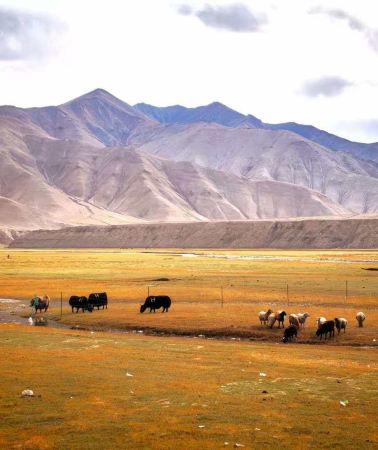
Banlange grassland is located at the northern foot of Kunlun Mountain, in Uruksai Township in the mountainous area of Cele County. It is a winter pasture for herdsmen. The basic vegetation includes Kunlun Song, needle hair, astragalus, wild onion, etc. It is also a beautiful alpine grassland and a natural grassland, famous for its excellent grass quality and pollution-free. Uruksai is Uyghur, meaning "big river beach". The grassland is 95 kilometers away from Cele County, 15 kilometers away from Uruksai Township Government, and 2 kilometers away from the township people's government is at the foot of Kunlun Mountain. As the altitude gradually increases after entering the mountain, it reaches an altitude of 3,500-3,800 meters. The scenery on both sides of the road is becoming more and more different from the desert Gobi. After passing a big uphill top, the 45,000-acre Banlange grassland will appear in front of you. Although it is not as wide as Nalati grassland, it does not lack the charm of a grassland. Although it is not as flat as Balikun grassland, its endless blue sky, touchable white clouds, wild flowers all over the mountains and green grasslands, as well as groups of cattle and sheep floating on the hillside, playful marmots, jumping hares, running yaks, snow chickens with spread wings, and roosting partridges, isn't it a true portrayal of what a grassland should have? Echoing the Banlange grassland in the distance is the majestic Kunlun Mountains, a sacred mountain that holds a prominent position as the "ancestor of all mountains" in the cultural history of the Chinese nation. The ancients called the Kunlun Mountains the "Dragon Ancestor Vein" of China. It stretches 2,500 kilometers from east to west, starting from the Pamir Plateau in Tajikistan in the west and ending at the Kunlun Pass and the adjacent Qinghai-Tibet Mountains - the Burhan Buda Mountains, Bayankala Mountains and Amnye Machen Mountains in the east, forming an Inner Asian barrier between the Xizang Plateau and the Tarim Basin in western China, with an average altitude of 5,500 to 6,000 meters and a width of 130 to 200 kilometers. The Bugdaban Peak, with an altitude of 6,860 meters, is an important natural regional boundary between Xinjiang Province and Qinghai Province. Standing in the grassland, even the vision becomes broad all of a sudden. A vast green velvet carpet lies before your eyes. Hundreds of birds fly, foxes and rabbits gather in groups, and various animals come and Round-trip, interweaving together into a beautiful picture, which is refreshing. The fresh air makes people intoxicated. I really want to sing a famous song of Tengger, "Blue sky, white sheep..." Speaking of sheep, the famous Hotan sheep are dotted here. It is famous because it has created the well-known Hotan carpet. The rock paintings found in the Sangzhu and Loulan ruins in Hotan, as well as the colored wool fabrics from the Eastern Han Dynasty unearthed in the Minfeng and Niya ruins, prove that the Hotan area has been raising white sheep for hand-woven wool fabrics for a long time. Hotan sheep is a semi-coarse-wool sheep breed that is resistant to drought, heat and roughage. It has lived in desertification and semi-desert for a long time.grasslandUnder the ecological environment and low nutritional level, it has formed the characteristics of high adaptability. Its hair is bi-type, long and uniform, with good elasticity, luster and whiteness, and is suitable for weaving.carpetThe high-quality raw materials of Hetian and jacquard blankets, Hetian carpets woven from Hetian sheep wool enjoy a high reputation internationally. The people living on the Banlange grassland are as generous and hospitable as the mountains.UighurThe Uygur people are mainly engaged in farming. Historical records and ancient cultural relics prove that Hotan is one of the ancient agricultural areas in Xinjiang, planting crops such as cotton, wheat, and corn. In ancient times, there was a considerable foundation. According to the record of Hotan in the "Book of Han·Biography of the Western Regions", "all planted grains, grass, livestock and made soldiers, which was roughly the same as the Han." However, many Uygurs have changed their traditional lifestyles and live in mobile homes on the grasslands - yurts, leading a nomadic life of following water and grass, and migrating back and forth between summer pastures and winter pastures every year. The simple ethnic customs have attracted many tourists from Hotan and all over Xinjiang to come here to escape the summer heat and travel. Every year from late spring to late autumn is the bustling season in Banlange. In late spring, the vast grassland is surrounded by white clouds, and the stream formed by the melting snow of Kunlun flows between the mountain streams and grasslands. Sit down and touch the light and fluffy grass, bathe in the warm sunshine, breathe the air with a slight scent of grass, and hear the ancient and melodious tunes of herdsmen. On the mountaintops in the distance, sheep are like stars, and the green dome is dotted with a little white, which can't be seen inadvertently. In such a natural scenery, lie down and feel it carefully, and slowly integrate into this beautiful picture... In early summer, flowers are in full bloom, birds are singing, and the whole grassland is "dressed" beautifully by flowers all over the mountains. Rare species such as Kunlun snow chicken, quack chicken, and marmot are wrapped in it. Flocks of sheep and goats live in the grassland like flowing white clouds, and groups of dairy cows, cattle, and yaks appear and disappear in the grass on the hills. Thousands of horses are galloping on the vast grassland, and eagles are soaring in the blue sky with white clouds, forming a vivid and real landscape painting. Here you can appreciate the beautiful grassland scenery of "the sky is vast, the wilderness is boundless, and the wind blows the grass low to see cattle and sheep". In the midsummer heat, the lush sea of grass looks like an ocean. You can have a picnic here to escape the heat, spread out cushions or sit on the ground, and enjoy the feast here. There are prairie chicken, roasted whole lamb, barbecue, thin-skin buns, local eggs, corn sacs, prairie sand date honey, yellow apricots and other special snacks. The yellow apricots here are tender and delicious. They are mountain variants. The fresh juice is sweet and sour, and the taste is smooth. The almonds are edible, large, and taste good. They have antitussive and expectorant effects. When you rest after the meal, if you are interested, you can also whip the horse, ride around and see the real happiness of the herdsmen. You can hunt for the mysterious beauty of the distant Kunlun Mountains, or enjoy the running and playing of hares and marmots on the nearby grass slopes. You can also pick green and fresh wild mushrooms and wild mountain onions. The shepherds here always pick some wild mountain onions to take back to make naan or wrap "ququer" (wontons). In autumn, the temperature in Hotan is still scorching, but here there is no heat at all, which makes people feel Unlimited happy and comfortable. The air is filled with humid water vapor from time to time. Unconsciously, you are in the clouds and mist of the mountains. You accidentally experience the feeling of being a god, and you feel a little proud in your heart. Autumn is also the season of harvest. There are delicious food and abundant fruits. The special flavors presented by the simple and hospitable herdsmen will make you linger. The white felt house is like a woven snow lotus, providing you with a place to settle down when you are tired, and you can experience the exotic customs in person. At the same time, autumn is also the season for mowing grass. The grass cutters set up shacks deep in the grassland, and three or five people live together. By September, piles of grass are neatly stacked, waiting to be processed and shipped out. Banlange grassland has green grass, green mountains, white snow peaks and clouds and sky, with unique scenery, outlining a gorgeous picture of alpine pasture. The climate is pleasant and it is a good place to escape the summer heat. The following time is left for everyone to appreciate the beautiful scenery and reminisce the unforgettable journey.Qira · 97.4km from downtown

Yurungqash River
玉龙喀什河It originates from the glaciers on the northern slopes of the Kunlun Mountains, flows north through the urban area of Hotan, and spans over 500 km. Downstream, it merges with the Karakash River—known for its abundance of black jade—to form the Hotan River, which then flows deep into the Taklamakan Desert. The river's fame comes from Hotan jade: jade materials that have fallen from the mountains are washed and polished by the river for years, turning into smooth, lustrous pebbles that settle in the riverbed. This is why the nickname "White Jade River" has been used for thousands of years. The riverbank is a window into understanding Hotan's natural environment and local culture. Visitors can stroll along the riverbank to enjoy the scenery of the river, oases, and distant mountains, while also experiencing the local lifestyle of residents living along the river.Hotan City · 10.9km from downtown

Hotan Museum
Hotan Museum is a comprehensive museum dedicated to showcasing the history and culture of Hotan. It houses over 10,000 artifacts, most of which were unearthed from archaeological excavations across Hotan. The museum's star exhibits are quite specific: a palm-sized Tang Dynasty white jade monkey, featuring a large monkey holding a smaller one with another riding on its shoulder, symbolizing "successive generations of nobility," with a warm and delicate jade texture; the "Yuanhe First Year" brocade pouch unearthed from the Niya Site is exceptionally precious due to its Eastern Han Dynasty dating inscription; and wooden tablets with Kharosthi script recording land sales and other daily affairs, offering a fascinating read of archival documents from nearly 2,000 years ago. The Buddhist art section is also worth a close look. The clay Buddha head unearthed from the Rawak Buddhist Temple Ruins bears a distinct Gandhara style, the murals from the Damagou Buddhist Temple Ruins recreate the appearance of the peak period of Khotan Buddhism, and the copied fragments of the "Preface to the Orchid Pavilion Collection" unearthed from Mazatage reveal traces of Central Plains calligraphy reaching the Western Regions. The museum also features a special exhibition hall for the Niya Site titled "People of the Han and Jin Dynasties" and a cultural and creative experience hall, allowing visitors to gain a deeper understanding of its unique cultural charm.Hotan City · 2.6km from downtown

Tuancheng Scenic Area
Tuancheng Scenic Area is a living district transformed from old city alleys. The old city alleys radiate from the center in concentric circles, resembling a round shape, and residents still live there today. Wood-carved doors and windows, arched skylights, mosaic brick walls, and earthy brown bricks and tiles continue the style of traditional dwellings. The door and window patterns and courtyard details vary from house to house, and grapevines from many courtyards reach over the walls, forming a green canopy above the alleys. Shops along the street feature traditional Hotan handicrafts such as Atlas silk, handmade wool carpets, copperware, and wood carvings. The area also hosts specialty shops, dining, and cultural exhibition spaces. Compared to a typical ancient architectural attraction, it feels more like a living district that is still in use, making it perfect for a leisurely stroll to appreciate the architectural details and experience the authentic local atmosphere.Hotan City · 2km from downtown

Ahe Highway
Ahe Highway is a graded highway in China that runs through the Taklamakan Desert, fully funded by the transportation department and built along the river (Hotan River). It starts in the north at Nankou Town (12th Regiment), Alar City, an oasis city at the southern foot of the Tianshan Mountains, and ends in the south at Yulongkashi Town, Hotan City, on the northern edge of the Xinjiang Kunlun Mountain Scenic Area. Of this, the desert section is 407.567 km long, and the non-desert section is 16.805 km long.Hotan City · 4.8km from downtown

Taklamakan Desert
The Taklimakan Desert (Hotan) is a tourist destination full of mystery and challenges. It is located between Hotan and the Yarkand River Valley and stretches in an arc to the southwest. The sand here is fine and soft, and it is vast and boundless, giving people a vast visual shock. Visitors can choose a desert off-road vehicle tour to experience the magnificence and vastness of the sea of sand. For travelers who love hiking, the oasis on the edge of the desert provides a unique hiking route, along which you can enjoy the wonderful landscape of the desert and oasis interweaving. At night, the temperature in the desert is low and the starry sky is clearly visible, making it an ideal place for stargazing. When traveling, it is recommended to prepare plenty of water and sunscreen, and wear clothes suitable for the desert environment to cope with the temperature difference between day and night and the strong sunlight. Whether it is a short desert experience or an in-depth adventure, the Taklimakan Desert (Hotan) can bring unforgettable memories to tourists and leave a deep impression.Karakax · 50.2km from downtown

Damohu Yang Ecological Scenic Area
Damohu Yang Ecological Scenic Area is a natural attraction themed around poplar forest conservation and desert landscapes. Featuring vast stretches of pristine poplar forests and expansive deserts, it's an ideal destination for photography enthusiasts and nature explorers. Visitors can admire spectacular poplar forest views, experience desert adventure activities, and feel the magical charm of nature.Hotan City · 14.5km from downtown

Niya Site
Niya Site is the former site of the Jingjue Kingdom during the Han and Jin dynasties, spread across an area 25 km long from north to south and 5–7 km wide from east to west. Within this narrow, ancient city site, the remains of Buddhist temples, houses, and cemeteries are scattered about. The former farmlands, forest belts, canal systems, and smelting sites are still faintly visible. It can be seen that the residents of the Jingjue Kingdom were divided into northern and southern districts by the Niya River that flowed through the city, with the wealthy living in the south and commoners in the north. However, every household had its own orchard, livestock pen, and pond. There is an earthen Buddhist pagoda in the ruins; although dilapidated, it still retains its ancient charm. The Jingjue Kingdom was located in theTaklamakan Desert. Situated by the Ruoshui River, it was a small kingdom. According to the "Book of Han: Account of the Western Regions," it had only "480 households, 3,360 people, and 500 soldiers." During the Eastern Han Dynasty, it was "annexed by Shanshan, and the kingdom ceased to exist." However, "all travelers on the southern Silk Road passed through this city." Silk Road merchants bustling across the bridges of the Niya River brought treasures of the time to this small, isolated kingdom, including glassware from West Asia, Greek-style artworks, Indian cotton fabrics, and silk brocades, lacquerware, bronze mirrors, and paper from the Yellow River basin. The blue-background batik cotton fragments and cotton trousers unearthed from a Han-Jin joint burial tomb for couples are among the earliest cotton textiles discovered in China to date. In particular, the brocade with the inscription "Five stars rise in the east, benefiting China" is considered a masterpiece of brocade and a precious relic of the Silk Road. Kharosthi documents are a major discovery inNiyaarchaeology. The 800 Kharosthi wooden slips unearthed at the Niya Site include proclamations, letters, and instructions, covering almost every aspect of life at that time. Niya’s abandonment remains a mystery. There are no signs of river diversion or war around the ancient city ruins, and there are no traces of human presence in the houses and courtyards. A large number of official documents had just been organized but were not yet transported away; even their loyal dogs were forgotten and left tied to the pillars at their doorsteps. The people of Niya disappeared in such a hurry, leaving behind only sand-buried ruins and an enduring, unsolvable mystery in the vast desert.Minfeng · >100km from downtown
Experiences you can't miss in Hotan Prefecture
Featured Travel photography in Hotan Prefecture
View all Travel photography![Hotan Prefecture Travel Photography[Wedding photo micro-movie aerial photography/wedding follow-up photography/makeup and clothing/charter tour guide customization]](https://ak-d.tripcdn.com/images/0354f12000e9rjynt154F_C_568_320.jpg?_fr=wc)
FromUS$99.65
![Hotan Prefecture Travel Photography[Driver and guide + travel photography + wedding photos, aerial photography, micro-film + makeup and clothing + itinerary customization ]](https://ak-d.tripcdn.com/images/0353212000nytzg1nB875_C_568_320.jpg?_fr=wc)
FromUS$16.61
![Kizilsu travel photography[Wedding photo micro-movie aerial photography/wedding follow-up photography/makeup and clothing/charter tour guide customization]](https://ak-d.tripcdn.com/images/0356d12000iiw7hai4923_C_568_320.jpg?_fr=wc)
FromUS$16.61
![Travel photo shoot in Qira[Anniversary photography shoot - all raw photos included + multilingual translation, photography, videography, and aerial drone services to capture your sweet moments]](https://ak-d.tripcdn.com/images/0353412000o5cjz7lC2E8_C_568_320.jpg?_fr=wc)
FromUS$33.22
![Lop County trip moments[On-site photography and videography services including family-friendly and couple photos, short videos, promotional videos, portraits, wedding photos with all raw images provided]](https://ak-d.tripcdn.com/images/0356i12000p6vhxqrACB5_C_568_320.jpg?_fr=wc)
FromUS$107.96
![Trip moments in Minfeng[Photography and videography services including family-friendly, individual and couple photos, short videos, promotional videos, portraits, wedding photos with all raw images provided]](https://ak-d.tripcdn.com/images/0354l12000s5mdvlmDAEB_C_568_320.jpg?_fr=wc)
![Yutian Travel Photo Shoot[One-on-One Photography Services: Appointment Shooting, Following Shots, Wedding Photography, Street Photography, Candid Shots, Aerial Photography, Videography / Multilingual Translation]](https://ak-d.tripcdn.com/images/0351v12000r1ggn1aAB58_C_568_320.jpg?_fr=wc)
![Kunyu trip moments[On-site photography and videography services including aerial photos, short videos, promotional videos, wedding photos, portraits with all raw images provided]](https://ak-d.tripcdn.com/images/0353y12000s42w46276FE_C_568_320.jpg?_fr=wc)
FromUS$107.96
Featured SIM card in Hotan Prefecture
View all SIM card
4.6/5
· 69.7k reviews· 2mil bookedFree cancellation
Book now for today
Fast-selling Wi-Fi & SIM cards
50% off
Limited-time sale
FromUS$0.09US$0.18

4.6/5
· 23.6k reviews· 659.5k bookedFree cancellation
Book now for today
91.4% of travelers recommend
50% off
Limited-time sale
FromUS$0.09US$0.18

4.5/5
· 9.7k reviews· 233.5k bookedFree cancellation
Book now for today
Similar travellers pick
52% off
Limited-time sale
FromUS$0.08US$0.17

4.6/5
· 9.1k reviews· 237.1k bookedFree cancellation
Book now for today
8.004k bookings in 7 days
50% off
Limited-time sale
FromUS$0.08US$0.16

4.6/5
· 31.7k reviews· 936.7k bookedFree cancellation
Book now for today
Fast-selling Wi-Fi & SIM cards
50% off
Limited-time sale
FromUS$0.09US$0.18

4.6/5
· 6.5k reviews· 189.6k bookedFree cancellation
Book now for today
Fast-selling Wi-Fi & SIM cards
50% off
Limited-time sale
FromUS$0.08US$0.16

4.6/5
· 2.3k reviews· 57.4k bookedFree cancellation
Book now for today
90.9% of travelers recommend
50% off
Limited-time sale
FromUS$0.08US$0.16

4.7/5
· 5.4k reviews· 136.1k bookedFree cancellation
Book now for today
Fast-selling Wi-Fi & SIM cards
50% off
Limited-time sale
FromUS$0.08US$0.16
Free things to do in Hotan Prefecture
Yotkan Ancient City
Hotan County · 11.9km from downtownBook now for tomorrow, Cancel anytimeHotan Night Market
Hotan City · 1.3km from downtownXinjiang Kunlun Mountain Scenic Area
Qira · 97.4km from downtownYurungqash River
Hotan City · 10.9km from downtownHotan Museum
Hotan City · 2.6km from downtownTuancheng Scenic Area
Hotan City · 2km from downtownAhe Highway
Hotan City · 4.8km from downtownTaklamakan Desert
Karakax · 50.2km from downtownDamohu Yang Ecological Scenic Area
Hotan City · 14.5km from downtownBook now for tomorrow, Cancel anytimeNiya Site
Minfeng · >100km from downtown
More ways to travel from Hotan Prefecture
Private Tours in Hotan Prefecture
View More Private Tours in Hotan Prefecture



What travellers say about Hotan Prefecture

我还在这里3 July 2026
5.0
Buying daytime tickets for the evening show is such great value! The performers are incredibly dedicated. Despite the recent high temperatures in Hotan, they still managed to deliver such a fantastic performance for tourists – a huge thumbs up to all the performers and staff! The evening show is definitely worth seeing.
Yotkan Ancient City

M25***6123 December 2022
4.0
Hotan Night Market is located in Hotan City, in the southern foot of Xinjiang. You can taste most of Xinjiang's delicacies, such as sizzling roasted lamb legs, roasted buns, red willow barbecue, and a wide variety of fruits and vegetables. Experience a different exotic atmosphere.
Hotan Night Market

William大哥21 May 2026
5.0
Snow-capped mountains and grasslands may be found everywhere, but Kunlun, the ancestor of all mountains, the abode of immortals, is unique in the world. No regrets for being born in China, and a must-do in this lifetime is to climb Kunlun Mountain. Kunlun Secret Realm Luxury Wilderness Hotel, located within the core scenic area, boasts top-tier management standards. Welcome to experience it.
Xinjiang Kunlun Mountain Scenic Area

非凡轶生1 August 2023
5.0
Yulong Kashi River (formerly Yulonghashi River): Originated from the vast Kunlun Mountains, it flows into the Tarim Basin and merges with the Karakashi River in the west to form the Hotan River. The river is 325 kilometers long, with many tributaries and a drainage area of 14,500 square kilometers.
The river is rich in white jade, green jade and black jade. It has been the main river for producing jade in Hotan since ancient times. It is also called the White Jade River because it produces Hotan jade. It is a river in the Hotan area of Xinjiang, China.
Yurungqash River

风雪太行8 January 2026
5.0
Located on Kunlun Road in Hotan City, Hotan Prefecture, Xinjiang Uygur Autonomous Region, the Hotan Museum is a comprehensive national first-class museum integrating exhibitions, cultural education, and tourism. The museum covers a total area of approximately 135,000 square meters, with a building area of approximately 56,000 square meters. The exhibition areas include the Ancient Chinese Civilization Hall, the Hotan Cultural Relics Exhibition Hall, and the Folk Culture Exhibition Hall, showcasing a rich collection of ancient artifacts and artworks, serving as a window into understanding Hotan's history and culture.
Hotan Museum

白驹幕府过隙10 December 2024
4.0
In Hotan City, the buildings are in the traditional style of local ethnic minorities, but most of them are newly built or renovated.
I went there in the morning, ignoring the time difference. Around 10:30, there were almost no businesses open. I entered from one side and came out from the other, mainly to look at the buildings.
It is expected to be more lively at night. In such a large block, there is only one chef preparing ingredients for rice in the open air.
Tuancheng Scenic Area

M34***9927 December 2025
5.0
It's a place well worth visiting; the scenery is beautiful and you'll want to stay forever.
Ahe Highway

298***9728 July 2023
5.0
China Xinjiang Taklimakan Desert Highway (also known as Tarim Desert Highway): It is the world's longest grade highway that runs through a flowing desert and is also China's earliest desert highway. (From Aral City to Hotan City) It is 425 kilometers long [sly smile] There is no section with speed measurement, 150 horsepower is awesome.
Taklamakan Desert

ren sheng bai tai10 May 2023
5.0
It takes about 20 minutes to drive to the city of Hotan
Damohu Yang Ecological Scenic Area

天上的蓝精灵01710 April 2022
5.0
The Niya Ruins are the site of the Jingjue Kingdom during the Han and Jin Dynasties, located in Minfeng County, Xinjiang, northwest China. The period is from the 2nd century BC to the 5th century AD. The Niya Ruins is a narrow strip of land centered on 82 degrees 43 minutes 14 seconds east longitude and 37 degrees 58 minutes 35 seconds north latitude.
Houses, courtyards, cemeteries, pagodas, Buddhist temples, fields, orchards, animal pens, canals, pottery kilns, smelting sites and other relics were found in the Niya Ruins. Relics such as wood, bronze, iron, pottery, stone, woolen fabrics, coins, and wooden slips were unearthed. It was designated as a key cultural relic protection unit of the autonomous region in 1962, and on November 20, 1996, the State Council announced it as a national key cultural relic protection unit. It is now a historical and cultural humanistic scenic tourist area.
[Scenery] Excellent
[Interest] Strong
[Cost-effective] High
Niya Site


