Ganluo

Things to do in Ganluo

Search attractions or local attractions & tours
Search

Explore top experiences

Top 10 attractions in Ganluo

View all Attractions
Chengdu Research Base of Giant Panda Breeding
2026 Global 100 - Best Things to Do

Chengdu Research Base of Giant Panda Breeding

9.4
4.6/5
115.4k reviews

The Chengdu Research Base of Giant Panda Breeding is home to many adorable giant pandas, and you can observe these charming national treasures up close. Located in the northern suburbs of Chengdu, the Chengdu Research Base of Giant Panda Breeding is approx. 10 km from the city center, and its construction fully simulates the wild living environment of giant pandas, with lakes, streams, bamboo forests, lawns, and more. The Chengdu Research Base of Giant Panda Breeding has many "panda villas", which are enclosed leisure areas for pandas. Each features an outdoor yard and an indoor rest room. When the weather is cool, the giant pandas play in the yard, and visitors can watch the adorable pandas through the railings; when the weather is hot, the giant pandas hide in the air-conditioned rest rooms, and visitors can only watch them through the glass. You can also see pandas in the new area of the Chengdu Research Base of Giant Panda Breeding, and they are our hero pandas. The pandas' home is bigger, and their activity range is wider. Seeing pandas is the main draw, but there is plenty more to do and see. A must-visit is our landmark building — the internet-famous Panda Tower. As a new landmark of Chengdu, it stands at the highest point of the Chengdu Research Base of Giant Panda Breeding. The tower is 69.8 m tall with 11 floors. Its exterior resembles a giant bamboo shoot, while the interior is shaped like a blooming hibiscus flower. Inside, 81 platforms are distributed throughout, allowing visitors to enjoy the views of the Chengdu Research Base of Giant Panda Breeding from multiple angles. There is also the Art Museum (New Building) located in the dense forest area of the new district, which uses emerging exhibition methods such as multi-sensory interaction, lighting installations, interactive installations, and thermal sensing to create immersive exhibition scenes for visitors. The new area of the Chengdu Research Base of Giant Panda Breeding plans to set up science popularization display boards and interactive facilities with rich content and diverse forms in four major zones, so that visitors can learn about giant pandas while watching them and enhance their interactive experience. On festivals related to animal and environmental protection, themed science popularization activities will also be carried out for visitors of different age groups, such as interactive lectures, family-friendly science popularization, mystery exploration games, and other activities that combine education with entertainment. When you're tired from playing, you can also go enjoy a musical — "Panda": it vividly presents to the audience the scene of magical animals, with the giant panda as their representative, coexisting harmoniously, sharing nature, and loving life on the beautiful and fertile land of Chengdu, Sichuan. Through the form of a musical, it reflects the livable landscape of Chengdu, Sichuan, and the simple and leisurely life of the local people. In terms of total area, it has increased from the original 1,035 mu to 3,570 mu, expanding by 2.5 times. During the expansion, the original topography and landforms were fully followed and preserved, and the multi-level landscape belts of mountain valleys formed by mountain gullies and streams were utilized to create 11 giant panda venues, multiple science popularization venues, and visitor pedestrian streets and other sightseeing locations. After the expansion project is completed, it can accommodate no fewer than 180 giant pandas and companion animals such as red pandas and golden snub-nosed monkeys. As of now, multiple giant pandas and red pandas have moved into the "new homes" in the expansion area, and rare animals such as golden snub-nosed monkeys will also be waiting to welcome everyone in the future. In terms of design, the new area is equipped with ample visitor facilities in accordance with 5A attraction standards. It not only provides basic facilities such as sightseeing vehicles and tourist restrooms, but also equips the hill commercial street, the exit commercial street, and scattered commercial complexes in various zones with a large number of tourism service facilities. The planned business formats include dining, souvenir sales, postal services, cinemas, theaters, and experiential education, among others, and the quantity is sufficient to meet visitor demand. After nearly a year of operation, in response to the practical issues of the new area's large size and uneven distribution of supporting facilities, the Chengdu Research Base of Giant Panda Breeding has added multiple beverage vending machines, direct drinking water dispensers, and shared convenience facilities throughout the new area to improve the visitor experience. Next, the Chengdu Research Base of Giant Panda Breeding will further supplement and improve visitor rest facilities, inquiry service facilities, and guide and navigation facilities to meet visitor needs. The expanded Chengdu Research Base of Giant Panda Breeding will help Chengdu build a demonstration site of harmonious coexistence between humanity and nature, improve conditions for giant panda research and conservation, protect biodiversity, fully demonstrate the brand value, cultural value, and economic value of giant pandas, and build the cultural tourism brand of "Sanxingdui, Jiuzhaigou, and Giant Pandas: A Leisurely Journey Through Sichuan." New businesses and projects such as the Panda Art Museum, IMAX Theater, and Panda Theater are now open, meeting visitors' needs for dining, entertainment, sightseeing, shopping, and leisure while they watch giant pandas.

China · Chengdu
Mount Qingcheng
No. 4 of Best Things to Do in Sichuan and Chongqing

Mount Qingcheng

8.9
4.6/5
34.9k reviews

Mount Qingcheng has long been praised as "Tranquil Paradise under Heaven," with its peaks encircling like city walls—hence the name. Legend says Zhang Daoling of the Eastern Han dynasty established Taoism here in a thatched hut, making it the ancestral home of Celestial Master Taoism, where temple incense still burns today. The mountain divides into front and back sections: the front features Taoist temples and cultural relics, commonly referred to as "Mount Qingcheng" by most travelers; the back excels in natural landscapes like pools, waterfalls, streams, and gorges, making it ideal for hiking and summer retreats. The highlights of Qianshan are concentrated. Starting from Jianfu Palace beside the mountain gate, follow the ancient stone steps upward past Natural Picture, Tianshi Cave, Chaoyang Cave, and Shangqing Palace, with the summit's Laojun Pavilion as the final vantage point. Tianshi Cave, also called Changdao Temple, is one of the mountain's largest Taoist complexes—its front courtyard holds a millennium-old ginkgo tree allegedly planted by Zhang Daoling, while the cliffside Ink-throwing Trough behind is said to be where the celestial master drew mountains with vermilion ink. Painting master Zhang Daqian once resided at Shangqing Palace, styling himself "Guest of Qingcheng." At the mountain's base, Yuecheng Lake's mirror-like waters add ethereal beauty to the lush greenery. The rear mountain entrance is the quaint Tai'an ancient town. From here, the trails connect Wulong gully and Feiquan gully into a loop, with views like Misty spring triple pools, Double spring water curtain cave, and Hundred-zhang long bridge accompanied by the sounds of water and shaded woods. The Longyin gorge walkway built along cliffs overlooks rushing streams below, making it a dedicated hiking route. The mountain stays pleasantly cool even in midsummer. The front mountain and back mountain entrances are not connected, usually requiring separate itineraries. Most 1-day tours choose one of the two. The front mountain's main temples can be visited in half a day, while the back mountain loop is longer and requires reserving most of a day. Travelers wishing to see the sunrise often ascend the mountain a day early, staying overnight at mountain temples for convenient morning viewing.

China · Dujiangyan
Chengdu Du Fu Thatched Cottage Museum
2026 Asia 100 - Best Things to Do

Chengdu Du Fu Thatched Cottage Museum

8.9
4.7/5
48k reviews

Chengdu Du Fu Thatched Cottage is the former residence of Du Fu, the Sage of Poetry, during his exile in Chengdu. In the winter of 759 AD, Du Fu came to Chengdu with his family to escape the An Lushan Rebellion. In the spring of the following year, he built a "thatched cottage" by the Huanhua Stream and lived there. Du Fu resided here for three years and nine months in total, during which he composed more than 240 poems that have been passed down to this day. Chengdu Du Fu Thatched Cottage is hailed as "the holy land of Chinese literary history." In the late Tang Dynasty, the poet Wei Zhuang located the site of the thatched cottage and rebuilt the thatched hut. Thereafter, Du Fu Thatched Cottage underwent fourteen large-scale renovations and expansions from the Song, Yuan, Ming, and Qing Dynasties to the present day. After the founding of New China, in 1952, Du Fu Thatched Cottage was fully renovated and officially opened to the public. In 1955, the Du Fu Memorial Hall was established, and in 1985 it was renamed Chengdu Du Fu Thatched Cottage Museum. It is now one of the first batch of Major Historical and Cultural Sites Protected at the National Level, a National First-Class Museum, a National Key Protection Unit for Ancient Books, and a National 4A-Level Tourist Attraction. Its area has also grown from the "one mu of cleared thatch" when Du Fu built the cottage to nearly 800 mu today, including 300 mu of cultural relic area and 500 mu of Huanhua Garden area. Chengdu Du Fu Thatched Cottage Museum is a public welfare Class II institution, and is also additionally designated as the Du Fu Thatched Cottage Poetry, Calligraphy and Painting Academy Art Museum and the Chengdu Chinese Calligraphy Museum. It currently has an authorized staffing of 123 positions and 16 internal working bodies, with its main source of funding being admission ticket revenue. Chengdu Du Fu Thatched Cottage Museum is a museum of ancient architecture, a large-scale center for the collection and display of Du Fu research materials and Du Fu poetry calligraphy and painting in China, an important platform for inheriting and promoting excellent Chinese poetry culture, a representative base of classical gardens in western Sichuan, and a protection and exhibition center for ancient architecture in western Sichuan. Its ancient buildings feature wooden column-and-tie structures, with representative buildings including the Grand Hall, the Hall of Poetry History, the Ministry of Works Hall, the Thatched Hut, and the Sutra Library; its distinctive poetic garden views include the Bonsai Garden, the Orchid Garden, and the Plum Garden.

China · Chengdu
Sanxingdui Museum
2026 Asia 100 - Best Things to Do

Sanxingdui Museum

8.8
4.5/5
18.4k reviews

Sanxingdui Museum is a thematic site museum displaying cultural relics unearthed from the Sanxingdui site, with its grounds located at the northeast corner of the site. The Sanxingdui site is an important remnant of ancient Shu civilization, dating back approximately 3,000 to 5,000 years. Within the site, remains such as the eastern, western, and southern city walls and the inner city wall at Moon Bay still exist, and it is hailed as the "source of Yangtze River civilization." The museum's permanent exhibition is divided into three sections: "A Century of Dreams," "The Majestic Royal Capital," and "Heaven, Earth, Man, and Gods," systematically presenting the archaeological excavation process and research findings of Sanxingdui civilization. The museum displays a large number of precious artifacts unearthed from the site, among which the uniquely shaped bronze objects are particularly striking. The bronze standing figure measures over 2.5 m in total height and is a rare, massive early bronze human figure in China; the pose of its hands, held in a hollow ring grip, has prompted various scholarly interpretations. The bronze mask is over 1 m wide, with extremely exaggerated facial features and eyes that protrude in cylindrical form, creating a strong visual impact. The bronze sacred tree stands nearly 4 m tall, with sacred birds and dragon-shaped ornaments cast on its trunk, and is speculated to be related to ancient sun worship and the mythological "ladder to heaven." In addition, the gold objects represented by the gold staff and the jade and stone objects represented by the jade border zhang are likewise rare and important remains of ancient Shu civilization. When visiting, it is recommended to allow ample time. The three exhibition areas unfold along the threads of archaeological discoveries, the layout of the capital city, and spiritual beliefs, progressing layer by layer. The bronze sacred tree and the bronze standing figure are the museum's iconic exhibits and are well worth pausing to examine in detail. The museum also displays artifacts newly unearthed in recent years, presented to the public, and are worth noting for visitors interested in new archaeological findings.

China · Guanghan
Chengdu Wuhou Shrine Museum
2026 Asia 100 - Best Things to Do

Chengdu Wuhou Shrine Museum

8.7
4.6/5
29.8k reviews

Chengdu Wuhou Shrine Museum is a shrine and temple complex commemorating Liu Bei, Zhuge Liang, and other heroes of Shu Han. It consists of Hui Ling Mausoleum, Han Zhaolie Temple, Wuhou Shrine, and Sanyi Temple, and is one of the few shrines in China where a ruler and his ministers are worshipped together. Hui Ling Mausoleum was first built in 223 AD, the third year of the Zhangwu era of Shu Han, when Liu Bei was buried. Over subsequent dynasties, additional sacrificial structures were gradually built around the mausoleum. The special shrine commemorating Zhuge Liang was approximately built during the Southern and Northern Dynasties period, located beside Hui Ling. In the 24th year of the Hongwu era of the Ming Dynasty (1391), Zhu Chun, Prince Xian of Shu, under the rationale that "sovereign and minister should be integrated as one," merged Hui Ling, the Han Zhaolie Temple, and the Wuhou Shrine into a single entity. Because Zhuge Liang had a profound influence among the common people, they customarily referred to the entire area collectively as the "Wuhou Shrine." The main structures of the existing shrine were rebuilt during the Kangxi era of the Qing Dynasty. The buildings within the shrine are arranged along the central axis from south to north, passing in sequence through the main gate, the second gate, Liu Bei Hall, the transitional hall, and on to Zhuge Liang Hall and Sanyi Temple. Liu Bei Hall enshrines a statue of Liu Bei, with the side halls on either side housing statues of Guan Yu and Zhang Fei respectively, while the east and west corridors contain dozens of statues of Shu Han civil officials and military generals. A large number of Three Kingdoms cultural steles and inscribed plaques and couplets are preserved inside and outside the halls, among which the Tang dynasty "Three Excellences Stele"—with text by Pei Du, calligraphy by Liu Gongchuo, and engraving by Lu Jian—and the "Attacking the Heart Couplet" inscribed by Zhao Fan of the Qing dynasty are particularly well known. The "red walls and bamboo shadows" within the attraction is a representative photo spot in Chengdu, featuring red walls lining the path and lush green bamboo casting shade, with outstanding light and shadow effects. The garden area on the west side of Chengdu Wuhou Shrine Museum was originally the cemetery of Liu Xiang, a general of the Sichuan army. It contains structures such as a stone memorial archway gate, a three-arch gate, a square pavilion, and Jianxin Hall, featuring the architectural style of northern cemeteries, which is relatively rare in the southwestern region. Chengdu Wuhou Shrine Museum is adjacent to Jinli Ancient Street, so visitors can easily visit both during the same trip.

China · Chengdu
Leshan Giant Buddha
No. 9 of Best Things to Do in Sichuan

Leshan Giant Buddha

8.6
4.7/5
33k reviews

The Leshan Giant Buddha, also known as the Lingyun Giant Buddha, is situated on the cliff of Qiluan Peak on Lingyun Mountain at the confluence of the Min River, Qingyi River, and Dadu River in Leshan, Sichuan. It is a colossal seated stone statue of Maitreya carved during the Tang Dynasty, standing approx. 70 m tall, with a single instep spacious enough to accommodate over a hundred people. Legend has it that the turbulent waters at the confluence once frequently capsized passing boats. To calm the currents, the monk Haitong of Lingyun Temple initiated the carving of the Buddha. Over several generations, craftsmen continued the construction, which took approx. ninety years to complete. On the cliff to the right of the Buddha, an inscription from the Tang Dynasty titled "Jiazhou Lingyun Temple Great Maitreya Stone Statue" remains to this day, revealing its original name—the Great Maitreya Stone Statue of Jiazhou Lingyun Temple. The common route to visit the giant Buddha is to first arrive at Lingyun Temple beside the Buddha's head, then descend along the winding Jiuzhaigou plank road built against the cliff. View the Buddha's spiral hair buns and robe folds up close, and reach the platform at the Buddha's feet to look up at the full figure. Only then can one truly appreciate the grandeur of "a mountain being a Buddha, and a Buddha being a mountain." Lingyun Temple has continuous incense offerings, and many travelers also join their palms here to pray for blessings. For a different perspective, take a boat cruise or view from the riverside of Leshan ancient city: the continuous mountain outlines of Wuyou Mountain, Lingyun Mountain, and Guicheng Mountain resemble a giant reclining Buddha facing upward, with the grand Buddha seated precisely at its chest—creating the marvel of "Buddha within Buddha." The river view also captures the grand Buddha's full profile alongside the scenery of three rivers, making it especially effortless for travelers with limited stamina or those seeking panoramic shots.

China · Leshan
Bipeng Valley
2026 Global 50 - Fall Viewing Attractions

Bipeng Valley

8.5
4.6/5
27.3k reviews

Bipeng ValleyLocated in Suoluo Valley, Putou Township, Li County, Aba Prefecture, it is renowned for its beautiful natural scenery and well-preserved natural ecological views, and is a well-known holy land for red leaf viewing in China. If you are not an outdoor enthusiast hiking through, visitingBipeng ValleyRelatively simple. After purchasing a ticket and entering through the attraction entrance, take the sightseeing bus past Dragon King Lake and Namu Lake to reach the Shanghaizi reception center directly. Snow-capped mountains accompany you along the way, and there are several spots to admire the red autumn leaves. After arriving at Shanghaizi, take a short break, then you can either hike or pay to take the electric shuttle bus further up to Panyang Lake, and return the same way after sightseeing. At Shanghaizi, you can also choose to hike to Yanzhiyanwo, which is approx. 10 km in total with good road conditions. Bipeng ValleyEach of the four seasons has its own features, but the recommended viewing time is in fallMid-September to mid-November. Every year at this time, the maple leaves in the valley are as red as fire, and the lake and mountains, together with the surrounding snow-capped mountains, form a captivating picture full of color and artistic charm. ActivitiesBipeng ValleyGenerally, no accommodation is needed. When entering the valley, just remember to bring some drinks and high-calorie foods, such as chocolate and beef jerky.

China · Li County

Experiences you can't miss in Ganluo

Featured Culture & history in Ganluo

View all Culture & history
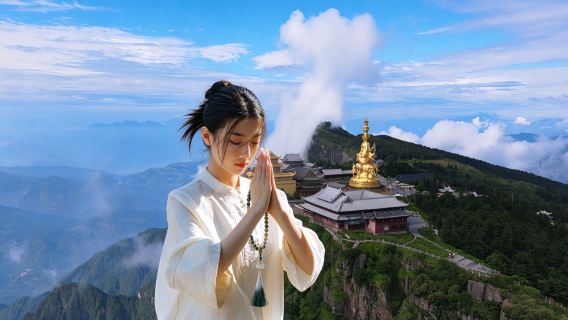
Private tour for 2–8 people | Mount Emei Golden Summit 1-day tour | Private car pickup · Optional Chinese and English-speaking guide
󱌍
5.0/5
· 1 review
Duration: 19.5 hrs
English
Free cancellation
Instant confirmation
Book now for tomorrow
FromS$ 96.14
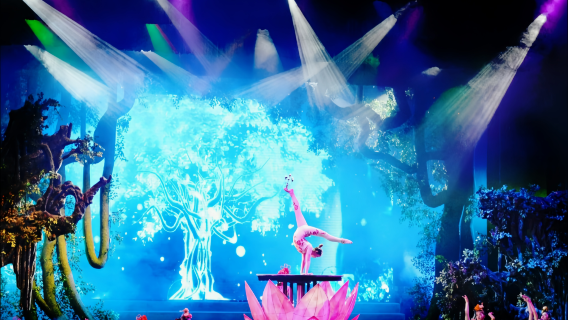
Chengdu city center departure - Leshan Giant Buddha + Emei Mountain ancient temple + Emei Mountain monkey watching day trip
󱌍
Duration: 10.5 hrs
English
Free cancellation
Instant confirmation
Book now for tomorrow
FromS$ 282.98
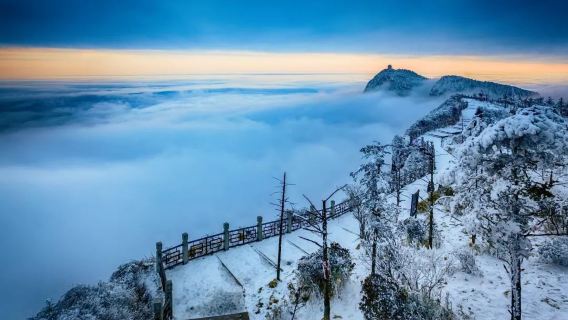
Day trip to Mount Emei from Chengdu with private charter service: Comfortable experience for worry-free travel
󱌍
Duration: 2 hrs
English
Free cancellation
Instant confirmation
Book now for tomorrow
FromS$ 97.61
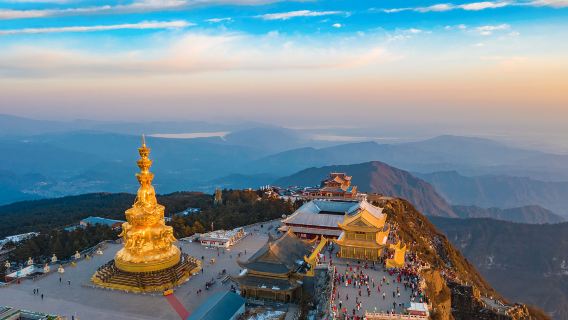
[Departing from Chengdu] Mount Emei and Leshan Giant Buddha one-day tour: Puxian Bodhisattva's sacred site and Lingyun Giant Buddha
󱌍
FromS$ 125.04
Mount Wawu Private One-Day Tour: Unmissable Adventure from Chengdu to Ancient Tableland
󱌍
Duration: 10 hrs
English
Free cancellation
Instant confirmation
Book now for tomorrow
FromS$ 136.89
Ganluo Today's weatherOvercast 11-19℃
Ganluo weather for the next 2 days11/16: 11-17℃, 11/17: 10-17℃

Free things to do in Ganluo

What travellers say about Ganluo

user-avatar
M60***496 October 2026
5.0
The scenery is beautiful, at an altitude of about 2000 meters. There's a 3-kilometer-long, gently sloping wooden boardwalk with almost no steep inclines, perfect for a leisurely stroll. The still lake reflects the surrounding scenery, and meadows and pastures dot the hillsides with cattle and horses – a truly therapeutic spot for photos. No strenuous hiking is required, making it easy for seniors and children to enjoy. The area boasts a high concentration of negative oxygen ions.

Heizhugou

user-avatar
TescoTone197015 November 2026
5.0
I have been looking forward to this experience for 6 months....and it did not disappoint! We did the 8am start which was great because all the Pandas were up and about. Seeing them laying around, walking about, eating was amazing....and so close close. The park itself is immaculate but it got busier as the morning went on. Our guide 'michael' was brilliant, helpful, attentive.and knowledgeable...what a great guy!

Chengdu Research Base of Giant Panda Breeding

user-avatar
婷姐的创业笔记13 November 2026
5.0
The autumn break was perfect, avoiding the crowds of the main holidays. The tour guide we hired had a drawing board, diagrams, and even small experimental tools in his bag, explaining the magnificent water conservancy projects in the simplest language possible – very nice!

Dujiangyan Scenic Area

user-avatar
Anonymous user14 November 2026
4.0
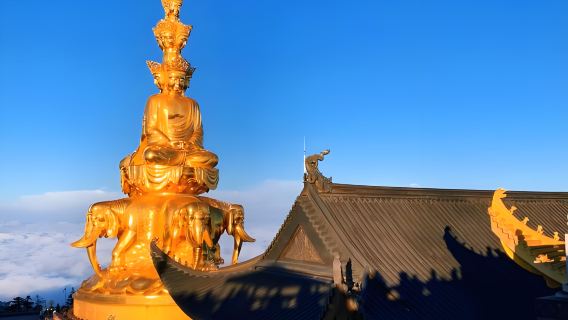
Step by step, I climbed to the Golden Summit of Mount Emei. A sea of ​​clouds surged beneath my feet, and the golden statue of Samantabhadra stood silently atop the mountain. The hardship of the long mountain path became meaningful upon seeing this sea of ​​clouds and the Buddha's light. The mountain is high and the road is long; every step is filled with reverence. May I have peace, joy, and freedom from worry in the future.

Mount Emei

user-avatar
_TI***lo13 November 2026
4.0
Gorgeous place but wow what a lot of people. Went to get cable car and 45-60 min queue (not that I could buy tickets anyway as insisted on Chinese mobile number). Beautiful scenery and would have been even better if the visibility was clearer. Oh and all those people with the bamboo walking canes- don’t give them to your kids 😂 nearly got whacked in face a couple of times!

Mount Qingcheng

user-avatar
M76***9314 November 2026
5.0
"How I wish I had a thousand mansions!" Only by visiting Du Fu Thatched Cottage in person can one truly appreciate the compassion and tenderness hidden in those verses. Surrounded by lush bamboo groves, winding paths lead to secluded spots, pavilions, ponds, and ancient steles are scattered throughout, each step revealing a new scene. The city's hustle and bustle is isolated by the layers of bamboo, creating a tranquil and elegant atmosphere where the plants are meticulously maintained. Strolling slowly and carefully reading the inscriptions on the steles feels like meeting the poet saint across a thousand years. It's a place to slow down and appreciate the unique poetic charm of Chengdu, a must-visit when in Chengdu.

Chengdu Du Fu Thatched Cottage Museum

user-avatar
_TI***f914 November 2026
5.0
Very unforgettable visit to sanxingdui, better understanding of the shu history. Recommended to get someone to explain the history first and then go back one more time to see in details. Love especially the mask and the big tree, oldern people had great imagination.

Sanxingdui Museum

user-avatar
M27***4410 November 2026
4.0
Highly recommend our tour guide, Xiaoyu! She led us on a tour of the Wuhou Temple, providing a clear and organized explanation. From the Hui Mausoleum, the Tang Dynasty steles, and the Qing Dynasty steles to the Wuhou Temple itself, she eloquently recounted the figures and stories behind the Three Kingdoms period. Her explanations were accurate and to the point, and she patiently answered all our questions. The pace was comfortable, and we learned a great deal – a truly wonderful tour experience! [Roses][Roses]

Chengdu Wuhou Shrine Museum

user-avatar
M16***4313 November 2026
5.0
The scenic area is well-developed, and the off-season offers a better experience with fewer crowds. However, we still had to queue for over twenty minutes to see the Buddha's feet because the path was extremely narrow, only wide enough for one person at a time. An elderly person in front of us was walking slowly, which slowed everyone else down as well. Imagine how long the queue could be during peak season – three or four hours!

Leshan Giant Buddha

user-avatar
很爱吃玩的成都人15 November 2026
5.0
Comprehensive Itinerary: Drive from Chengdu to Li County on the first day, enjoy a yak hotpot, take a walk, and gather some supplies. On the second day, drive to the entrance of the valley for a bowl of hot noodles, then explore the area before returning to Chengdu. Small Tips: After entering the ticket gate, take the scenic area bus (ticket price included) to the first stop. After that, take another bus (ticket price included). You can then buy tickets for the sightseeing bus; the entire journey in and out costs 30 yuan, or you can buy tickets for sections at 20 yuan each (there are 3 sections in total). The buses and minibuses stop at each stop upon entry, but the return journey is a single trip. This is a scenic area in western Sichuan very close to Chengdu, and this is my second visit. Just remember to dress warmly. There seem to be more and more facilities, which is great for children. However, I hope that the construction of these facilities won't damage the scenery; it seems a bit excessive. The scenery is truly breathtaking. Bipenggou in the colorful ridge season is incomparably beautiful. I experienced rain, hail, and bright sunshine in one day, watching the clouds roll in and the fog rise and dissipate. The stranger posted a picture saying it couldn't capture its beauty, and I silently agreed. The grilled sausages at the scenic spot were still delicious, and the meat was still very substantial.

Bipeng Valley

Popular cities near Ganluo

Frequently asked questions

How can I contact Trip.com customer support?

Get help anytime, anywhere within 30 secondsContact customer support

Change and cancellation policies vary by attractions and tours. Please check the product details page for more information.

Ticket prices may vary between weekdays and weekends, as well as during peak and off-peak seasons. When booking with Trip.com, you can also use Trip Coins to get extra savings. For more tips on booking discounted tickets, please visit Trip.com for the latest information.