Gucheng

Things to do in Gucheng

Search attractions or local attractions & tours
Search

Explore top experiences

Top 10 attractions in Gucheng

View all Attractions
Banhe Grand Canyon

Banhe Grand Canyon

4.3
4.3/5
6 reviews
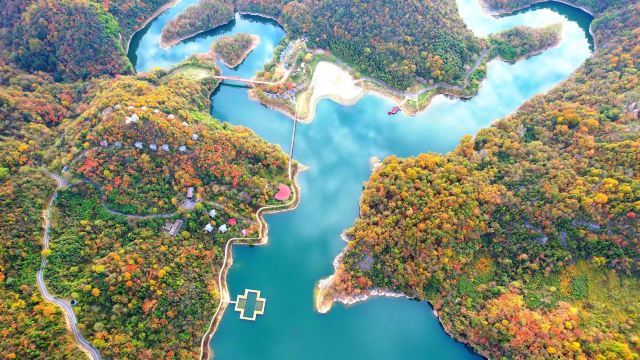
Banhe Grand Canyon is located in Huangshanya, Wushan Town, Gucheng County, Hubei Province. It belongs to Yunwu Mountain Village. The village is located between high mountains and steep ridges. In the early morning after the rain, the village is sometimes surrounded by clouds and mist, and sometimes the clouds and mist are gathered. It is like being in a fairyland. There is a feeling that you don't know the true face of Mount Lu, just because you are in this mountain. The entire Banhe River basin is 120 miles long, divided into three sections: upper, middle and lower, each about 40 miles. According to the villagers who have lived in the area for a long time, Banhe originated in the border of Fang County, Hubei Province, Danjiang and Gucheng. The river water is one of the sources of Tankou in Shihua, flowing into Beihe in Gucheng and into Hanjiang River. At present, it is a national AAA-level Attraction and a national forest economy demonstration base. It is an ideal place for river tracing and team development in Xiangyang and Souvenir. It is said that the reason why the sand and stones in the water of "Banhe" flash colorful and beautiful luster under the sun is that tourists affectionately call it "Banhe". It is a good place for hiking, river tracing, swimming and camping, and it is also a wonderful place to escape the summer heat. At the same time, it has the same scenery and charm as Jiuzhaigou. It can be said that it is a place where women are waiting to be married.Gucheng · 36.6km from downtown
Xieshan National Forest Park

Xieshan National Forest Park

3.3
5.0/5
29 reviews
Xieshan National Forest Park is located in the central part of Gucheng County, Hubei Province, facing the ancient city of Xiangyang and Wudang Mountain in the west. Xie Mountain was called Daughter Mountain in ancient times. It originated from its main peak, which is surrounded by clouds and mists like a woman dancing in gauze. Later, it got its name because of the production of Xiebai. The park has towering trees, a large area of forest coverage, fresh air and pleasant climate. Since ancient times, it has enjoyed the reputation of "Southern China Mountain Resort" and is a well-known place to escape the summer heat both at home and abroad. Looking around, it is full of greenery, mixed with needles and broad-leaves, tall trees, shrubs and bottom grass, native vegetation and artificial cultivation, ancient and famous trees, wild animals and plants live in harmony. The four seasons here are different, beautiful and charming. In early spring, peach red, plum and white, and the grass grows and warblers fly; in midsummer, the sun is shaded by greenery and the breeze is blowing; in late autumn, the layers of forests are dyed, and wild fruits are fragrant; The highest peak in the mountaineering scenic spot is the Daughter Peak, which has a panoramic view of the mountain scenery, which is full of praise. There is a strong cultural heritage in the scenic area. More than 5,000 years ago, Emperor Yan Shennong came here from Suizhou to taste herbs and plant five grains, leaving behind the relics of Shennong's old road, Shennong Cave, Wugutang, and Baicao Garden.Gucheng · 27.4km from downtown
Ancient Longzhong
No. 5 of Family-friendly Attractions in Hubei

Ancient Longzhong

7.2
4.4/5
5.5k reviews
Ancient Longzhong is located among the mountains west of Xiangyang city, where Zhuge Liang lived in seclusion during his youth. Legend has it that this place is surrounded by mountains, with only one peak "rising abruptly in the center," standing prominently among the ridges, hence the name "Longzhong." At the age of seventeen, Zhuge Liang came here with his uncle, farming and studying diligently for nearly a decade, earning the nickname "Crouching dragon." Later, Liu Bei visited his thatched cottage three times, and Zhuge Liang proposed the "Longzhong Plan" outlining the tripartite division of the world. Ancient Longzhong thus became known as the "cradle of wisdom" and the "birthplace of the tripartite division strategy." Today, the attraction still preserves traces of this history: the Wuhou Temple, originally built during the Jin dynasty, rises in tiers along the mountain slope as a site for commemorating Zhuge Liang; the Three visits hall was constructed to honor Liu Bei's three visits, with ancient cypresses in front said to be the very trees where Liu, Guan, and Zhang tied their horses; thatched cottage pavilion, farming fields, small rainbow bridge, hexagonal well, old dragon cave, and knee-embracing rock collectively form the "Ten scenes of Longzhong" passed down since the Ming dynasty—the knee-embracing rock is believed to be where Zhuge sat chanting "Liangfu yin." At the entrance stands a Qing-dynasty bluestone archway inscribed with "Ancient Longzhong," flanked by phrases from "Admonitions to my son"—"Indifference to fame reveals one's ambition" and "Tranquility leads to far-reaching vision"—with Du Fu's famous couplet "Three visits exhausted the world's schemes, two reigns revealed the veteran's heart" carved on pillars, serving as the attraction's iconic photo spot. Hiking up to Tenglong Pavilion atop the mountain offers panoramic views of Longzhong's forests and fields; nestled in the valley lies a thatched-roof theater once staging the large-scale outdoor drama "Thatched cottage: Zhuge Liang," chronicling his life. "Romance of the Three Kingdoms" describes this place as having "hills not lofty but elegant, waters not deep but clear." The leisurely pace of the visit allows you to share the story of the Three Visits to the Thatched Cottage with your children as you stroll. If you're interested in Zhuge Liang's life, we recommend setting aside half a day to explore the inscriptions and exhibits in detail, which is more rewarding than a hurried visit.Xiangyang · 46.8km from Gucheng
Wudang Mountains
No. 5 of Best Things to Do in Hubei

Wudang Mountains

8.1
4.6/5
15.4k reviews
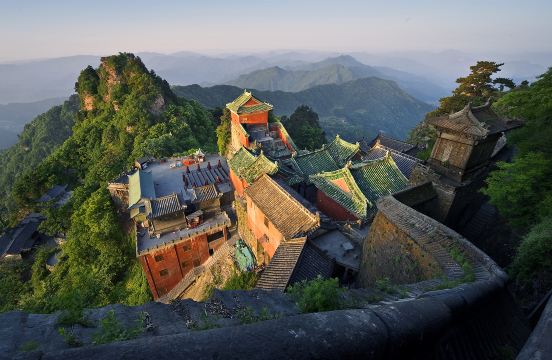
The Wudang Mountains are located in Shiyan, northwestern Hubei province. Its main peak, Tianzhu Peak, stands at an elevation of over 1,600 m. Legend has it that Emperor Zhenwu cultivated and ascended to immortality here, while Taoist Zhang Sanfeng further synthesized the essence of martial arts during the late Yuan and early Ming dynasties, making this the birthplace of Wudang martial arts. During the Yongle era of the Ming dynasty, the imperial court launched the monumental project of "constructing the Forbidden City in the north and building the Wudang Mountains in the south." The mountain temples were built according to royal standards, with their layout unfolding layer by layer following the mythological narrative of Zhenwu's spiritual cultivation. The palaces blend harmoniously with the peaks, cliffs, and streams, creating an ethereal and mystical atmosphere befitting a sacred mountain. The attractions unfold along the mountain terrain from the base to the summit, connecting key areas like Taizi Slope, Zixiao Palace, Nanyan Palace, and Taihe Palace. At Taizi Slope, the undulating Nine-bend Yellow River Wall follows the mountain contours, while Wuyun Tower's "one pillar supporting twelve beams" remains an architectural marvel. Zixiao Palace, a well-preserved imperial Taoist temple, features the stately Zixiao Hall with its double-eaved, nine-ridged roof. Nanyan Palace clings dramatically to a cliff face, offering vertiginous views of the valley below. Ascending the stone-paved ancient path to Tianzhu Peak's summit reveals the gilded bronze Golden Hall—the architectural masterpiece of the entire complex. As the birthplace of Wudang martial arts, this place attracts enthusiasts from home and abroad who come to seek masters and practice martial arts. The Taizi Slope on the mountain and the Xuantian Yuxu Palace at the foot serve as daily training grounds for practitioners. If you happen to encounter Taoist priests or students demonstrating Wudang boxing techniques, take a moment to quietly observe and appreciate the centuries-old martial arts heritage. A two-day visit is recommended: On the first day, enter from the mountain gate to visit Taizi slope and Zixiao palace, then stay overnight near Wuyaling. On the second morning, first visit Nanyan palace, then ascend to the golden summit before hiking down or taking the cableway at Qiongtai. After exiting the mountain gate, you may also visit Xuantian Yuxu palace. The attraction's shuttle buses connect all major core attractions, allowing flexible combinations of hiking and riding. Most dining and lodging options are concentrated around Nanyan, convenient for rest during the climb. From late October to November each year, when the forests are ablaze with color and red leaves cover the mountains, it's the perfect time to enjoy the fall scenery in the mountains.Danjiangkou · 59.5km from Gucheng
The Three Gorges Dam Tourism Area
No. 1 of Best Things to Do in Hubei

The Three Gorges Dam Tourism Area

8.9
4.7/5
9k reviews
The Three Gorges Dam Tourism Area is located in the Xiling Gorge section of the Yangtze River in Yichang, Hubei. It is a scenic attraction built around the Three Gorges hydro project, covering over ten square kilometers. Currently, it offers travelers three viewing spots: Tanzi Ridge, the 185 viewing platform, and the river closure memorial park. The dam crest itself is not open to travelers, so visits primarily revolve around these three attractions. Tanzi Ridge is the highest accessible point in the dam area, named for its jar-shaped summit viewing platform resembling an overturned jar. It also served as the survey site for the dam's initial location selection. From the ridge top, visitors can overlook the Three Gorges Project in its entirety—the dam, power station, and twin five-level ship locks are all visible. The five lock chambers cascade down the mountainside, earning the nickname "Fourth Gorge of the Yangtze." The park displays engineering artifacts like ancient riverbed stones, river closure rocks, and foundation stones from the dam site, complemented by model exhibits that help visitors intuitively understand the origins and development of this mega-project. The 185 observation platform is located on the left bank of the dam. It gets its name from sharing the same elevation of 185 m as the dam crest. Standing on the platform feels like being atop the dam: on one side, the dam and vertical ship lift are within close reach, offering a chance to witness ships "riding the elevator" over the dam; on the other side lies the vast, tranquil reservoir upstream. The stark contrast between the stillness above and the dynamism below the dam is striking. The closure memorial park is situated on the right bank downstream of the dam, preserving artifacts like tetrahedral closure stones and large loading machinery used during the construction. It's an ideal spot to view the dam's full frontal grandeur. During flood seasons when the dam releases water, torrents rush out from the deep outlets, creating towering mist and thunderous echoes that reverberate through the valley—a truly awe-inspiring spectacle. The three attractions are far apart, and the scenic area provides shuttle buses for transportation. It is recommended to reserve half a day to visit them in order.China · Yichang
Mount Hua
2026 Asia 100 - Best Things to Do

Mount Hua

8.7
4.7/5
55.5k reviews
Mount Hua, known as the "Western Great Mountain" in ancient times, is one of China's Five Great Mountains. Located in Huayin, Shaanxi Province, it is also elegantly called "Taihua Mountain." The "Hua" in both "Zhonghua" and "Huaxia" originates from this mountain. "Steep and perilous" are the essence of Mount Hua's scenery, and the saying "there has always been only one path up Mount Hua" precisely describes its steepness—the Plank Road in the Sky, the Sparrowhawk Turn, the Thousand-Foot Precipice, the Hundred-Foot Gorge, the Laojun Plow Ditch, and other perilous sights leave every visitor awestruck. The Mount Hua attraction covers a vast area, including the main peak attraction, the Western Great Mountain Temple attraction, and the Xianyu attraction, among which the main peak attraction is the core, encompassing the five main peaks—east, south, west, north, and center—as well as the classic "Mount Hua Valley" climbing trail. The five main peaks each have their own distinctive features. The East Peak, at an elevation of approx. 2,100 m, has the open and expansive Chaoyang Terrace at its summit, making it an excellent spot for watching the sunrise, and is therefore also known as Chaoyang Peak; the natural stone patterns on the cliff face along the side of the peak resemble a giant palm print—this is the Huayue Immortal Palm, listed since ancient times as one of the Eight Views of Guanzhong. The West Peak, at an elevation of approx. 2,080 m, is named Lotus Peak because the giant rock at its summit resembles a lotus flower; the Cuiyun Palace, the Axe-Split Rock, and the Self-Sacrifice Cliff are scattered across it, and the myth of Chenxiang splitting the mountain to save his mother is said to have originated here. The South Peak, at an elevation of over 2,150 m, was called the "head of Mount Hua" by the ancients; it consists of two summits—Songgui Peak and Luoyan Peak—with a sheer cliff dropping straight down on one side. The North Peak, at an elevation of approx. 1,600 m, is also known as Yuntai Peak; it stands isolated and towering with precipitous drops on all four sides, and the story of "Taking Mount Hua by Strategy" took place here; the peak features views such as the Zhenwu Hall and the Jiaogong Stone Chamber. The Central Peak lies at the center of the East, West, and South Peaks, with serene and lush vegetation; on the peak is the Jade Maiden Shrine, said to be the place where Nongyu, daughter of Duke Mu of Qin during the Spring and Autumn period, cultivated herself, hence it is also known as Jade Maiden Peak. The Plank Road in the Sky is located on the mountainside east of the South Peak. It was built by the Yuan Dynasty Taoist He Zhizhen, who embedded stone stakes into the cliff face and laid wooden planks. At the end of the plank road, visitors can see Hezu Cave, where he cultivated himself. Visitors must press close to the cliff, hold the iron chains, and step on the wooden planks while moving sideways slowly—an extremely thrilling experience. The ridge of Canglong Ridge is as narrow as a blade, flanked by bottomless chasms, and walking on it makes one's heart race and vision blur. Golden Lock Pass is the vital gateway to the East, West, South, and Central peaks. Taoists believe that passing through this pass marks entry into a fairyland, and there is a folk saying: "Once past Golden Lock Pass, you enter another realm."China · Huayin

Experiences you can't miss in Gucheng

Gucheng Today's weatherLight rain 11-14℃
Gucheng weather for the next 2 days11/4: 10-20℃, 11/5: 12-23℃

Free things to do in Gucheng

What travellers say about Gucheng

user-avatar
M56***467 August 2026
4.0
Overall, it was just average. There were many children's play facilities, but the river water wasn't particularly clear. Since our children are older, they didn't really enjoy playing on the rides. The bamboo raft operator was quite good, but we waited a long time for the kitchen. I heard that when it's crowded, the queue can be several hours long. The valley is quite small; we didn't walk around for very long, and it was very stuffy and hot.

Banhe Grand Canyon

user-avatar
D46***8425 February 2020
5.0
Hi ve visited this place 3 years ago.It was very interesting. Not too much people, natural, good feeling!

Nanhe Small Three Gorges

user-avatar
可怕可爱多长大的人民工15 October 2025
5.0
Xieshan National Forest Park in Hubei Province is located on the eastern edge of the mountainous region of northwestern Hubei Province, on the west bank of the middle reaches of the Han River. It faces Laohekou and Xiangyang across the Han River to the east, Danjiangkou City to the north, Fang County to the west, and Baokang and Nanzhang to the south. The forest park has a subtropical warm and humid monsoon climate, with an average annual temperature of 12°C, an annual accumulated temperature ≥10°C of 3892.3°C, and an annual rainfall of 1419 mm. The vegetation is subtropical evergreen broad-leaved forest, with a forest coverage rate of 93%. The forest park's main natural attractions include Daughter Peak, Dressing Table, Pearl Stone, Mandarin Duck Stone, Nanzhu Garden, Liquidambar trees, hot springs, and the "Little Three Gorges" of the Nanhe River.

Xieshan National Forest Park

user-avatar
Anonymous user26 October 2026
4.0
A fantastic scenic spot, combining culture and beautiful scenery. It recreates various historical events. Tenglong Pavilion is beautiful, but climbing up the mountain is a bit tiring. We watched a dramatic performance depicting the Three Visits to the Thatched Cottage, which was very interesting!

Ancient Longzhong

user-avatar
莫莫31 October 2026
5.0
Taking the cable car from Qiongtan directly to the Golden Summit is very easy and convenient, especially for the elderly and children. Climbing would take about three hours. The cable car is definitely more energy-efficient. This famous Taoist mountain showcases the architectural wisdom of the ancients, which is truly commendable. Each palace has its own unique charm, and none are truly inferior. Staying in the mountains allows you to fully immerse yourself in Taoist culture.

Wudang Mountains

user-avatar
可乐爸爸会旅行2 November 2026
5.0
The scenic area has a clear layout, starting with the West Hill Grottoes, then moving to the East Hill Grottoes and Xiangshan Temple on the opposite bank. A single visit covers most of the highlights and allows for relatively close observation of the Buddha statues, making it quite rewarding. However, it's a pity that many statues have been damaged by theft.

Longmen Grottoes

user-avatar
WYQ62702 November 2026
5.0
As a national 5A-level scenic spot, the Three Gorges Dam is an unmissable destination when visiting the Yangtze River. Standing on Tanziling and looking down, the mighty Yangtze River surges beneath your feet, and the magnificent momentum of the world's largest water conservancy project is overwhelming. Touching the heavy dam body and watching the white waves and steaming mist during the flood discharge, you can marvel at the hard-core miracle of modern engineering and appreciate the serene poetic beauty of the high gorges turning into a placid lake. It is a wonderful journey that combines awe and a sense of remembrance.

The Three Gorges Dam Tourism Area

user-avatar
M37***456 June 2026
4.0
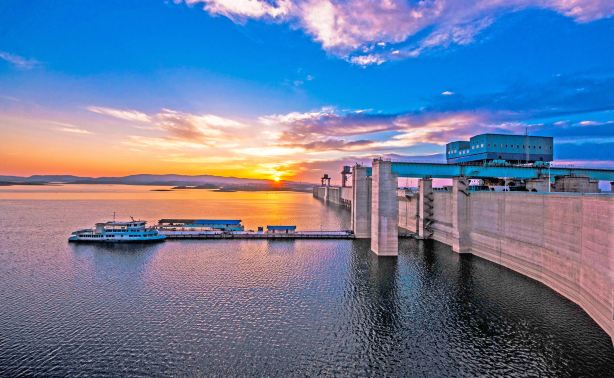
Standing atop the Danjiangkou Dam, overlooking the vast expanse of water, is truly awe-inspiring! This is the world's longest water diversion project, benefiting the largest population and covering the widest area. Strolling along the dam's viewing platform, the distant blue sky and white clouds reflect beautifully on the water, which shimmers in the sunlight. The dam's magnificent structure blends seamlessly with the surrounding stunning scenery, making every snapshot a cinematic masterpiece, as if each frame tells its own story.

Danjiangkou Dam Scenic Area

user-avatar
Anonymous user2 November 2026
4.0
Too many people up the hills. Hard to enjoy the scenery quietly.

Mount Hua

Trip Moments in Gucheng

Popular cities near Gucheng

Frequently asked questions

How can I contact Trip.com customer support?

Get help anytime, anywhere within 30 secondsContact customer support

Change and cancellation policies vary by attractions and tours. Please check the product details page for more information.

Ticket prices may vary between weekdays and weekends, as well as during peak and off-peak seasons. When booking with Trip.com, you can also use Trip Coins to get extra savings. For more tips on booking discounted tickets, please visit Trip.com for the latest information.