![3.5-Hour In-Depth Chinese Guided Tour at the Winter Palace Museum in Saint Petersburg with Licensed Official Guide [Daily Departures]](data:image/webp;base64,UklGRhYNAABXRUJQVlA4WAoAAAAgAAAAZAQAZAQASUNDUCQCAAAAAAIkYXBwbAQAAABtbnRyUkdCIFhZWiAH4QAHAAcADQAWACBhY3NwQVBQTAAAAABBUFBMAAAAAAAAAAAAAAAAAAAAAAAA9tYAAQAAAADTLWFwcGzKGpWCJX8QTTiZE9XR6hWCAAAAAAAAAAAAAAAAAAAAAAAAAAAAAAAAAAAAAAAAAApkZXNjAAAA/AAAAGVjcHJ0AAABZAAAACN3dHB0AAABiAAAABRyWFlaAAABnAAAABRnWFlaAAABsAAAABRiWFlaAAABxAAAABRyVFJDAAAB2AAAACBjaGFkAAAB+AAAACxiVFJDAAAB2AAAACBnVFJDAAAB2AAAACBkZXNjAAAAAAAAAAtEaXNwbGF5IFAzAAAAAAAAAAAAAAAAAAAAAAAAAAAAAAAAAAAAAAAAAAAAAAAAAAAAAAAAAAAAAAAAAAAAAAAAAAAAAAAAAAAAAAAAAAAAAAAAAAAAAAAAAAAAAHRleHQAAAAAQ29weXJpZ2h0IEFwcGxlIEluYy4sIDIwMTcAAFhZWiAAAAAAAADzUQABAAAAARbMWFlaIAAAAAAAAIPfAAA9v////7tYWVogAAAAAAAASr8AALE3AAAKuVhZWiAAAAAAAAAoOAAAEQsAAMi5cGFyYQAAAAAAAwAAAAJmZgAA8qcAAA1ZAAAT0AAACltzZjMyAAAAAAABDEIAAAXe///zJgAAB5MAAP2Q///7ov///aMAAAPcAADAblZQOCDMCgAAMC0BnQEqZQRlBD51OplKpKMiIaASCBiQDolpbuF3YR69H8pb0WcX4fAAVphqqTZMQ6qk2TEOqpNkxDqqTZMQ6qk2TEOqpNkxDqqTZMQ6qk2TEOqpNkxDqqTZMQ6qk2TEOqpNkxDqqTZMQ6qk2TEOqpNkxDqqTZMQ6qk2TEOqpNkxDqqTZMQ6qk2TEOqpNkxDqqTZMQ6qk2TEOqpNkxDqqTZMQ6qk2TEOqpNkxDqqTZMQ6qk2TEOqpNkxDqqTZMQ6qk2TEOqpNkxDqqTZMQ6qk2TEOqpNkxDqqTZMQ6qk2TEOqpNkxDqqTZMQ6qk2TEOqpNkxDqqTZMQ6qk2TEOqpNkxDqqTZMQ6qk2TEOqpNkxDqqTZMQ6qk2TEOqpNkxDqqTZMQ6qk2TEOqpNkxDqqTZMQ6qk2TEOqpNkxDqqTZMQ6qk2TEOqpNkxDqqTZMQ6qk2TEOqpNkxDqqTZMQ6qk2TEOqpNkxDqqTZMQ6qk2TEOqpNkxDqqTZMQ6qk2TEOqpNkxDqqTZMQ6qk2TEOqpNkxDqqTZMQ6qk2TEOqpNkxDqqTZMQ6qk2TEOqpNkxDqqTZMQ6qk2TEOqpNkxDqqTZMQ6qk2TEOqpNkxDqqTZMQ6qk2TEOqpNkxDqqTZMQ6qk2TEOqpNkxDqqTZMQ6qk2TEOqpNkxDqqTZMQ6qk2TEOqpNkxDqqTZMQ6qk2TEOqpNkxDqqTZMQ6qk2TEOqpNkxDqqTZMQ6qk2TEOqpNkxDqqTZMQ6qk2TEOqpNkxDqqTZMQ6qk2TEOqpNkxDqqTZMQ6qk2TEOqpNkxDqqTZMQ6qk2TEOqpNkxDqqTZMQ6qk2TEOqpNkxDqqTZMQ6qk2TEOqpNkxDqqTZMQ6qk2TEOqpNkxDqqTZMQ6qk2TEOqpNkxDqqTZMQ6qk2TEOqpNkxDqqTZMQ6qk2TEOqpNkxDqqTZMQ6qk2TEOqpNkxDqqTZMQ6qk2TEOqpNkxDqqTZMQ6qk2TEOqpNkxDqqTZMQ6qk2TEOqpNkxDqqTZMQ6qk2TEOqpNkxDqqTZMQ6qk2TEOqpNkxDqqTZMQ6qk2TEOqpNkxDqqTZMQ6qk2TEOqpNkxDqqTZMQ6qk2TEOqpNkxDqqTZMQ6qk2TEOqpNkxDqqTZMQ6qk2TEOqpNkxDqqTZMQ6qk2TEOqpNkxDqqTZMQ6qk2TEOqpNkxDqqTZMQ6qk2TEOqpNkxDqqTZMQ6qk2TEOqpNkxDqqTZMQ6qk2TEOqpNkxDqqTZMQ6qk2TEOqpNkxDqqTZMQ4Q4e4y8Rz16MvEc9ejLxHPXoy8Rz16MvEc9ejLxHPXYLrUl+0HaQA25DjLxHPXoy8Rz16MvEc9ejLxHPXoy8Rz16MvEZSAd+wyzHgIewW2Zlbas3+3QFqFHDvvz16MvEc9ejLxHPXoy8Rz16MvEc9ejLw9Oem0o0qUTd1njpSTxxvz+UIQ1SwN06+JGENVSbJiHVUmyYh1VJsmIdVSbJiHVUmyYh1ZEroH+qqbFYBP9f+zCmdQQ1VJsmIdVSbJiHVUmyYh1VJsmIdVSbJiHVTZQWid8vIAW6B5hydBNyCGqpNkxDqqTZMQ6qk2TEOqpNkxDqqTZMQ6qbKv34rDoky1oQFUQTontcIK0gBlWiXHIIaqk2TEOqpNkxDqqTZMQ6qk2TEOqpNkxDeQjCloCfdCs6qOS6zziWUYb7RZRbJluW8Rz16MvEc9ejLxHPXoy8Rz16MvEc9ejLxHKF4xmqUFetnXkhUW0VQPJl0/FzGoYKM9KJBJsmIdVSbJiHVUmyYh1VJsmIdVSbJiHVUmyCVP4Ff+iUBKzVlwfT5jYIyEgFVbFymfEgcFXFCAtNuYTLqbxGHiOevRl4jnr0ZeI569GXiOevRl4jnr0ZeI8SaOPt4QO5srn1JnYtiWrv0luwNavZsv1JgWnxWDljXjkENVSbJiHVUmyYh1VJsmIdVSbJiHVUmyYhvLJVIe3OSgh82JeTBxV/nYynNBDVUmyYh1VJsmIdVSbJiHVUmyYh1VJsmIdVSbKCl7789ejLxHPXoy8Rz16MvEc9ejLxHPXoy8Rz16MvEc9ejLxHPXoy8Rz16MvEc9ejLxHPXoy8Rz16MvEc9ejLxHPXoy8Rz16MvEc9ejLxHPXoy8Rz16MvEc9ejLxHPXoy8Rz16MvEc9ejLxHPXoy8Rz16MvEc9ejLxHPXoy8Rz16MvEc9ejLxHPXoy8Rz16MvEc9ejLxHPXoy8Rz16MvEc9ejLxHPXoy8Rz16MvEc9ejLxHPXoy8Rz16MvEc9ejLxHPXoy8Rz16MvEc9ejLxHPXoy8Rz16MvEc9ejLxHPXoy8Rz16MvEc9ejLxHPXoy8Rz16MvEc9ejLxHPXoy8Rz16MvEc9ejLxHPXoy8Rz16MvEc9ejLxHPXoy8Rz16MvEc9ejLxHPXoy8Rz16MvEc9ejLxHPXoy8Rz16MvEc9ejLxHPXoy8Rz16MvEc9ejLxHPXoy8Rz16MvEc9ejLxHPXoy8Rz16MvEc9ejLxHPXoy8Rz16MvEc9ejLxHPXoy8Rz16MvEc9ejLxHPXoy8Rz16MvEc9ejLxHPXoy8Rz16MvEc9ejLxHPXoy8Rz16MvEc9ejLxHPXoy8Rz16MvEc9ejLxHPXoy8Rz16MvEc9ejLxHPXoy8Rz16MvEc9ejLxHPXoy8Rz16MvEc9ejLxHPXoy8Rz16MvEc9ejLxHPXoy8Rz16MvEc9ejLxHPXoy8Rz16MvEc9ejLxHPXoy8Rz16MvEc9ejLxHPXoy8Rz16MvEc9ejLxHPXoy8Rz16MvEc9ejLxHPXoy8Rz16MvEc9ejLxHPXoy8Rz16MvEc9ejLxHPXoy8Rz16MvEc9ejLxHPXoy8Rz16MvEc9ejLxHPXoy8Rz16MvEc9ejLxHPXoy8Rz16MvEc9ejLxHPXoy8Rz16MvEc9ejLxHPXoy8Rz16MvEc9ejLxHPXoy8Rz16MvEc9ejLxHPXoy8Rz16MvEc9ejLxHPXoy8Rz16MvEc9ejLxHPXoy8Rz16MvEc9ejLxHPXoy8Rz16MvEc9ejLxHPXoy8Rz16MvEc9ejLxHPXoy8Rz16MvEc9ejLxHPXoy8Rz16MvEc9ejLxHPXoy8Rz16MvEc9ejLxHPXoy8Rz16MvEc9ejLxHPXoy8Rz16MvEc9ejLxHPXoy8Rz16MvEc9ejLxHPXoy8Rz16MvEc9ejLxHPXoy8Rz16MvEc9ejLxHPXoy8Rz16MvEc9eioAAP7/4vC2LEQAAAAAAAAAAAAAAAAAAAAAAAAAAAAAAAAAAAAAAAAAAAAAAAAAAAAAAAAAAAAAAAAAAABps4ATP0udazyHzBxVasdQajicYP97oruYQAXhittIvZot8O6bZlPg5MPkP1xm8kLCuntWV2Q4gF8bX0AGuY6RZaVpoUzaeFlE3lCqAqWpLgDnmhngAT2DovvpGMvyA78nzjPcKAYbg0oWvLfZ0gvK2MlQIAVO85VUeHh36OfDS9qFDVkgeQMRgQB4TTZK5HzzIyPyf3NtaKWqLEEcagCmiWjkz0Nxm3CPuBAACWaov5j+tGVnVHZ3hQBD8cA3MTW1L5m7w3NDAQ4WHBYspHl48O/AgBvye7T71zxOUOLz7NKj0sC8VKkIAAAAAAAAAAAAAAAAAAAAAAAAAAAAAAAAAAAAAAAAAAAAAAAAAAAAAAAAAAAAAAAAAAAAAAAAAA==)


1. Winter Palace admission tickets for individual visitors start at 11:00, with time slots every half hour. If you only need to photograph the ticket, please inform us of your preferred time slot.
2. Admission ticket only, no guide service. No need to gather - please ignore the platform's gathering information. Arrive at the venue 30 minutes before the ticket's designated time for entry.
3. The price includes the admission ticket and service fee. Requests for price differences after purchase will not be accepted. Please consider carefully before purchasing.
4. If you purchase a join-in guided tour package, please arrive on time as we cannot wait for latecomers. Late arrivals will not be admitted, and no refunds will be issued for admission tickets or guide fees. Any losses incurred must be borne by yourself.
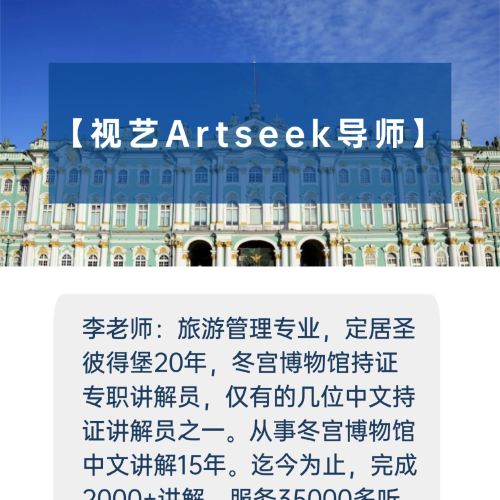

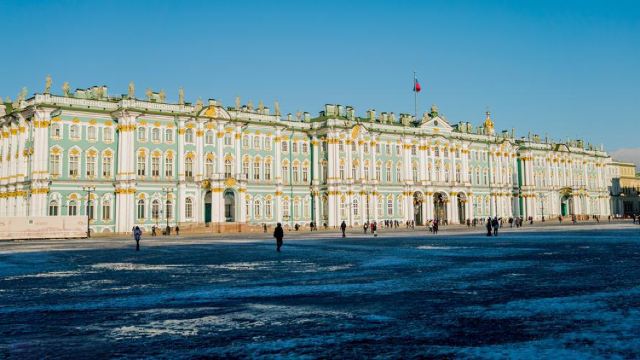
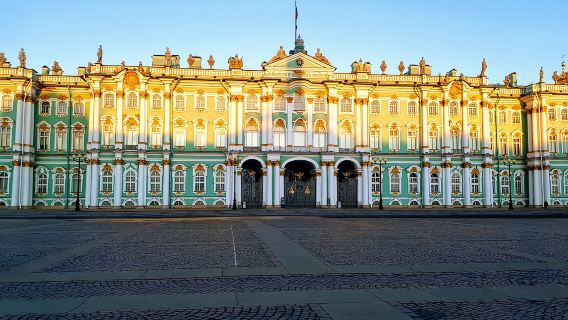
The Winter Palace (Зимний дворец) is an iconic landmark in Saint Petersburg, Russia, situated on Palace Square. Construction began in 1721, showcasing Russian Baroque architecture. Originally serving as the imperial palace for Russian Tsars, it was later incorporated into the State Hermitage Museum after the October Revolution. As a prime example of mid-18th century Russian Neoclassical architecture, it is recognized as one of the
.Before February 1917, the Winter Palace served as the residence of the Tsar, later occupied by the bourgeois Provisional Government. On November 7, 1917 (October 25 in the Russian calendar), the uprising masses captured the Winter Palace. After the October Revolution, the Hermitage Museum was established in 1922, and the Winter Palace became part of the museum.
The Hermitage, along with the British Museum in London, the Louvre in Paris, and the Metropolitan Museum of Art in New York, is recognized as one of the world's four great museums. The museum was originally the private collection of Empress Catherine II.
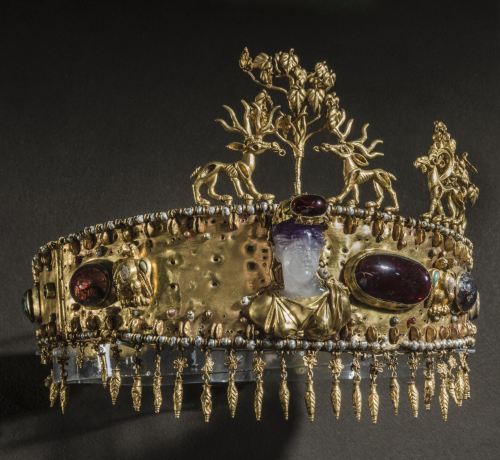
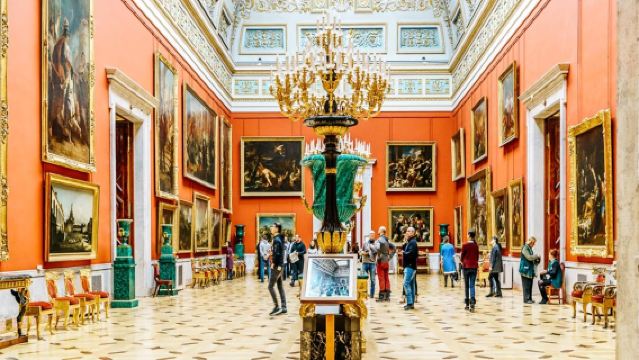
The Winter Palace is situated on Palace Square in Saint Petersburg, originally serving as the imperial palace of Russian tsars. The palace boasts an extensive collection of rare artifacts. In the 18th century, Catherine the Great established the Cabinet of Curiosities, which specifically acquired 225 famous paintings from Germany, housed within the building and known as the Hermitage (Hidden Palace). After the October Revolution, it became part of the State Hermitage Museum in Saint Petersburg.
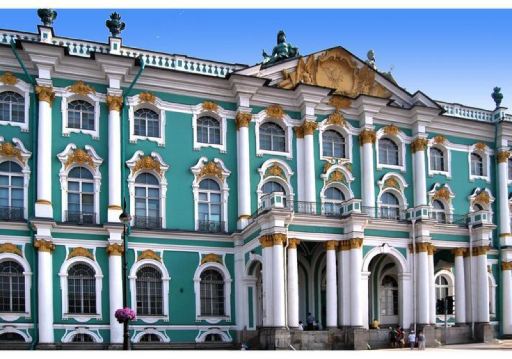
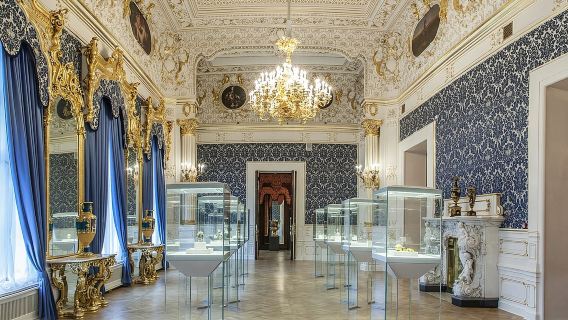
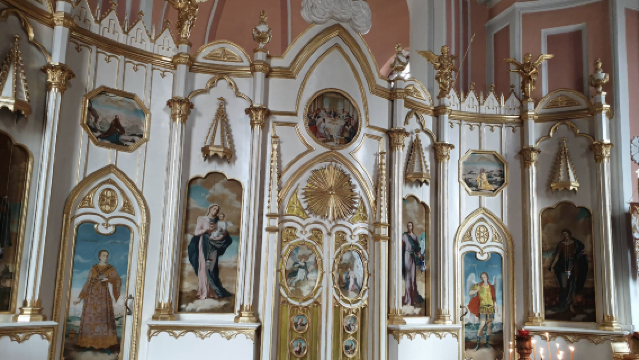
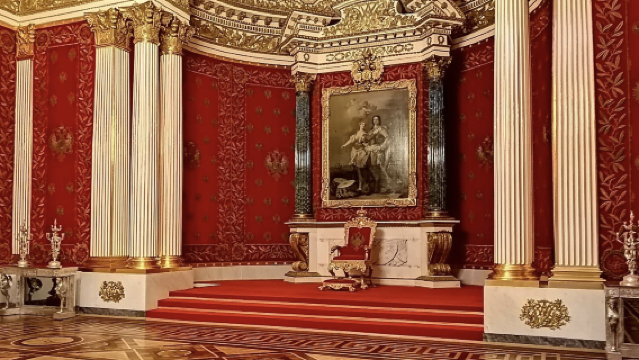
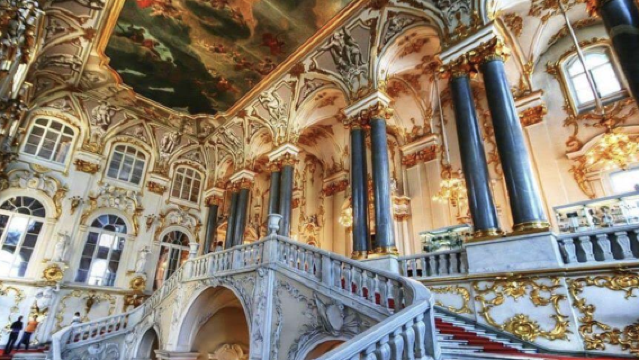
The Winter Palace is situated on Palace Square in Saint Petersburg, standing as a magnificent monument of Russian Baroque architecture from the mid-18th century. Its pale blue exterior walls and white classical columns make it one of the most elegant structures in Saint Petersburg. Inside the palace lies the world-famous Hermitage Museum, featuring a 20 km-long art gallery housing thousands of artworks. The palace is encircled by two rows of majestic colonnades. Adorned with various marbles, malachite, lapis lazuli, porphyry, and jasper inlays, complemented by gilded and bronze-plated decorations, along with sculptures, murals, and tapestries of diverse materials, the palace presents a dazzling array of colors and regal splendor. At the center of Winter Palace Square rises the towering Alexander Column, commemorating Russia's victory over Napoleon.